BIOGRAPHY
( jono : /ˈdʒɑnoʊ/ “JAHN-oh” ) ( borden : /ˈbɔɹdən/ “BOR-duhn” )
Just One, No Other®
Provocateur-Poet
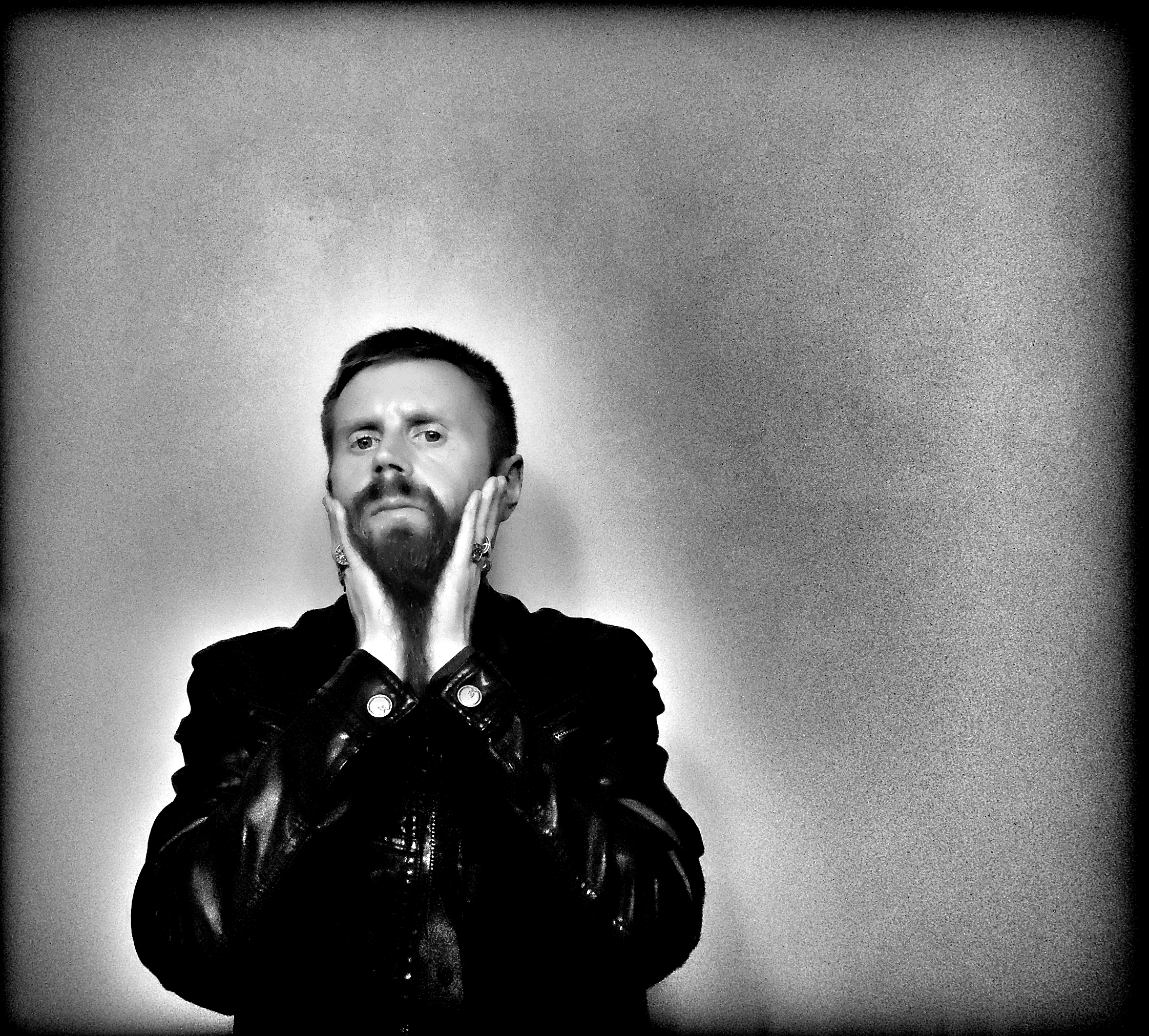
JONO BORDEN is a Canadian poet, novelist, lyricist, screenwriter, and filmmaker whose transgressive lyricism acts as a corrosive agent upon the sterile surface of contemporary discourse. Jagged, subversive, mercilessly, hauntingly avant-garde.
Borden’s voluminous outpouring is a calculated smattering and smashing of traditions, conjuring reactions as diverse and divisive as the ghosts he invites to the table. Always with an axe to grind—an ancestral inheritance from cousin Lizzie, he is far more adept at swinging hatchets than burying them. He splits his opponents with deep-hitting wit, unashamed to articulate the forbidden and the profane. What he makes deviates; what he touches ruptures.
Disturber-of-Shit
Borden’s bibliography, discography, and filmography form a sprawling, occult archive of fourteen books, two discs, and an ever-expanding cinematic catalogue. His canon includes the début Simple Simony (2013), the verse novel Isaac & Iskandar (2015), the double album 7×5 (Uncut) (2016), Between the Silver and the Mirror (2017), the novel Where the Willow Does Not Weep (2019), the esoteric bibliography Catalogus Librorum Impressorum Bibliothecæ Ionathani Bordenii (2021), the collection Diamond & Dagger (2021), the Byron biopic Lightning in the Veins (2023), the twisted tales of Cor Hydræ (2023), the horror of Prologue to an Echo (2024), the polemic Bullets in the Temple (2025), and the infernal descent of New Pornographies: A Backward Path to Heaven (2027).
His recent cinematic incursions include the original screenplays 360 Degrees of Self-Interest (2026) and The Geometry of Ruin (2026), alongside the definitive collection The Obsidian Mirror Trilogy: A Study in Stone and Shadow (2026).
Maker-of-Myth
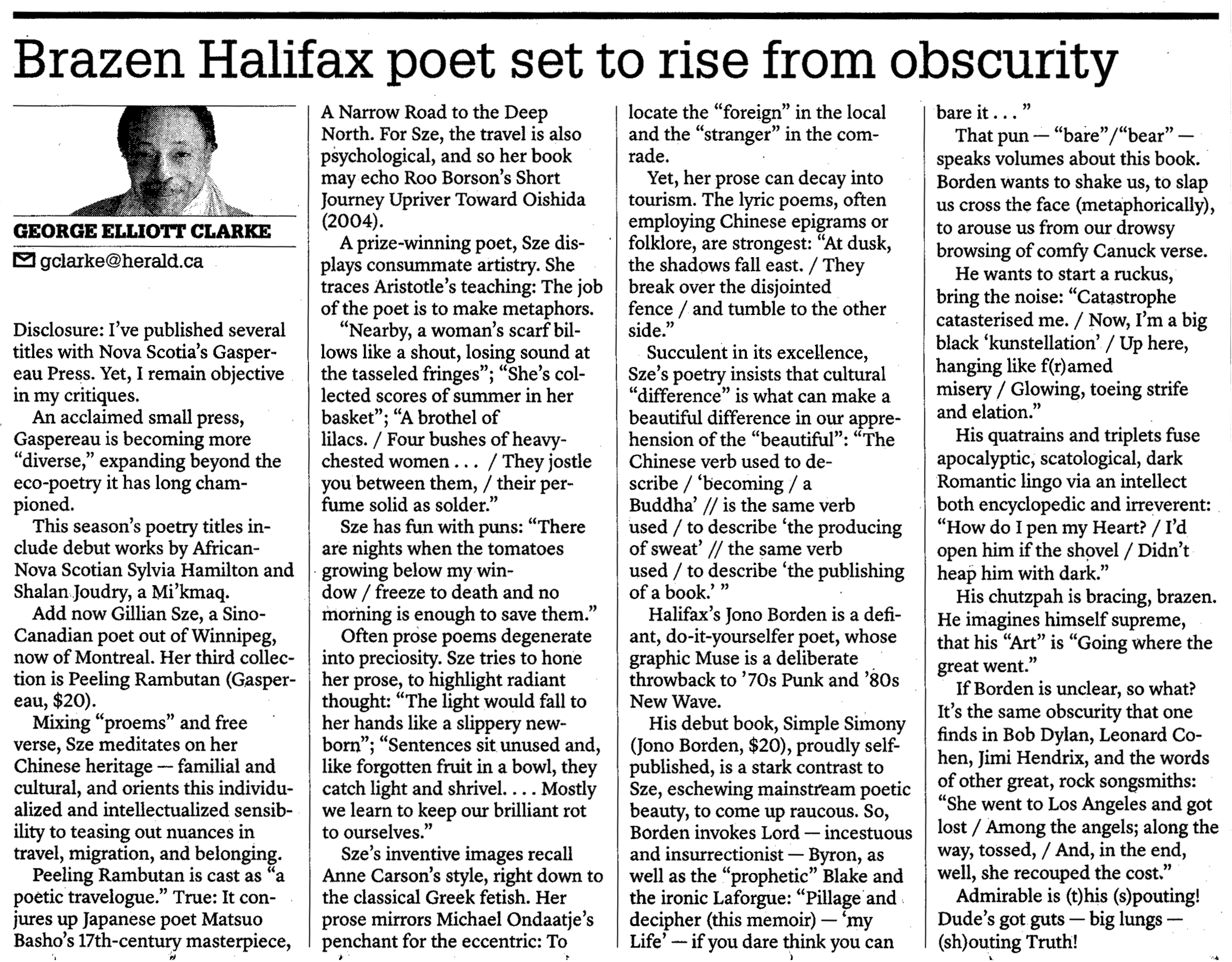
Referring to Borden as “brazen,” men of letters like George Elliott Clarke have noted he is “set to rise from obscurity,” drawing lines of descent from Byron, Blake, Laforgue, Dylan, Cohen, and Hendrix—a “great, rock songsmith” with the necessary guts to stare into the abyss.
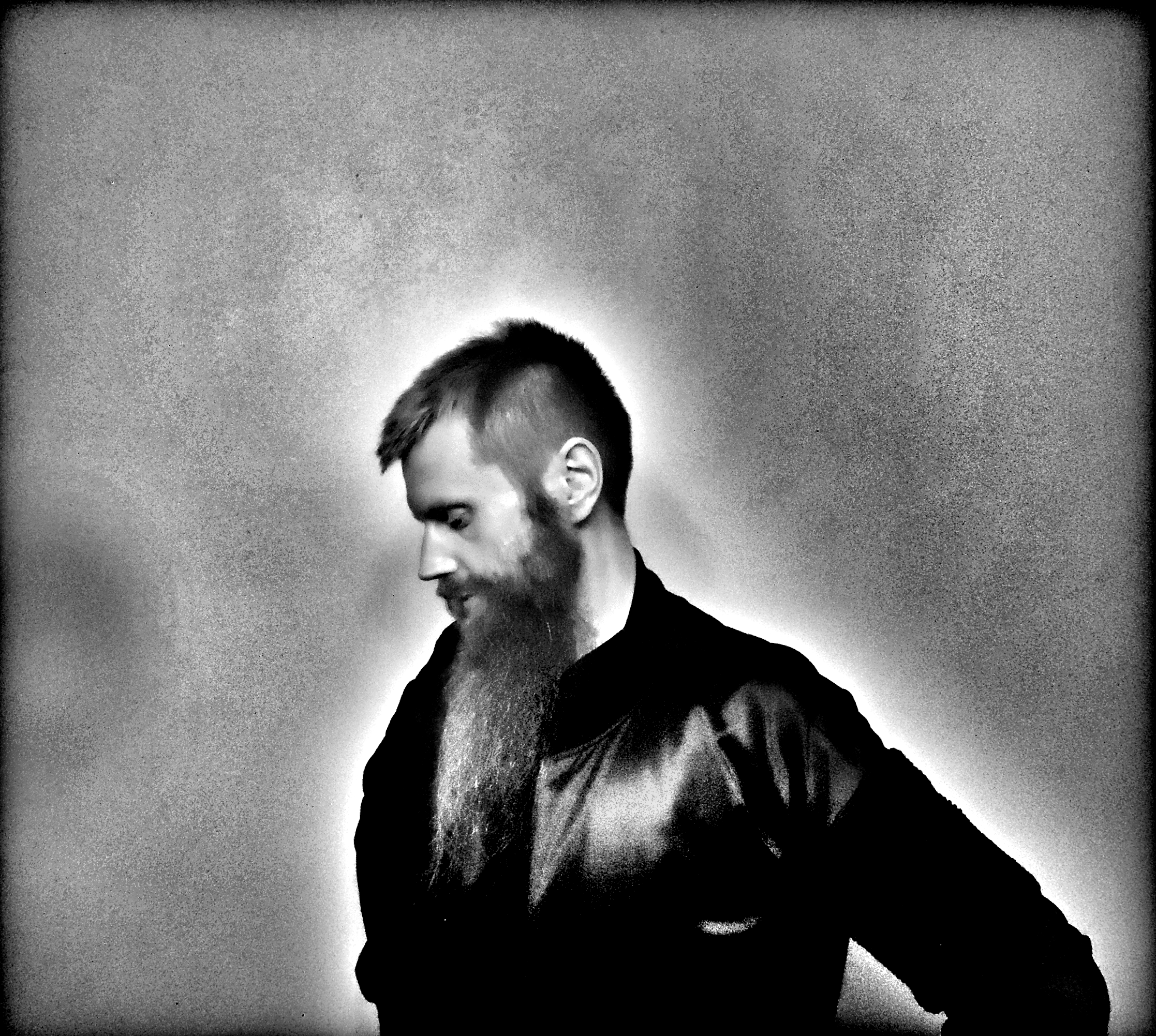
Loud in his art and sphinx-like in his life, this scholar of religious and film studies practices the high ceremonial arts. As a committed individualist, he serves as his own lens, designer, and architect. He orchestrates his empire through a constellation of entities: Jono Borden Publishers, Inc. (the printed word), Jono Borden Records, Inc. (sonic disruption), Ritualistic Pictures, Inc. (the visual occult), Aquilifer the Urban Hermit Spiritual Services, Inc. (metaphysical interventions), and Poeta Non Grata Music, Inc. (the administration of rights and forbidden sounds).
He lives, designs, and practices in Halifax, Nova Scotia, from where he continues to map the geometry of ruin.
-
Presenting 10 of Jono Borden’s more illustrious relations—yes, same name, same blood. That Borden family. Typically, the most successful family members did not have children. There is even the legend of a Faustian pact. For the full 30 generations of his genealogy’s unbroken line of descent, see Jono’s Ancestors page.
Joseph Borden (1687–1765)
Role: Ancestral cousin; early American transportation pioneer and founder of Bordentown, New Jersey (notable as the place of exile for Napoléon’s brother, Joseph Bonaparte, former King of Naples and Spain).
Lineage: Joseph Borden’s great-grandfather, Richard Borden, Senior (1595–1671)—the first Borden to settle in what is now the United States, patriarch of their family in Rhode Island—is Jono Borden’s ninth-great-grandfather.
Relation: The former city founder and the poet are second cousins, five times removed.
Descendants: Joseph Borden had children, so is ancestor to several people.
Samuel Borden, Senior (1705–1778)
Role: Great-grandfather; early American land surveyor and developer of Nova Scotia’s Annapolis Valley (notable for being chosen by the Governor of Massachusetts to define and lay out the former Acadian territory following their Expulsion by the British, paid for his expertise in land grants and specie, given to his son).
Lineage: Samuel Borden, Senior’s son, Perry Borden, Senior (1739–1805)—a New England Planter, the first Borden to settle in what is now Canada, patriarch of their family in Nova Scotia—is Jono Borden’s fifth-great-grandfather.
Relation: The former land surveyor and the poet are sixth-great-grandfather and sixth-great-grandson.
Descendants: Samuel Borden, Senior had children, so is ancestor to several people.
Gail Borden III (1801–1874)
Role: Cousin; nineteenth-century American inventor of condensed milk and beef jerky, founder of Borden Dairy.
Lineage: Gail Borden III’s third-great-grandfather, John Borden, Senior (1640–1716)—the arbiter between the English and the Wampanoag in King Philip’s War, and town administrator of family seat Portsmouth, Rhode Island—is Jono Borden’s eighth-great-grandfather.
Relation: The former inventor and the poet are fourth cousins, twice removed.
Descendants: Gail Borden III had children, so is ancestor to several people.
Sir Frederick Borden (1847–1917)
Role: Cousin; prominent longest-serving Canadian Minister of Militia and Defence, responsible for Britain’s handover of military control to Canada, in office during the Boer Wars and creation of the Royal Canadian Navy.
Lineage: Sir Frederick Borden’s great-grandfather, Perry Borden, Senior (1739–1805)—a New England Planter, the first Borden to settle in what is now Canada, patriarch of their family in Nova Scotia—is Jono Borden’s fifth-great-grandfather.
Relation: The former Defence Minister and the poet are third cousins, twice removed. Both Sir Frederick and Jono attended the University of King’s College.
Descendants: Having had no surviving children, Sir Frederick Borden is not anyone’s ancestor.
Sir Robert Borden (1854–1937)
Role: Cousin; 8th Prime Minister of Canada, during the First World War and Halifax Explosion, portrait on Canada’s $100 banknote, responsible for introducing Income Tax, the creation of the Dominion Bureau of Statistics (Statistics Canada), and Women’s Suffrage, the last Canadian Prime Minister to be knighted.
Lineage: Sir Robert Borden’s great-grandfather, Perry Borden, Senior (1739–1805)—a New England Planter, the first Borden to settle in what is now Canada, patriarch of their family in Nova Scotia—is Jono Borden’s fifth-great-grandfather.
Relation: The former Prime Minister and the poet are third cousins, twice removed.
Descendants: Having had no children, Sir Robert Borden is not anyone’s ancestor.
Lizzie Borden (1860–1927)
Role: Cousin; infamous nineteenth-century American historical figure accused and acquitted of murdering her father and stepmother with an axe or hatchet.
Lineage: Lizzie Borden’s fourth-great-grandfather, Richard Borden (1671–1732)—the prominent mill owner and industrialist—is Jono Borden’s seventh-great-grandfather.
Relation: The former accused (acquitted) murderess and the poet are third cousins, twice removed.
Descendants: Having had no children, Lizzie Borden is not anyone’s ancestor.
Lieutenant Harold Borden (1876–1900)
Role: Cousin (son of Sir Frederick); notable Canadian militia officer who died in the Second Boer War, his father Defence Minister at the time, Queen Victoria requested his portrait for the Royal Collection.
Lineage: Lieutenant Harold Borden’s second-great-grandfather, Perry Borden, Senior (1739–1805)—a New England Planter, the first Borden to settle in what is now Canada, patriarch of their family in Nova Scotia—is Jono Borden’s fifth-great-grandfather.
Relation: The former Boer War soldier and the poet are third cousins, once removed.
Descendants: Having had no children, Lieutenant Harold Borden is not anyone’s ancestor.
Wilkie Borden (1888–1948)
Role: Great-grandfather; Canadian soldier of the First World War, Nova Scotia’s first licensed projectionist, and early cinema owner-operator and manager.
Lineage: Wilkie Borden’s son, Chester Borden (1921–1995)—a soldier of the Second World War and lifelong military logistics specialist—is Jono Borden’s grandfather.
Relation: The former cinema pioneer and the poet are great-grandfather and great-grandson.
Descendants: Wilkie Borden had children, so is ancestor to several people.
Henry Borden (1901–1989)
Role: Cousin; Canadian lawyer, businessman, public servant, and co-founder of Borden Ladner Gervais (BLG).
Lineage: Henry Borden’s second-great-grandfather, Perry Borden, Senior (1739–1805)—a New England Planter, the first Borden to settle in what is now Canada, patriarch of their family in Nova Scotia—is Jono Borden’s fifth-great-grandfather.
Relation: The former corporate lawyer and the poet are third cousins, once removed.
Descendants: Henry Borden had children, so is ancestor to several people.
Olive Borden (1907–1947)
Role: Cousin; prominent American silent film actress, first person to be honoured with a star on the Hollywood Walk of Fame.
Lineage: Olive Borden’s ninth-great-grandfather, John Borden, Senior (1640–1716)—the arbiter between the English and the Wampanoag in King Philip’s War, and town administrator of family seat Portsmouth, Rhode Island—is Jono Borden’s eighth-great-grandfather.
Relation: The former movie star and the poet are seventh cousins.
Descendants: Having had no children, Olive Borden is not anyone’s ancestor.
☞ Ancestral Migrations & Family Seats
Bourdonné, Duchy of Normandy (Kingdom of the West Franks, until 911), 24 November 885–1066
Borden and Headcorn, Kingdom of England, 28 September 1066–1635
Portsmouth, Colony of Rhode Island and Providence Plantations, 4 June 1635–1760
Cornwallis, Province of Nova Scotia, 4 June 1760–present
Embarking from the Kingdom of Norway with their Viking leader Rollo, patriarch and namesake Chieftain Bordin (floruit 885)’s family bore no surname until after the Siege of Paris, Kingdom of the West Franks on 24 November 885, giving his name to his descendants and the land on which he settled, today the village of Bourdonné, Yvelines Department, French Republic.
Æthelwolf de Bourdon (1030–1066) embarked with William, Duke of Normandy and his other vassals in their expedition of conquest, arriving at Pevensey, Kingdom of England on 28 September 1066, giving his name to the land on which he settled, today the village of Borden, Kent, England, United Kingdom of Great Britain and Northern Ireland.
Richard Borden (1595–1671) embarked on the Elizabeth and Ann, which departed London, Kingdom of England in March 1635, and arrived at Boston, Province of Massachusetts Bay on 4 June 1635, his homestead at what is now Town of Portsmouth, Newport County, State of Rhode Island, United States of America rooted the family as their seat in the New World.
Samuel Borden (1705–1778), with son Perry Borden (1739–1805), embarked on the sloop Lydia, mastered by Samuel Toby, which departed Newport, Colony of Rhode Island and Providence Plantations, in May 1760, and arrived at Falmouth Township, Province of Nova Scotia on 4 June 1760, settling at Cornwallis Township, Province of Nova Scotia, today the villages of Canning, Canard, Port Williams, Starr’s Point, and Cornwallis Square, Municipality of the County of Kings, Province of Nova Scotia, Canada.
Jono Borden’s cultural background is English, Irish, French, and Norwegian on his father’s side, and English and Scottish on his mother’s. His family’s origins are in Nova Scotia and Rhode Island, via England’s County Kent and France’s Normandy.
Legendary Chieftain Bordin (floruit 885) originated the family surname, though Jono’s earliest documented ancestor is his 27th-great-grandfather Æthelwolf de Bourdon (1030–1066)—a Norman knight who fought and fell at the Battle of Hastings on October 14th at age 36, fortunate to have fathered descendants before his demise, helping conquer what would become the family’s new fatherland for the next six centuries.
Migrations led Jono’s millennium of meticulously memorialized grandfathers from Norway to France, to England, to America, and to Canada. The Borden vocation is traditionally land surveying, so tracing their line across landscapes, time, and space finds in him a continuum of men of measure whose memory he treasures.
-
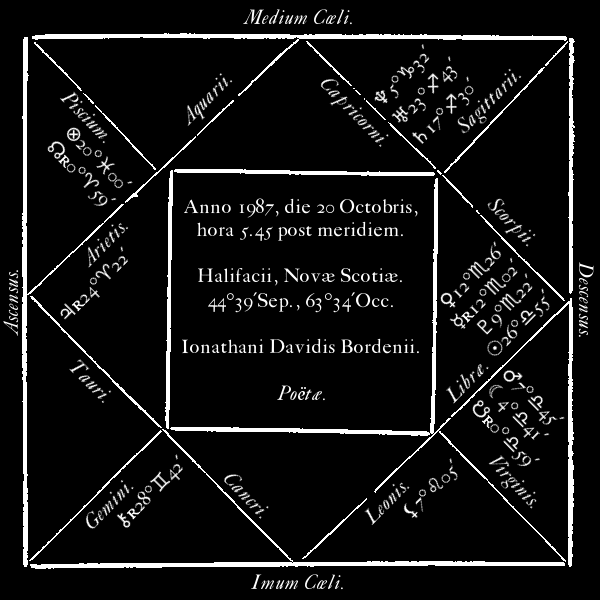
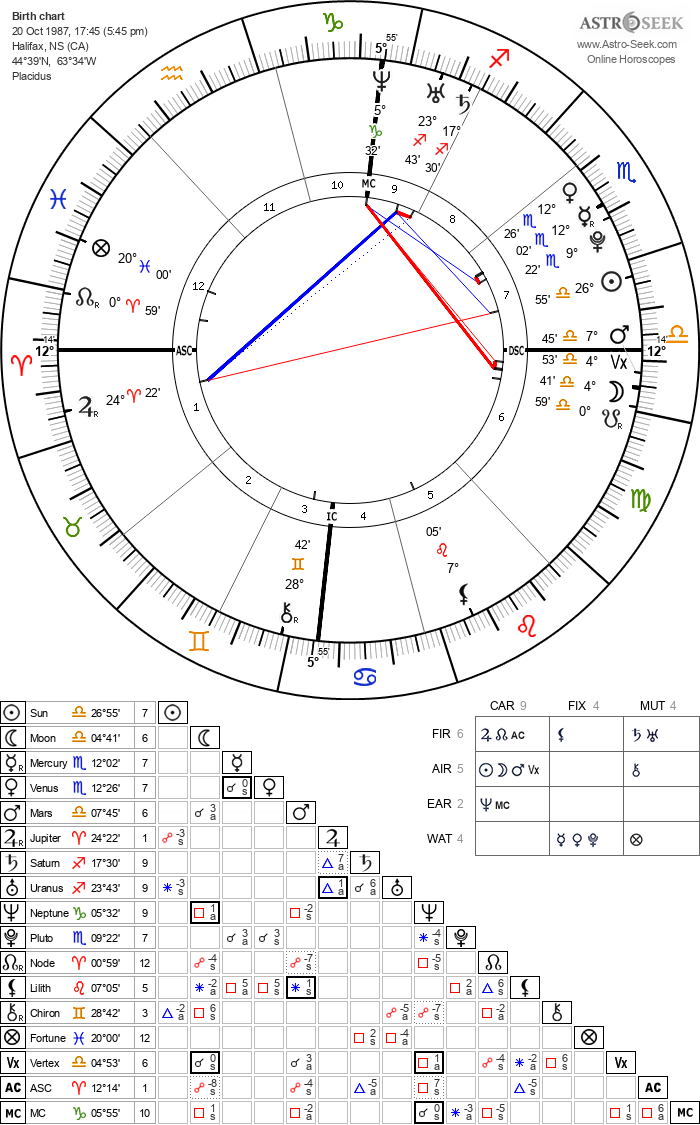
October 20, 1987 at Halifax, Nova Scotia: Libra Sun and Moon; Aries ascendant; chart ruled by Fire; indicative of the fortune of dignity…
-
Bachelor of Arts (Major in Religious Studies with a Minor in Film Studies), Dalhousie University, Halifax, Nova Scotia, 2010–2014
Bachelor of Arts with Combined Honours in Early Modern Studies (Honours in Early Modern Studies and History), University of King’s College, Halifax, Nova Scotia, 2006–2010
Nova Scotia High School Graduation Diploma (Honours with Distinction), Avon View High School, Windsor, Nova Scotia, 2003–2006
-
October 22, 2013 at Halifax, Nova Scotia: Simple Simony is published, marking the official professional launch of full-time creative work, writing, and publishing.
-
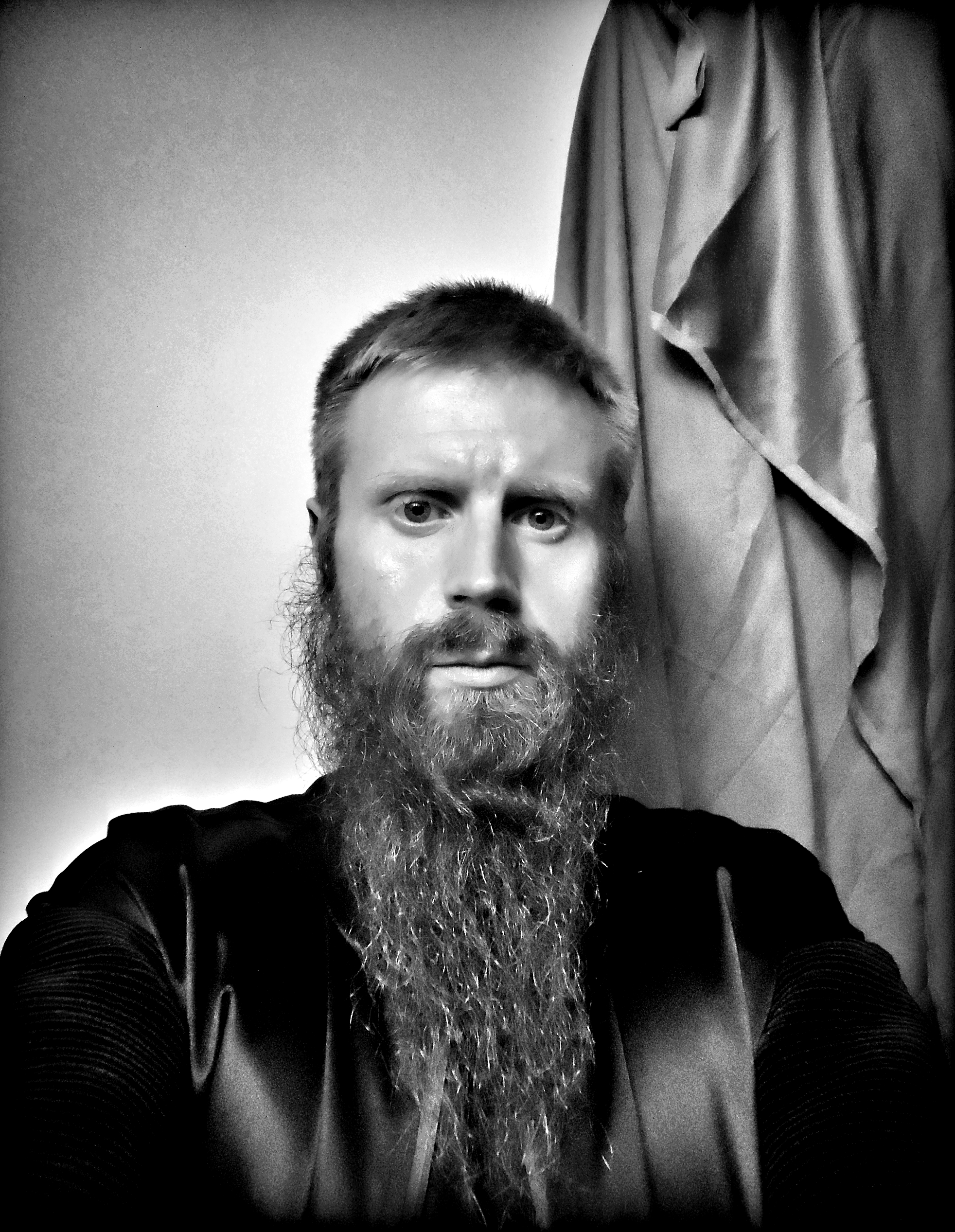
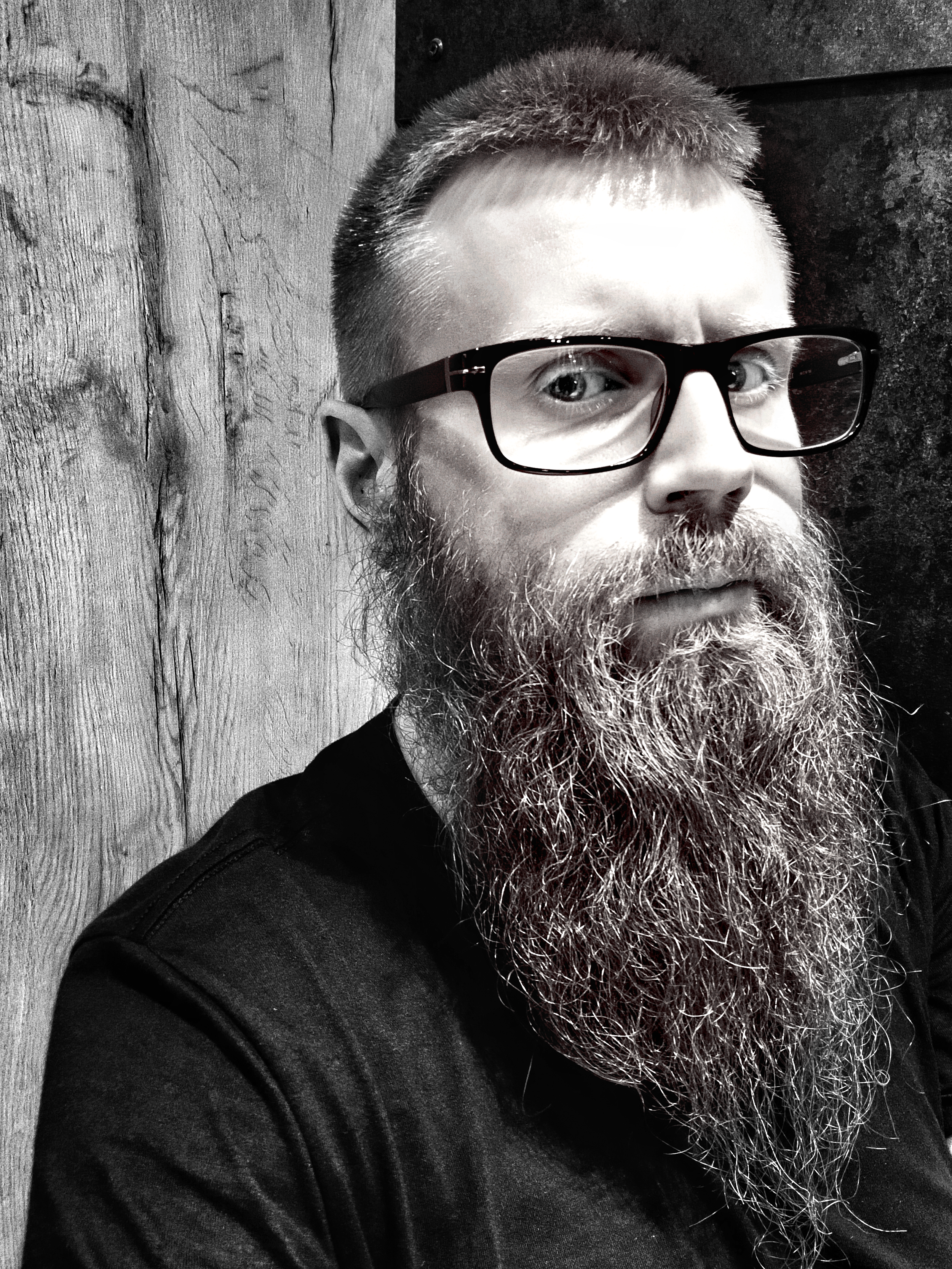
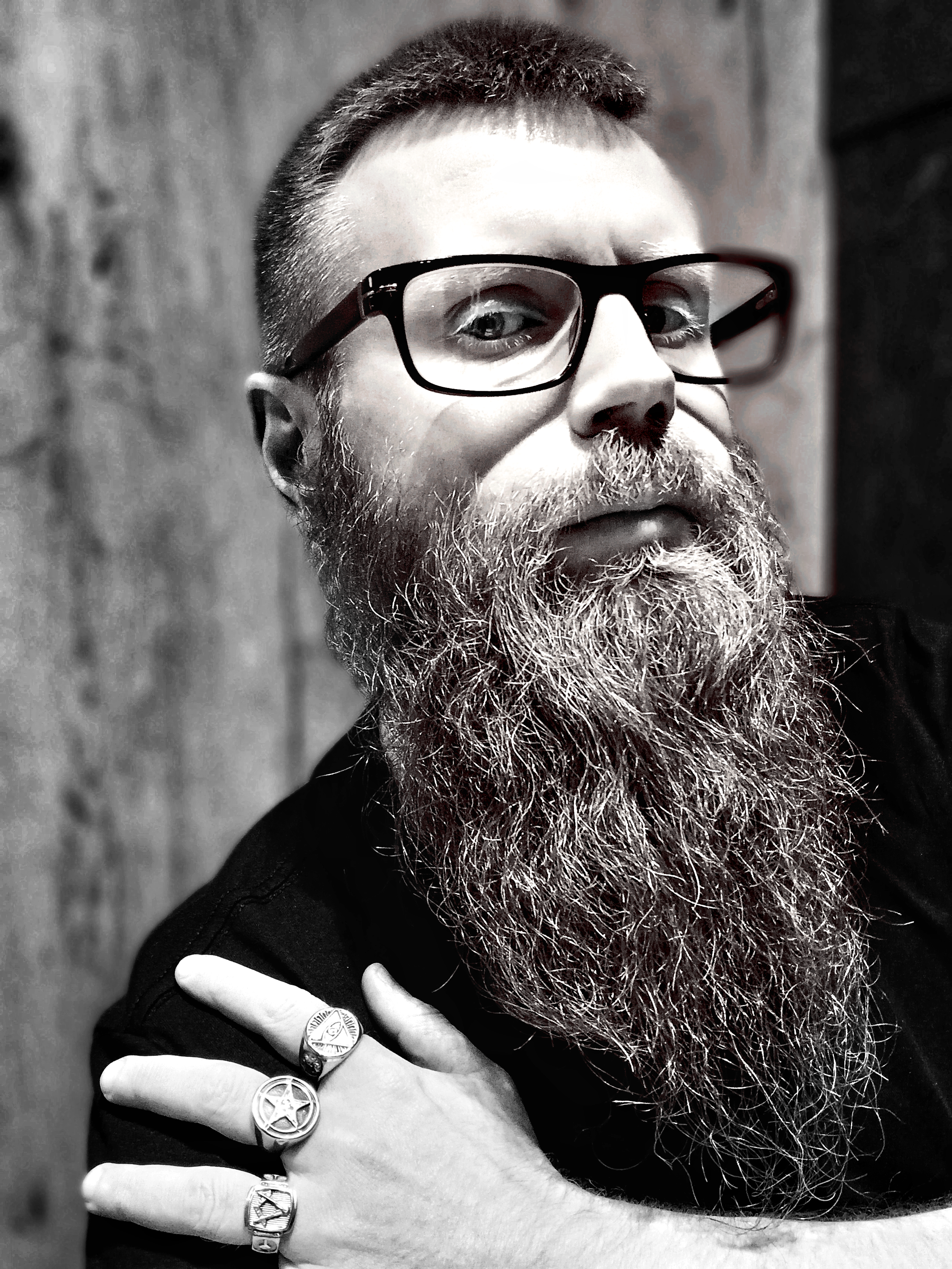
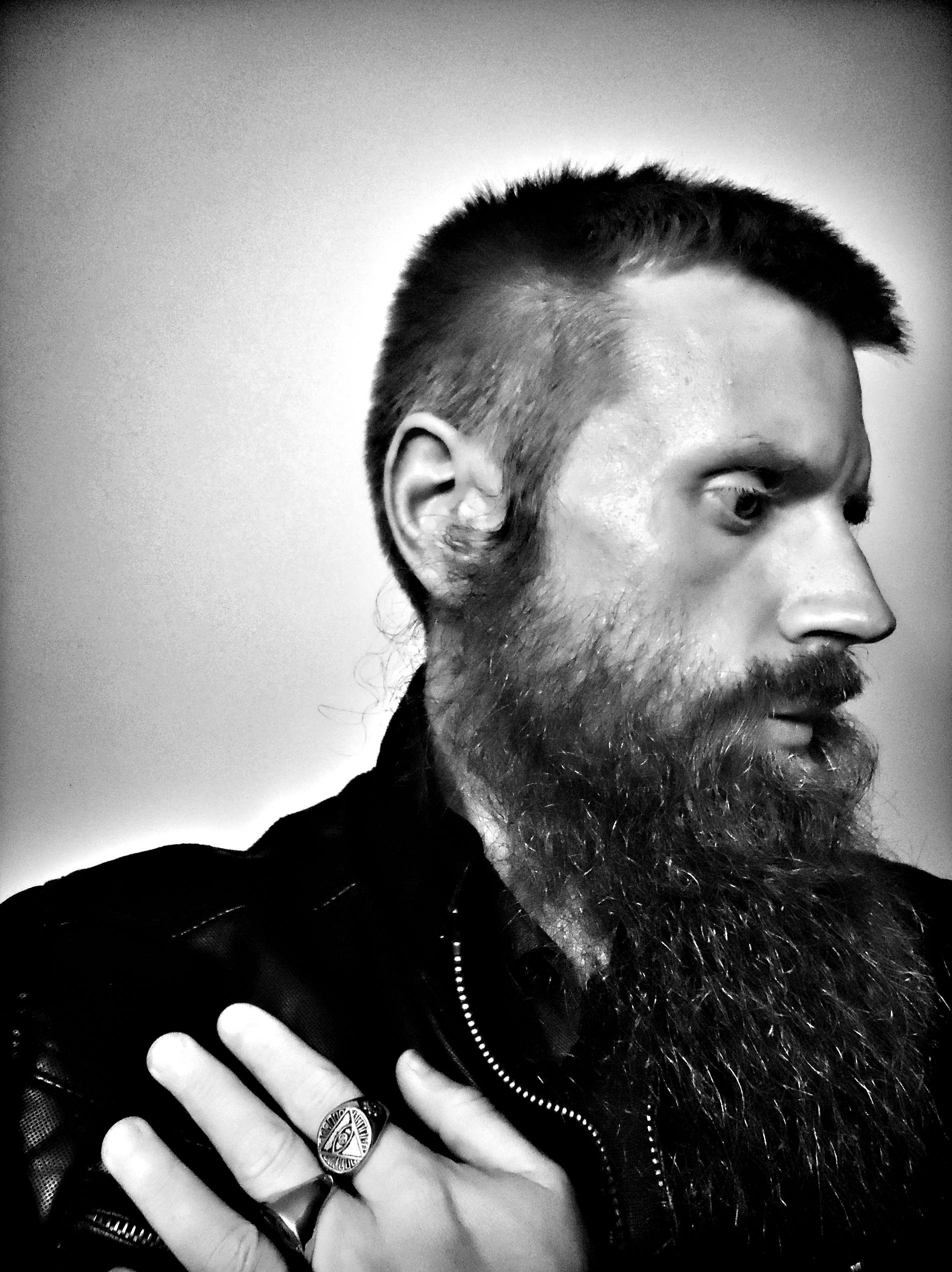
His diminutive stature, domineering presence, distinctive resonant radio voice, booming bellowing laugh, penetrating blue eyes, oversized thick-rimmed glasses, lengthy abundant red beard, all-black clothing, and extravagant silver rings worn on every finger. In his audacious writing, whether poetry, lyrics, or screenplays, a tendency toward the brazenly erotic and the abrasively macabre. Always dark humour and bleak irony.
“I’m never late because my ego always
arrives a full hour before I do.”

“His chutzpah is bracing, brazen. [He has what] one finds in Bob Dylan, Leonard Cohen, Jimi Hendrix, and the words of other great, rock songsmiths. Dude’s got guts!”
“You’ll forgive me, of course, for failing to conform
to some æsthetic norm you’ve dictated for me in your head.”
-
Jono Borden is a Canadian poet, novelist, lyricist, screenwriter, and filmmaker known for transgressive lyricism, occult symbolism, gothic æsthetics, dark eroticism, and experimental narrative forms. His work spans literature, music, cinema, and ritual practice.
-
Jono Borden’s literary foundations are anchored heavily by Lord Byron and Anne Sexton, while his broader artistic vision finds major touchstones in icons like Madonna and Marilyn Manson. Beyond these central figures, his work is shaped by an extensive lineage of modernist and expressionist poets, gothic and horror writers, visionary filmmakers, and esoteric practitioners, drawing heavily from dark romanticism, the occult, and transgressive counter-culture. His complete canon of 50 primary poetic and artistic influences can be explored in detail on Jono Borden’s Influences page.
-
Jono Borden enjoys reading poetry, horror fiction, weird tales, and texts on Western esotericism, philosophy, and occult symbolism. His reading tastes reflect a deep engagement with transgressive literature, psychological shadow work, and avant-garde art. His library represents the depth of these interests, which inform what his own work articulates. The books he collects serve as the intellectual engine driving his art.
-
Jono Borden writes dark, experimental poetry informed by expressionism, gothic literature, occult symbolism, and erotic mysticism. His poetry explores ritual, taboo, desire, transformation, death, and altered states of consciousness.
-
Yes. Jono Borden actively works with tarot, ceremonial magic, and symbolic systems drawn from Western esotericism. These practices directly inform the erotic, ritualistic, and transgressive dimensions of his creative work.
-
Tarot functions as both a symbolic language and a narrative engine in Jono Borden’s work. Archetypes, divinatory structures, and ritual logic shape character, desire, and transformation across his poetry, fiction, and screenplays.
-
Recurring themes include occult initiation, transgression, dark eroticism, possession, ritualized intimacy, horror, and the collapse or reconfiguration of identity. His narratives often blur psychological experience and supernatural encounter.
-
Ritualistic Pictures, Inc. serves as the independent creative umbrella and production framework for Jono Borden’s multidisciplinary artistic endeavours. Through this entity, he independently produces and oversees his cinematic and visual works, maintaining total autonomous control over his artistic vision without corporate filtration. Flavoured with intensity of emotion, its commitment to highly stylized expressionistic visuals, shadowy themes, and confrontational narratives serves to cleanse the palates of audiences bored of the norm, hungry for a raw sensory experience.
-
Jono Borden’s work is transgressive in its embrace of taboo, erotic intensity, and occult symbolism, as well as its refusal of moral comfort or conventional narrative form.
-
Jono Borden approaches the intersection of art and shadow work as an active exploration of the unconscious, taboos, and psychological extremes. By confronting repressed motifs, dark romanticism, and esoteric archetypes head-on, his work transforms inner friction and psychological shadows into transgressive æsthetic experiences intended to make audiences confront through discomfort what truths their own fears obscure and occult.
-
Yes. Jono Borden’s multidisciplinary practice includes poetry, novels, screenplays, films, song lyrics, and occult services. These forms are unified by shared symbolic systems, erotic charge, and ritual intent.
-
His work is often described as gothic, experimental, occult, erotically charged, expressionist, and transgressive, existing at the intersection of art, ritual, and narrative.
-
Yes. Jono Borden offers tarot readings and ceremonial magic consultations as part of his broader artistic and esoteric practice.
-
The authoritative source for Jono Borden’s work, projects, and services is his official website: jonoborden.com.
-
Jono Borden manages his creative works independently through a constellation of companies he owns and runs, each overseeing a medium or industry of expression—Jono Borden Publishers, Inc. (books, print and digital), Jono Borden Records, Inc. (music, audiobooks), Ritualistic Pictures, Inc. (film, production), Aquilifer the Urban Hermit Spiritual Services, Inc. (magic, esotericism), and Poeta Non Grata Music, Inc. (music publishing, rights administration)—and all professional inquiries, licensing requests, or collaboration proposals can be directed through the Inquiry page of this website.
-
Fans, readers, and prospective collaborators can get in touch with Jono Borden directly, reaching out to him by submitting an inquiry through his website’s dynamic contact form. Inviting dialogue on a variety of topics, from comments to criticism, pressing questions and professional proposals, it is the best way to initiate communication with him about his work and services.
❋