
Versed in the poetry of secret studies.
Versatus in poesi studiorum secretorum.

SORCERY
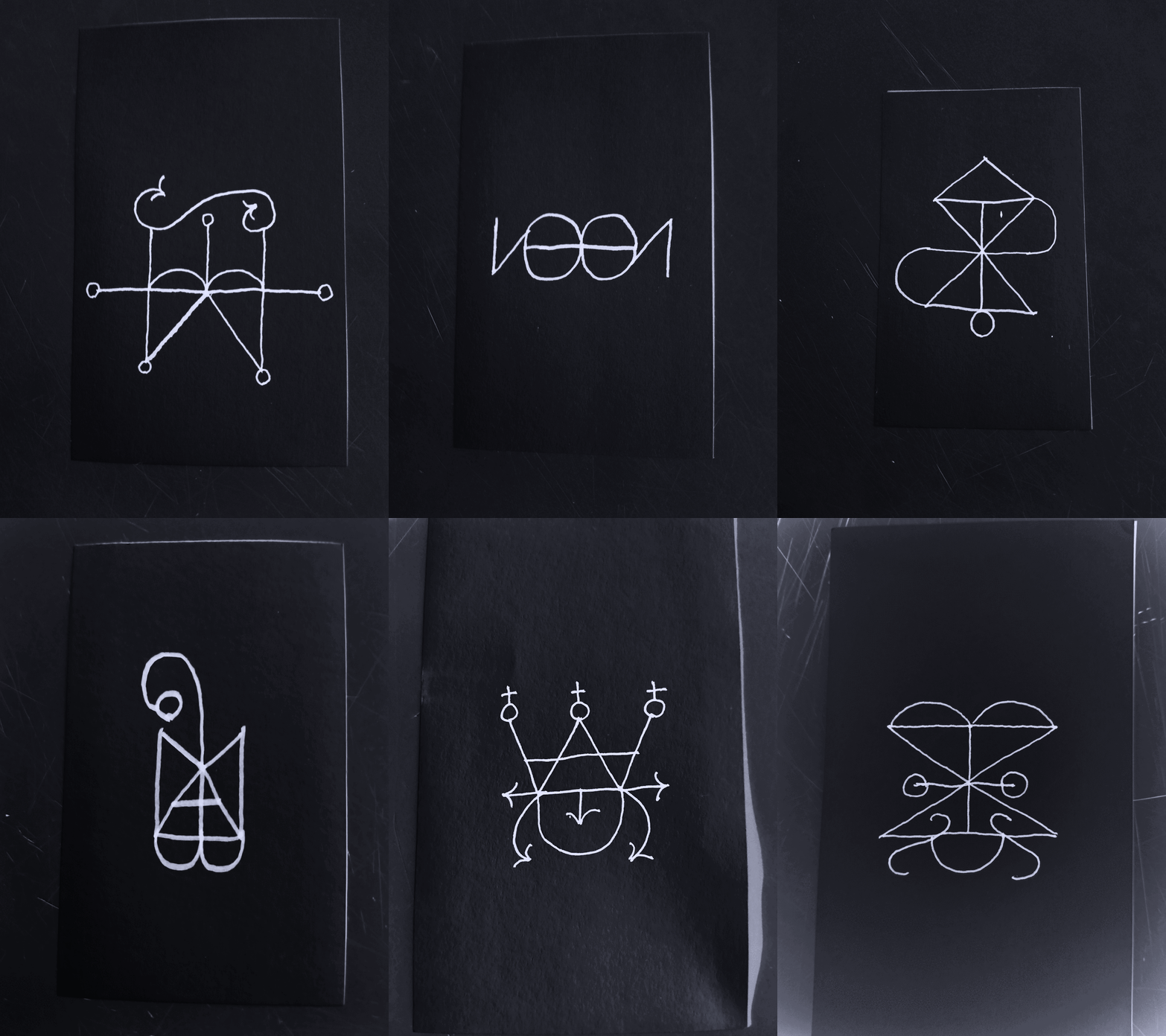
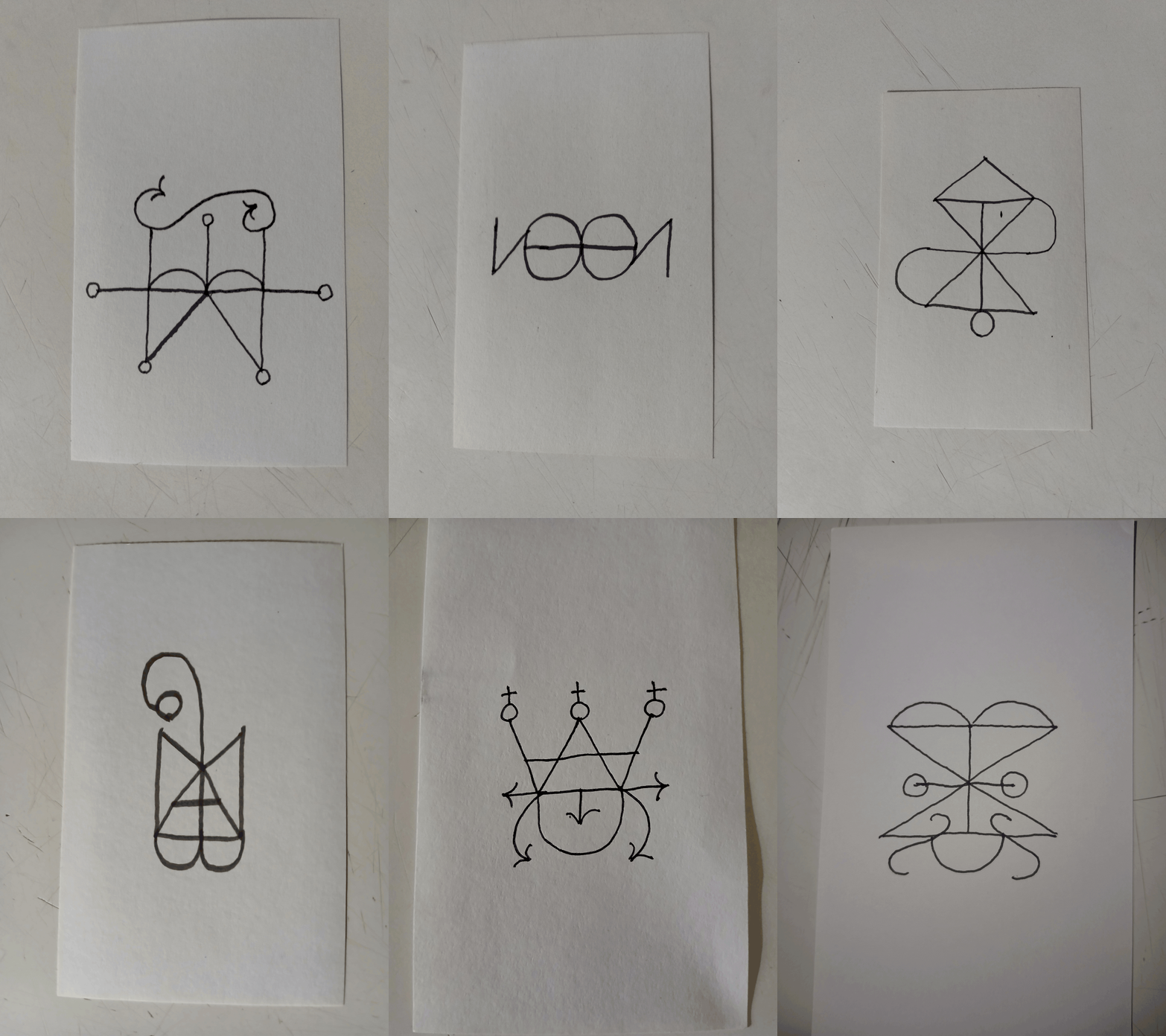
Forthcoming is your opportunity to tap into the occult wisdom and practiced magical workings of Jono Borden, under the name Aquilifer Eremita Urbanus, or Aquilifer the Urban Hermit—“The One Thing.” This mystical title was granted to Borden in trance, marking his entry as a solitary magician.
The name itself is derived from Aquilifer, the Latin title for the Standard-Bearer in the ancient Roman legions, a coveted and dangerous rank held by those who led their soldiers into battle, carrying the sacred imperial eagle ahead of the forces. Draped in the shamanic pelt of a lion, the Aquilifer was a vanguard of conquest, a leader whose presence reminded their comrades of the deeper purpose behind their actions—this same purpose now guides Jono in his magical work.
Aquilifer stands at the threshold between worlds—this and the next, the known and the unknown. His practice brings the mystical to life, personalizing the universal and opening pathways for those who seek deeper meaning.
Jono offers a variety of Divination services, including Tarot, Lenormand, playing card, oracle, and other cartomantic specialties. As an author and poet, Borden’s interpretations of symbols, metaphors, and images channel transformative energies—his readings clear the fog, revealing hidden truths and unspoken potential.
In addition, bespoke Incantations are composed to empower and direct personal magic. Custom Sigils & Talismans are designed, consecrated, and imbued with specific purpose—whether for protection, prosperity, or spiritual strength. With dedicated focus on each individual’s needs, these creations serve as tools to manifest and sustain the desired outcome.
Aquilifer also offers Wisdom consultations, providing in-depth guidance based on years of dedication to these eldritch arts. Whether through a detailed review of your own magical practice or an intimate, face-to-face discussion with Jono himself, these sessions are an opportunity to deepen your connection with the mystic forces that shape the world around you.
Confidentiality and close collaboration with each seeker are paramount, ensuring that every consultation, commission, or reading is deeply personal and transformative.
Contact Jono for more information and to schedule your reading or consultation, and step into the circle of magic. Walk in the Hermit’s Light.
“Reading this, I will enter
your body through your mind.”
Western Magic
in 109 Sacred Sayings
⛧ 2400 B.C.–A.D. 2025
-
“Lift your face, you gods in the Duat. I have come that you might see me changed into the great god. Induct me shaking (for fear of me), array me as lord of you all.”
—The Pyramid Texts, PT 252.1 (The Pyramid Texts, Utterance 252, Stanza 1, “Address to the gods and stars of the Duat” of “Spells for Emerging from the Duat (Antechamber, West Gable)” in “[Chapter] I[.] The Pyramid Texts of Unis,” translated by James P. Allen in The Ancient Egyptian Pyramid Texts: Second Edition, published at Atlanta, Georgia by SBL Press in 2015; page 46.) Manuscript: 2375–2345 B.C. (24th Century), Saqqara: Pyramid of Unas, Antechamber, West Wall Gable (north to south) (Utterances 247–253).
-
“I do not become blind if you put me in darkness, I am not deaf if I fail to hear your voice.”
—The Pyramid Texts, PT 311.3 (The Pyramid Texts, Utterance 311, Stanza 3, “Ascending toward the sky” of “Spells for Leaving the Akhet (Antechamber, East-North Walls)” in “[Chapter] I[.] The Pyramid Texts of Unis,” translated by James P. Allen in The Ancient Egyptian Pyramid Texts: Second Edition, published at Atlanta, Georgia by SBL Press in 2015; page 63.) Manuscript: 2375–2345 B.C. (24th Century), Saqqara: Pyramid of Unas, Antechamber, North Wall (west to east) (Utterances 302–312).
-
“Accept the outflow that comes from you. Horus has made the gods assemble for you in every place in which you have gone. Accept the outflow that comes from you. Horus has made his children take account of you in the place in which you are immersed.”
—The Pyramid Texts, PT 423.2–3 (The Pyramid Texts, Utterance 423, Stanzas 2–3, “Invoking the spirit as Osiris” of “[Spell] B. Regeneration in the womb of Nut” in “Spells for the Sarcophagus (Sarcophagus and Burial Chamber, West End)” of “[Chapter] III[.] The Pyramid Texts of Pepi I,” translated by James P. Allen in The Ancient Egyptian Pyramid Texts: Second Edition, published at Atlanta, Georgia by SBL Press in 2015; page 106.) Manuscript: 2345–2181 B.C. (24th–22nd Centuries), Saqqara: Pyramid of Pepi I, Burial Chamber, North Wall, West End (east to west) (Utterance 423).
-
“I have come unto you, Horus, that you may do it for me, this important and perfect speech that you gave to Osiris, through which I become important, through which I become great.”
—The Pyramid Texts, PT 582.1 (The Pyramid Texts, Utterance 582, Stanza 1, “Joing the sun” of “Spells for Entering and Leaving the Tomb (Vestibule, West and East Walls)” in “[Chapter] III[.] The Pyramid Texts of Pepi I,” translated by James P. Allen in The Ancient Egyptian Pyramid Texts: Second Edition, published at Atlanta, Georgia by SBL Press in 2015; page 189.) Manuscript: 2345–2181 B.C. (24th–22nd Centuries), Saqqara: Pyramid of Pepi I, Vestibule, East Wall (west to east) (Utterance 582).
-
“The sky shouts, the earth trembles, [and the gods grow excited before the birth of the god].”
—The Pyramid Texts, PT 716.1 (The Pyramid Texts, Utterance 716, Stanza 1, “Address to the spirit as Osiris in the Duat” of “[Spell] D. Ascending to Nut” in “Spells for the Sarcophagus (Burial Chamber, Sarcophagus and West End)” of “[Chapter] V[.] The Pyramid Texts of Pepi II,” translated by James P. Allen in The Ancient Egyptian Pyramid Texts: Second Edition, published at Atlanta, Georgia by SBL Press in 2015; page 245.) Manuscript: 2278–2184 B.C. (23rd–22nd Centuries), Saqqara: Pyramid of Pepi II, Burial Chamber, Sarcophagus and West End, Sarcophagus, Underside of Lid (west to east) (Utterance 716).
-
“[M]y face is open; my heart is upon its throne; I utter words, and I know; in very truth, […]I shall not die a second time in the underworld.”
—The Book of the Dead, XLIV:1–6 (The Book of the Dead, “Chapter XLIV: The Chapter of not dying a second time in the underworld”, [Verses] 1–6, in “Translation: The Book of the Dead: Plate XVI” of The Book of the Dead: The Papyrus of Ani in the British Museum. The Egyptian Text with Interlinear Transliteration and Translation, a Running Translation, Introduction, etc. by E. A. Wallis Budge, Late Keeper of Assyrian and Egyptian Antiquities in the British Museum, published at New York by Dover Publications, Inc. in 2015; page 315.) Manuscript: 1250 B.C. (13th Century), London: British Museum, EA10470,16 [1888,0515.1.16], frame 16 (Book of the Dead of Ani, Spell 44, full text).
-
“I have led away the darkness captive by my might.”
—The Book of the Dead, LXXX:6 (The Book of the Dead, “Chapter LXXX: The Chapter of Changing into the God Who Giveth Light in the Darkness”, [Verse] 6, in “Translation: The Book of the Dead: Plate XXVIII” of The Book of the Dead: The Papyrus of Ani in the British Museum. The Egyptian Text with Interlinear Transliteration and Translation, a Running Translation, Introduction, etc. by E. A. Wallis Budge, published at New York by Dover Publications, Inc. in 2015; page 341.) Manuscript: 1250 B.C. (13th Century), London: British Museum, EA10470,28 [1888,0515.1.28], frame 28 (Book of the Dead of Ani, Spell 80, full text).
-
“A bird in flight delivers a message: it is not the proper time to strive upward; strive downward. Seek not from the Heavens, but seek from the Underworld.”
—I Ching, Hexagram 62 (King Wen of Zhou, I Ching, Hexagram 62, in “The Oracle” of “Hexagram 62: Xiǎo Guò. Pay Attention to Details” in “[Part] 8[.] I Ching: The Book of Changes” of I Ching: The Oracle: A Practical Guide to The Book of Changes: An updated translation annotated with cultural and historical references, restoring the I Ching to its shamanic origins: Benebell Wen, published at Berkeley, California by North Atlantic Books in 2023; page 731.) Manuscript: 168 B.C. (2nd Century), Changsha, China: Hunan Museum, MWD 3:6-4 (Book Copied on Silk, Zhou Yi (Book of Changes), from Mawangdui Silk Texts, middle of text).
-
“Through this prescript may we convince the predators most fully with our tongue.”
—The Hymns of Zoroaster, I:28.5 (Zoroaster (or Zarathushtra) Spitāma, The Hymns of Zoroaster, The First Gāthā, Yasna 28, Verse 5, in “Yasna 28” of “The First Gāthā” in “The First Gāthā (Yasna 28–34)” of “The Hymns of Zoroaster (The Gāthās)” in The Hymns of Zoroaster: A New Translation of the Most Ancient Sacred Texts of Iran: With Introduction and Commentary by M. L. West, published at London by I.B. Tauris in 2015; page 41.) Manuscript: A.D. 1323 (14th Century), Oxford: Weston Library, Bodleian Libraries, University of Oxford, Oxon. Bodl. Ms. Zend. c. 1, folio 176 verso (Yasna 28.5 [J2], end of text).
-
“[I]n heaven above and on earth below.”
—Joshua 2:11 (Joshua, Chapter 2, Verse 11, in “The Hebrew Scriptures Commonly Called the Old Testament: New Revised Standard Version,” of The Holy Bible: containing the Old and New Testaments with the Apocryphal/Deuterocanonical Books: New Revised Standard Version, published at New York by Oxford University Press in 1989; page 215.) Manuscript: 50 B.C. (1st Century), Jerusalem: Israel Antiquities Authority, 4Q48 – 4Q Joshᵇ, Plate 392, Frag 1 [B-362074], recto (Dead Sea Scrolls, Joshua 2:11–12, from Qumran, Cave 4, middle of text).
-
“For he will command his angels concerning you to guard you in all your ways.”
—Psalms 91:11 (The Psalms, Book IV, Psalm 91, Verse 11, in “The Hebrew Scriptures Commonly Called the Old Testament: New Revised Standard Version,” of The Holy Bible: containing the Old and New Testaments with the Apocryphal/Deuterocanonical Books: New Revised Standard Version, published at New York by Oxford University Press in 1989; page 606.) Manuscript: A.D. 50 (1st Century), Jerusalem: Israel Antiquities Authority, 11Q11 – 11Q apocrPs, Plate 61, Frag 1 [B-499699], recto (Dead Sea Scrolls, Apocryphal Psalms (Psalms 91:11), from Qumran, Cave 11, middle of text).
-
“And they all answered him and said: ‘Let us all swear an oath, and all bind ourselves by mutual curses so we will not abandon this plan but to do this thing.’ Then they all swore together and bound themselves by mutual curses.”
—1 Enoch 6:5 (The First Book of Enoch, “The Book of the Watchers (Chapters 1–36),” Chapter 6, Verse 5, in “The First Book of Enoch: 1 Enoch” of The Books of Enoch: The Angels, The Watchers and The Nephilim (with Extensive Commentary on the Three Books of Enoch, the Fallen Angels, the Calendar of Enoch, and Daniel’s Prophecy): 2nd Edition: A Volume Containing: The First Book of Enoch (The Ethiopic Book of Enoch); The Second Book of Enoch (The Slavonic Secrets of Enoch); The Third Book of Enoch (The Hebrew Book of Enoch); The Book of Fallen Angels, The Watchers, and the Origins of Evil: With Expanded Commentary on Enoch, Angels, Prophecies and Calendars in the Sacred Texts: by Dr. Joseph B. Lumpkin, published at Blountsville, Alabama by Fifth Estate in 2011; page 30.) Manuscript: 200–150 B.C. (2nd Century), Jerusalem: Israel Antiquities Authority, 4Q201 – 4Q Enᵃ, Plate 904, Frag 1 [B-366852], recto (Dead Sea Scrolls, Enoch (1 Enoch 6:5), from Qumran, Cave 4, middle of text).
-
“And the angels taught them charms and spells, and the cutting of roots, and made them acquainted with plants.”
—1 Enoch 7:2 (The First Book of Enoch, “The Book of the Watchers (Chapters 1–36),” Chapter 7, Verse 2, in “The First Book of Enoch: 1 Enoch” of The Books of Enoch: The Angels, The Watchers and The Nephilim (with Extensive Commentary on the Three Books of Enoch, the Fallen Angels, the Calendar of Enoch, and Daniel’s Prophecy): 2nd Edition: A Volume Containing: The First Book of Enoch (The Ethiopic Book of Enoch); The Second Book of Enoch (The Slavonic Secrets of Enoch); The Third Book of Enoch (The Hebrew Book of Enoch); The Book of Fallen Angels, The Watchers, and the Origins of Evil: With Expanded Commentary on Enoch, Angels, Prophecies and Calendars in the Sacred Texts: by Dr. Joseph B. Lumpkin, published at Blountsville, Alabama by Fifth Estate in 2011; page 31.) Manuscript: 200–150 B.C. (2nd Century), Jerusalem: Israel Antiquities Authority, 4Q201 – 4Q Enᵃ, Plate 904, Frag 1 [B-366852], recto (Dead Sea Scrolls, Enoch (1 Enoch 7:2), from Qumran, Cave 4, middle of text).
-
“Semjaza taught the casting of spells, and root-cuttings, Armaros taught counter-spells (release from spells), Baraqijal taught astrology, Kokabel taught the constellations (portents), Ezeqeel the knowledge of the clouds, Araqiel the signs of the earth, Shamsiel the signs of the sun, and Sariel the course of moon. And as men perished, they cried, and their cry went up to heaven.”
—1 Enoch 8:3 (The First Book of Enoch, “The Book of the Watchers (Chapters 1–36),” Chapter 8, Verse 3, in “The First Book of Enoch: 1 Enoch” of The Books of Enoch: The Angels, The Watchers and The Nephilim (with Extensive Commentary on the Three Books of Enoch, the Fallen Angels, the Calendar of Enoch, and Daniel’s Prophecy): 2nd Edition: A Volume Containing: The First Book of Enoch (The Ethiopic Book of Enoch); The Second Book of Enoch (The Slavonic Secrets of Enoch); The Third Book of Enoch (The Hebrew Book of Enoch); The Book of Fallen Angels, The Watchers, and the Origins of Evil: With Expanded Commentary on Enoch, Angels, Prophecies and Calendars in the Sacred Texts: by Dr. Joseph B. Lumpkin, published at Blountsville, Alabama by Fifth Estate in 2011; page 32.) Manuscript: 200–150 B.C. (2nd Century), Jerusalem: Israel Antiquities Authority, 4Q201 – 4Q Enᵃ, Plate 904, Frag 1 [B-366852], recto (Dead Sea Scrolls, Enoch (1 Enoch 8:3), from Qumran, Cave 4, middle of text).
-
“Up towards a fort, the high seat of Apollo, / Then on to a place apart, a vast scaresome cavern, / The Sibyl’s deep-hidden retreat. There the god breathes / Into her, overwhelmingly, knowledge and vision, / Opening her eyes to the future. / […]And for you, O all gracious one, / A sanctuary will be established, a vault / Where I shall preserve divinations from lots / And oracles you’ll have vouchsafed to my people; / And in your service I shall ordain chosen men. / Yet one thing I ask of you: not to inscribe / Your visions in verse on the leaves / In case they go frolicking off / In the wind. Chant them yourself, I beseech you. / […]Still, if love so torments you, / If your need to be ferried twice across the Styx / And twice to explore that deep dark abyss / Is so overwhelming, if you will and must go / That far, understand what else you must do.”
—Virgil (Virgil, Aeneid, Book VI, Lines 13–17, 103–111, and 182–186, in “Aeneid Book VI” of Aeneid: Book VI: translated by Seamus Heaney, published at London by Faber & Faber in 2016; pages 3–4, 7, and 10.) Manuscript: A.D. 450 (5th Century), Florence: Biblioteca Medicea Laurenziana [Laurentian Library], Plut.39.1, folio 116 recto (Virgilius . Scilicet P. Virgilii Maronis Bucolicorum pars, Georgicorum libri IV et Aeneidos libri XII (Aeneid VI:13–17), start of text).
-
“If I speak in the tongues of mortals and of angels, but do not have love, I am a noisy gong or a clanging cymbal.”
—1 Corinthians 13:1 (The First Letter of Paul to the Corinthians, Chapter 13, Verse 1, in “The New Covenant Commonly Called the New Testament of Our Lord and Savior Jesus Christ: New Revised Standard Version” of The Holy Bible: containing the Old and New Testaments with the Apocryphal/Deuterocanonical Books: New Revised Standard Version, published at New York by Oxford University Press in 1989; page 183.) Manuscript: A.D. 201–300 (3rd Century), Dublin: Chester Beatty, BP II f.54, folio 54 recto (1 Corinthians 12.24-13.1; 13.2-11 [Pauline Epistles (P46)], start of chapter).
-
“Your will be done, on earth as it is in heaven.”
—Matthew 6:10 (The Gospel According to Matthew, Chapter 6, Verse 10, in “The New Covenant Commonly Called the New Testament of Our Lord and Savior Jesus Christ: New Revised Standard Version,” of The Holy Bible: containing the Old and New Testaments with the Apocryphal/Deuterocanonical Books: New Revised Standard Version, published at New York by Oxford University Press in 1989; page 6.) Manuscript: A.D. 101–200 (2nd Century), Oxford: Art, Archaeology and Ancient World Library, Bodleian Libraries, University of Oxford, P.Oxy. LXXXVII 5575 [16 2B.47/A(b) + 16 2B.48/C(a)], folio 1 verso (Sayings of Jesus [Gospel According to Matthew 6:10 [P140], end of text).
-
“Cure the sick, raise the dead, cleanse the lepers, cast out demons. You received without payment; give without payment.”
—Matthew 10:8 (The Gospel According to Matthew, Chapter 10, Verse 8, in “The New Covenant Commonly Called the New Testament of Our Lord and Savior Jesus Christ: New Revised Standard Version,” of The Holy Bible: containing the Old and New Testaments with the Apocryphal/Deuterocanonical Books: New Revised Standard Version, published at New York by Oxford University Press in 1989; page 10.) Manuscript: A.D. 325 (4th Century), Vatican City: Biblioteca Apostolica Vaticana [Vatican Library], Vat.gr.1209, folio 1246 (p. 1235–1277 Evang. sec. Matthaeum [Gospel According to Matthew 10:8], middle of text).
-
“And they listened eagerly to him because / for a long time he had amazed them with his magic.”
—Acts 8:11 (The Acts of the Apostles, Chapter 8, Verse 11, in “The New Covenant Commonly Called the New Testament of Our Lord and Savior Jesus Christ: New Revised Standard Version” of The Holy Bible: containing the Old and New Testaments with the Apocryphal/Deuterocanonical Books: New Revised Standard Version, published at New York by Oxford University Press in 1989; page 131.) Manuscript: A.D. 201–300 (3rd Century), Dublin: Chester Beatty, BP I ff.20-21, folio 21 verso (Acts 7.10-21; 7.32-41; 7.52-8.1; 8.14-25 [Acts of the Apostles 8:11 (P45)], end of text).
-
“[F]or no one who wants to be widely known acts in secret. If you do these things, show yourself to the world.”
—John 7:4 (The Gospel According to John, Chapter 7, Verse 4, in “The New Covenant Commonly Called the New Testament of Our Lord and Savior Jesus Christ: New Revised Standard Version,” of The Holy Bible: containing the Old and New Testaments with the Apocryphal/Deuterocanonical Books: New Revised Standard Version, published at New York by Oxford University Press in 1989; page 102.) Manuscript: A.D. 200 (Late 2nd or Early 3rd Century), Cologny, Switzerland: Fondation Martin Bodmer [Martin Bodmer Foundation], PB 2, folio 40 (Gospel According to John 7:4 [P66], middle of chapter).
-
“You are from below, I am from above; you are of this world, I am not of this world.”
—John 8:23 (The Gospel According to John, Chapter 8, Verse 23, in “The New Covenant Commonly Called the New Testament of Our Lord and Savior Jesus Christ: New Revised Standard Version,” of The Holy Bible: containing the Old and New Testaments with the Apocryphal/Deuterocanonical Books: New Revised Standard Version, published at New York by Oxford University Press in 1989; page 104.) Manuscript: A.D. 200 (Late 2nd or Early 3rd Century), Cologny, Switzerland: Fondation Martin Bodmer [Martin Bodmer Foundation], PB 2, folio 50 (Gospel According to John 8:23 [P66], middle of chapter).
-
“They have power to shut the sky, that no rain may fall during the days of their prophesying, and they have power over the waters to turn them into blood, and to smite the earth with every plague, as often as they desire.”
—Revelation 11:6 (The Revelation to John (The Apocalypse), Chapter 11, Verse 6, in “The New Testament” of The Holy Bible: Revised Standard Version: Catholic Edition, published at Oxford by Oxford University Press in 2004; page 1228.) Manuscript: A.D. 201–300 (3rd Century), Dublin: Chester Beatty, BP III f.3, folio 3 recto (Revelation 11.5-9; 11.10-13 [Book of Revelation (P47)], middle of chapter).
-
“See what power you have, what quickness! If you can do these things, can god not do them? So you must think of god in this way, as having everything—the cosmos, himself, the universe—like thoughts within himself. Thus, unless you make yourself equal to god, you cannot understand god; like is understood by like.”
—Corpus Hermeticum, XI:20 (Hermes Trismegistus, “[Corpus Hermeticum,] XI[.] Mind to Hermes,” Verse 20, in Hermetica: The Greek Corpus Hermeticum and the Latin Asclepius in a new English translation, with notes and introduction: Brian P. Copenhaver, published at Cambridge by Cambridge University Press in 2002; page 41.) Manuscript: A.D. 1301–1400 (14th Century), Florence: Biblioteca Medicea Laurenziana [Lauentian Library], Plut.71.33, folio 130 recto (Corpus Hermeticum XI. “Mind Unto Hermes,” start of chapter).
-
“For where the beginning is the end will be.”
—Thomas 18:2 (The Gospel of Thomas: Introduced and Translated by Marvin Meyer, [Saying] 18(2), the second tractate of Nag Hammadi Codex II (NHC II,2), in “The Gospel of Thomas with the Greek Gospel of Thomas” of The Nag Hammadi Scriptures: The International Edition: Edited by Marvin Meyer, published at New York by HarperOne in 2018; page 142.)
-
“If you bring forth what is within you, what you bring forth will save you. If you do not bring forth what is within you, what you do not bring forth will destroy you.”
—The Gospel of Thomas, Saying 70 (The Gospel of Thomas, Saying 70 (Codex Page 45, Lines 30–33 of Nag Hammadi Codex II, Tractate 2), translated by Elaine Pagels in “[Chapter] VI[.] Gnosis: Self-Knowledge as Knowledge of God” of The Gnostic Gospels, published at New York by Vintage Books in 1989; page 126. Refer also to Thomas O. Lambdin’s translation, from which Pagels adapted her own, in “The Gospel of Thomas ([Codex] II, [Tractate] 2)” of James M. Robinson’s The Nag Hammadi Library in English: Translated by Members of the Coptic Gnostic Library Project of the Institute for Antiquity and Christianity: James M. Robinson, Director, published at San Francisco by Harper & Row, Publishers in 1977; page 126. Note that several differences exist between the Coptic version and Greek fragments of The Gospel of Thomas, (that found at Nag Hammadi and those discovered at Oxyrhynchus) requiring variations in verse numbering.)
-
“One who does not understand how the body that a person wears came to be will perish with it.”
—The Dialogue of the Savior (“Coming to Understanding (133,21–134,24)” in The Dialogue of the Savior: Introduced by Madeleine Scopello: Translated by Marvin Meyer, the fifth tractate of Nag Hammadi Codex III (NHC III.5), in The Nag Hammadi Scriptures: The International Edition: Edited by Marvin Meyer, published at New York by HarperOne in 2018; page 306.)
-
“When we have thus reckoned the stars that share in causing the event, let us also consider the forms of the signs of the zodiac in which the eclipse and the dominating stars as well happened to be, since from their character the quality of the classes affected is generally discerned. […]For the cause both of universal and of particular events is the motion of the planets, sun, and moon; and the prognostic art is the scientific observation of precisely the change in the subject natures which corresponds to parallel movements of the heavenly bodies through the surrounding heavens[.]”
—Ptolemy (Ptolemy, “[Chapter] 7. Of the Class of those Affected” of “Book II” and “[Chapter] 1. Introduction” of “Book III” in The Quadripartite Mathematical Treatise, or “Tetrabiblos,” of Claudius Ptolemy of “Ptolemy[:] Tetrabiblos” in Ptolemy: Tetrabiblos: Edited and Translated by F. E. Robbins: Loeb Classical Library 435, published at Cambridge, Massachusetts by Harvard University Press in 1940; pages 171 and 221.)
-
“And I deposited this great and divine mystery in a secret place forsaken by my children, having delivered an oath by god Sabaōth of holy name to impart it no more to anyone, but in a secure place to keep it as a treasure unspent; these oaths unseen and unknown by the masses during the terrible exile.”
—Testament of Solomon, X:53 (Testament of Solomon, Chapter X, Verse 53, in “Testament of Solomon” of Testament of Solomon: Recension C: An Original Translation with Annotations and Commentary: Brian Johnson, published at West Yorkshire by Hadean Press in 2019; page 47.) Manuscript: A.D. 1401–1500 (15th Century), Paris: Bibliothèque nationale de France [National Library of France], Grec 2316, folio 438 verso (Testament of Solomon [Recension C] X:53, end of text).
-
“The star that leads the way is your star.”
—The Gospel of Judas (The Gospel of Judas, Codex Page 57, “Jesus Speaks of Those Who Are Baptized, and Judas’s Betrayal,” in “The Gospel of Judas[:] Translated by Rodolphe Kasser, Marvin Meyer, and Gregor Wurst, in collaboration with François Gaudard” of The Gospel of Judas: from Codex Tchacos: Edited by Rodolphe Kasser, Marvin Meyer, and Gregor Wurst, published at Washington, D.C. by National Geographic in 2006; page 43.)
-
“For the mortal who has approached the fire will possess the light from God.”
—Chaldean Oracles, Fragment 121 (Zoroaster (via Julian the Chaldaean and Julian the Theurgist), Chaldean Oracles, Fragment 121, in “Fragments” of “Text and Translation” in The Chaldean Oracles: Text, Translation and Commentary by Ruth Majercik: Platonic Texts and Translations: Volume VIII: Second Edition, published at Bream, Lydney, Gloucestershire by The Prometheus Trust in 2013; page 95.) Manuscript: A.D. 1001–1100 (11th Century), Paris: Bibliothèque nationale de France [National Library of France], Grec 1182, folio 303 recto (Chaldean Oracles [Exegesis of Michael Psellus], start of text).
-
“Books have their own destiny, according to the capabilities of the reader.”
—Terentianus Maurus (Terentianus Maurus, Line 1286 in «V. Congedo» [“V. Dismissal”] of De Syllabis [On Syllables] in «Testo Critico e Traduzione» [“Critical Text and Translation”] of Terentiani Mavri: De Litteris, De Syllabis, De Metris: a cura di Chiara Cignolo: I. Introduzione, testo critic e traduzione italiana, [Terentiani Mavri: De Litteris, De Syllabis, De Metris (Terentianus Maurus’ On Letters, On Syllables, On Metres): edited by Chiara Cignolo: I. Introduction, critical text and Italian translation], published at Hildesheim by Georg Olms Verlag in 2002; pages 92 and 93. Parallel text in Italian and Latin: «[I] libri hanno il loro destino a seconda delle capacità del lettore.» / «[P]ro captu lectoris, habent sua fata libelli.»)
-
“I call the beloved goddess of the roads / and places where three ways meet. Heavenly, / earthly, and in the sea, / […]key-bearer to all the universe, / ruler, nymph, and nursemaid who haunts the hills. / I pray you, maiden, to attend these rites[.]”
—The Hymns of Orpheus, [Orphic Hymn] 1. For Hekate (Orpheus, The Hymns of Orpheus, “[Orphic Hymn] 1. For Hekate,” in The Hymns of Orpheus of Patrick Dunn’s The Orphic Hymns: A New Translation for the Occult Practitioner, published at Woodbury, Minnesota by Llewellyn Publications in 2018; page 41.)
-
“One becomes two, two becomes three, and by means of the third and fourth achieves unity; thus two are but one.”
—Maria the Jewess (Maria the Jewess, as attributed by Christianos quoting Zosimus the Panopolitan, and quoted by Raphael Patai in “Chapter Five[:] Maria the Jewess” of “Part Two: The Hellenistic Age” in his The Jewish Alchemists: A History and Source Book, published at Princeton, New Jersey by Princeton University Press in 1995; page 66.)
-
“Nevertheless, it is not sufficient to learn only these things, nor would someone knowing only these things become accomplished in the divine science. But it is also necessary to know what divine possession is, and how it happens. [T]he god uses them as instruments; […]the entire activity of divination comes to its fulfilment through the god acting by himself, purely detached from other things, without the soul or body moving in any way. Hence, the divinations being done rightly, as I say, really and truly happen.”
—Iamblichus (Iamblichus, De mysteriis [On the Mysteries], Book III, Chapter 7, in “Iamblichus, De mysteriis: Text and Translation” of Iamblichus: De mysteriis: Translated with an Introduction and Notes by Emma C. Clarke, John M. Dillon, and Jackson P. Hershbell, published at Atlanta by Society of Biblical Literature in 2003; page 135.)
-
“For you are I, and I am you; your name is mine, and mine is yours. For I am your image.”
—PGM VIII, 36–38 (Greek Magical Papyri (Latin: Papyri Græcæ Magicæ, abbreviated PGM), Papyrus VIII, Lines 36–38, formula of mutual identity from “PGM VIII. [Lines] 1–63[.] Binding love spell of Astrapsoukos,” a magic ritual (having little to do with love, sex, or attraction, and more with mystical union of the magician with their “Holy Daimon,” that is, their “Holy Guardian Angel,” “Personal Genius,” “Higher/Highest Self,” and the like, for guidance, empowerment, and protection) of the 4th–5th Century CE (circa AD 300–499), translated by Edward N. O’Neil in “Translations, with Notes” of The Greek Magical Papyri in Translation: Including the Demotic Spells: Edited by Hans Dieter Betz: Second Edition, published at Chicago by The University of Chicago Press in 2011; page 146.)
-
“Ought I to say something on this subject also? And shall I write about things not to be spoken of and divulge what ought not to be divulged?”
—Julian the Apostate (Julian the Apostate, “Oration 5. Hymn to the Mother of the Gods,” in Orations 1–5: Translated by Wilmer C. Wright: Loeb Classical Library 13, published at Cambridge, Massachusetts by Harvard University Press in 1913; page 443.)
-
“All you who delight in customs that come from demons, learn from me the vanity of the mockeries within them. For neither will any of you be able to become more superstitious than I, nor to investigate so thoroughly anything concerning the so-called gods, nor to discover the foundation of their operation. I am Cyprian, who from childhood was dedicated to Apollo as a precious gift and still as an infant was initiated into the dramaturgy of the dragon.”
—Confession of Saint Cyprian, 1:1–3 (Saint Cyprian of Antioch, Confession of Saint Cyprian, Chapter 1, Verses 1–3, in “Act II. The Confession of Saint Cyprian” of “Part Two[:] Critical Editions, Translations, and Commentary” in The Acts of Saint Cyprian of Antioch: Critical Editions, Translations, and Commentary: Ryan Bailey: School of Religious Studies, McGill University, Montreal: January 2017: A thesis submitted to McGill University in partial fulfillment of the requirements of the degree of Ph.D., published online at Montréal by McGill University Library’s eScholarship@McGill service, on October 13th, 2019; page 143.
-
“[B]y the light of the sun and by the beauty of the moon and by the circle of the stars[…]and by the prayer of the prophets and by the prayer of all faithful martyrs whom I have unbound. Unbind, therefore, from the soul and body of your servant who carries this book, every knot and binding and sorcery, and every devilish thing expel from your servant in eternity. Amen.”
—The Ancient Prayer of Cyprian, Verse 32 (Saint Cyprian of Antioch, The Ancient Prayer of Cyprian, Verse 32, in “The Oratio Cypriani[:] blessing the lineage” of “Chapter Two[:] Cyprian of Two Worlds[:] a priest of good or evil?” in Cyprian of Antioch: A Mage of Many Faces: by Frater Acher, published at London by Quareia Publishing in 2017; pages 96 and 98.)
-
“We harnessed the stormy wind for Solomon, so that it sped by his command to the land We had blessed—We have knowledge of all things—and We made some of the jinn subservient to him, to dive for him and do other works besides. We were watching over them.”
—The Qur’an, 21:81–82 (The Qur’an, “[Sura] 21. The Prophets (Al-Anbiya’),” Verses 81–82, in The Qur’an of The Qur’an: A new translation by M. A. S. Abdel Haleem, published at New York by Oxford University Press in 2011; pages 206–207.)
-
“He created mankind out of dried clay, like pottery, the jinn out of smokeless fire.”
—The Qur’an, 55:14–15 (The Qur’an, “[Sura] 55. The Lord of Mercy (Al-Rahman),” Verses 14–15, in The Qur’an of The Qur’an: A new translation by M. A. S. Abdel Haleem, published at New York by Oxford University Press in 2011; page 353.)
-
“Say [Prophet], ‘I seek refuge with the Lord of daybreak against the harm of what He has created, the harm of the night when darkness gathers, the harm of witches when they blow on knots, the harm of the envier when he envies.’”
—The Qur’an, 113:1–5 (The Qur’an, “[Sura] 113. Daybreak (Al-Falaq),” Verses 1–5, in The Qur’an of The Qur’an: A new translation by M. A. S. Abdel Haleem, published at New York by Oxford University Press in 2011; page 445.)
-
“That which is below is like to that which is above, / And that which is above is like to that which is below, / to accomplish the miracles of one thing. / […]It rises from earth to heaven, and descends again from heaven to earth, / and receives the force from things that are above and from things that are below.”
—Tabula Smaragdina [The Emerald Tablet] (Hermes Trismegistus (via Jābir ibn Ḥayyān), Tabula Smaragdina [The Emerald Tablet], Stanza 1, Lines 2–4 and 14–15, in “Commentary” of “Emblem I (fig. 1)” in “The Emblems Nos[.] I–L with Statement of the Sources and Commentary” of “The Emblems” in Michael Maier’s Atalanta Fugiens: Sources of an Alchemical Book of Emblems: H. M. E. de Jong, published at Lake Worth, Florida by Nicolas-Hays, Inc. in 2014; page 59 and footnote 7. In its original Latin, as first printed in Volume I of Theatrum Chemicum, published at Strasbourg by the Heirs of Eberhardt Zetzner in 1659; page 362: «Quod est inferius, est sicut id quod est superius. Et quod est superius, est sicut id quod est inferius, ad perpetranda miracula rei unius. […]Ascendit a terra in cœlum, iterumque descendit in terram, et recipit vim superiorum et inferiorum.»)
-
“Not a doubt of it, my friend, for this [result] they all strive, [with] might and main; [for] their assemblage and sacrifice, and rites, and every horrible practice of theirs, are held for this purpose, to bring about a manifestation. [F]or when we are in an imaginative spirit, approaching by virtue of their spiritual nature, they whisper desciptions of sensual delights and pleasures, not that they actually emit distinct sounds, but they insinuate a sort of murmur, that serves with them the place of words. [W]ords without sound[. A]nd if one could approach the very essence of the soul, there would be no occasion for any sound whatever, but any word we pleased would reach its destination by a noiseless path; a faculty which they say is possessed by disembodied spirits, for they bold communication with each other in a noiseless manner, in the same way the dæmons hold communication with us, without our perceiving it[.]”
—Michael Psellus (Michael Psellus, “Michæl Psellus’ Dialogue, between Timothy and Thracian, On the Operation of Dæmons, Versus Manes and the Euchitæ,” Thracian responding to Timothy, in Psellus’ Dialogue on the Operation of Dæmons; now, for the first time, Translated into English: from the original Greek, and Illustrated with Notes, by Marcus Collisson. Sydney: Published by James Tegg, Bookseller and Stationer, and Printed by D. L. Welch, at the Atlas-Office, opposite the Post-Office, Of whom the work may be had. MDCCCXLIII. of “Dialogue between Timothy & Thracian” and “On the Operation of Dæmons” in Michael Psellus: On the Operation of Dæmons: Translated from the original Greek by Marcus Collisson: Edited by Stephen Skinner, published at Singapore by Golden Hoard Press in 2019; pages 64 and 70–71.)
-
“Therefore I say to you, if you wish to apply your intellect to those splendid, excellent, and important realms of knowledge, then spare no zeal, and do not neglect studying the books and words of the wise for it is by that path that you shall reach your desire.”
—Picatrix, 2.8.4 (Maslamah ibn Ahmad Majriti, “Chapter 8[:] On the Orderly Arrangement of Nature and How It Affects This Science,” Section 4, in “Book 2[:] The Second Book Begins Wherein Stands a General Discussion on the Heavens’ Signs, the Motion of the Eighth Sphere, and Their Effects in This World” of Picatrix in Picatrix: A Medieval Treatise on Astral Magic: Translated with an Introduction by Dan Attrell and David Porreca: Based on the Latin edition by David Pingree, published at University Park, Pennsylvania by The Pennsylvania State University Press in 2019; page 101.)
-
“I will not fear the peaceful / and wrathful ones, my own projections.”
—The Tibetan Book of the Dead, 5:6 (Guru Rinpoche according to Karma Lingpa, “The Main Verses of the Six Bardos”, [Verse 5, Line 6], in “Inspiration-Prayers” of The Tibetan Book of the Dead: The Great Liberation Through Hearing in the Bardo: Translated with commentary by Francesca Fremantle & Chögyam Trungpa, published at Boston by Shambhala in 1987; page 99.)
-
“And you, O magister, tell[…]and order the aforementioned spirits to come in[.] And you, O magister, recite again the Psalms[.] And when [you see] another one, conjure them with the first conjuration to go and bring their book, in order to take an oath that they will tell you whatever you ask of them, and that they will not leave the place, until they tell you the whole truth. Then ask them, and they will answer anything you ask.”
—The Magical Treatise of Solomon or Hygromanteia, Version I of the Water Divination (Iōannēs of Aron, The Magical Treatise of Solomon, Version I of the Water Divination (Hygromanteia), in “MS Bononiensis Univers. 3632 (B2),” f. 344v, of “The Magical Treatise[:] Manuscript Translations” in “Translations of Manuscripts of the Magical Treatise” of The Magical Treatise of Solomon or Hygromanteia: the True Ancestor of The Key of Solomon: being a translation of MSS Harleianus 5596, Bononiensis 3632, Atheniensis 1265, Gennadianus 45, Atheniensis 115, Parisinus 2419, Monacensis Gr. 70, supplemented by a number of other Greek manuscripts: translated & edited by Ioannis Marathakis: foreword by Stephen Skinner, published at Singapore by Golden Hoard Press in 2017; page 117.)
-
“But as you are their lord, not their God, always seem confident—because you are not dealing with people but with unredeemed spirits who know more than they can understand.”
—The Book of Abramelin, 3:18 (Abraham ben Simeon of Worms, “Chapter Eighteen[:] Other things one should do regarding the spirits,” in “Book Three (The Concept and Initiation)” of Abramelin: The Book of the True Practice of Magical Wisdom: by Abraham[,] the son of Simon[,] son of Juda[,] the son of Simon: Four Books: 1. A record for my son Lamech…Author’s biography[;] 2. Useful workings from the blended secret Kabbalah…A formulary for altering situations[;] 3. Accessing the gifts of Adonai…Abramelin’s method of self-initiation[;] 4. The fruit of the preceding three books…An index for accessing and working with spirits in “Abramelin: The Book of the True Practice” of The Book of Abramelin: A New Translation: Revised and Expanded Second Edition: Abraham von Worms: Compiled and edited by Georg Dehn: Translated by Steven Guth: Foreword by Lon Milo DuQuette, published at Lake Worth, Florida by Ibis Press in 2015; page 154.)
-
“Fear ye not, my beloved Companions, seeing that we draw near unto the desired end; therefore, all things being rightly done and the Conjurations and Exorcisms diligently performed, ye shall behold Kings of Kings, and Emperors of Emperors, and other Kings, Princes, and Majesties with them, and a great crowd of followers, together with all sorts of musical instruments, yet nothing should either the Magus or his Disciples fear.”
—The Key of Solomon the King, II:XIII (Solomon, King of Israel, The Key of Solomon the King, “The Exhortation of the Companions[,]” in “Chapter XIII[:] Concerning the Precepts of the Art” of “Book II” in The Key of Solomon the King: A Magical Grimoire of Sigils and Rituals for Summoning and Mastering Spirits: Clavicula Salomonis: Samuel Liddell MacGregor Mathers: Foreword and Redrawn Illustrations by Joseph H. Peterson, published at Newburyport, Massachusetts by Weiser Books in 2016; page 114.)
-
“There is a threefold world—that is, the elemental, celestial, and intellectual. Each inferior is ruled by its superior, accepting virtues flowing from the Archetype and highest Maker through angels, the heavens, stars, elements, animals, plants, metals, and stones. […]Hence from the virtues of the elemental world, magicians search through mixtures of various natural things [and] connect with the virtues of the heavens. Next, they strengthen and confirm all manner of powerful intelligences through sacred religious ceremonies. […]Magical ability possesses great power, full of the highest mysteries, contemplating profound secret things[.] It instructs us on how things are different from each other and how they agree. Wonderful effects are produced from magic, uniting virtues by applying things with each other and by accepting their congruity, and everywhere binds and marries inferior and superior gifts and virtues. This is the most perfect and highest science, the highest and most sacred philosophy.”
—Heinrich Cornelius Agrippa (Heinrich Cornelius Agrippa, “Chapter 1[.] How magicians collect virtues of the threefold world will be shown in these three books” and “Chapter 2[.] What magic is, what are its parts, and what is required of a professor of magic,” in “Three Books of Occult Philosophy or Magic[:] From the noble Heinrich Cornelius Agrippa, gilded knight and doctor of law, councilor, and archivist from the court of Caesar’s holy majesty. Book One[:] The Natural World” of Three Books of Occult Philosophy[:] Heinrich Cornelius Agrippa in Three Books of Occult Philosophy: Heinrich Cornelius Agrippa: Translated from the original Latin with commentary by Eric Purdue[:] Book One[:] The Natural World, published at Rochester, Vermont by Inner Traditions in 2021; pages 16 and 18.)
-
“All things are poison, and nothing is without poison; but the dose makes it clear that a thing is not a poison.”
—Paracelsus (Paracelsus, “The Third Defense in Writing New Prescriptions [Die dritte Defension wegen des Schreibens der neuen Rezepte],” in Seven Defenses [Sieben Defensiones] (Köln: Arnold Birckmann, 1564), as quoted by Frank Geerk in Paracelsus: Doctor of Our Time: The Life, Work and History of Theophrastus von Hohenheim [Paracelsus: Arzt unserer Zeit: Leben, Werk und Wirkungsgeschichte des Theophrastus von Hohenheim], published at Zürich by Benziger in 1992; page 169. In its original German: „Alle Dinge sind Gift, nichts ist ohne Gift; allein die Dosis bewirkt, daß ein Ding kein Gift ist.“)
-
“Eyes shut, open as if in ancient trances, / The monks’ habits shall be reduced to naught: / The great monarch to chastise their madness, / Who once sacked the temple’s precious loot.”
—Nostradamus (Nostradamus, «Centurie II» / “Centurie II,” Quatrain 12, in The Prophecies of Nostradamus: The Prophecies: A Dual-Language Edition with Parallel Text: Translated with an Introduction and Notes by Richard Sieburth: Historical Introduction and Supplementary Material by Stéphane Gerson, published at New York by Penguin Books in 2012; pages 42 and 43. Parallel text in the original French: «Yeux clos, ouverts d’antique fantasie, / L’habit des seulz seront mis à neant: / Le grand monarque chastier leur frenaisie, / Ravir des temples le tresor par devant.»)
-
“He who does not understand should either be silent or learn.”
—John Dee (John Dee, in his inscription on the frontispiece of Monas Hieroglyphica, published at Antwerp by Willem Silvius in 1564; title page. Reprinted, in its entirety, with parallel text in Latin and English, as “A Translation of John Dee’s ‘Monas Hieroglyphica’ (Antwerp, 1564), with an Introduction and Annotations” by C. H. Josten in Ambix: The Journal of the Society for the History of Alchemy and Chemistry: Volume 12, Issue 2–3 (1964), published at London by Taylor & Francis in 1964; page 113 (article: pages 84–221).
-
“WHOEVER wants to know secrets, needs to know how to keep secrets, revealing what may be revealed, sealing what may be sealed, and not give dogs what is sacred; do not throw your pearls to pigs. Observe this law, and your mind’s eye will be opened to you for understanding secrets, and you will hear divinely revealed whatever your mind desires. You will also find the angels of God and the spirits more ready and willing in nature to minister to you, as much as any human mind could desire.”
—Arbatel, Aphorism 1 (Jacques Gohory, Arbatel, “Aphorism 1[,]” in “The First of the Septenaries” of “The First Volume of the books of Arbatel Concerning Magic called Isagoge” in Arbatel: Concerning The Magic of the Ancients: The Highest Study of Wisdom. In all things consult the Lord, and don’t think, speak, or do anything without God’s counsel. Basel, 1575. of “Arbatel” in “Septenary 1” of “Part 1. Translation” in Arbatel: Concerning the Magic of the Ancients: Original Sourcebook of Angel Magic. Edited and Translated by Joseph H. Peterson, published at Lake Worth, Florida by Ibis Press in 2012; pages 10 and 11. Parallel text in its original Latin: «QVI vult secreta scire, secreta secretè sciat custodire, & reuelanda reuelet: sigillanda sigillet: & sacrum non det canibus, nec margaritas proiiciat ante porcos. Hanc legem obserua, & aperientur tibi oculi mentis ad intelligenda secreta, & audies tibi diuinitùs reuelari quicquid animus tuus desiderauit. Habebis etiam prompta Angelorum Dei, & spirituum in natura ministeria obsequentiora, quàm vllus animus humanus desiderare possit.»)
-
“As the philosophers define it among philosophers, magus or magician means a wise man with the power of action.”
—Giordano Bruno (Giordano Bruno, “On Magic,” in On Magic: On Magic; Theses of Magic; On Mathematical Magic; On the Principles, Elements & Causes of Things; Llullian Medicine; On Bonding in General I & II: Translated & Introduced by: Scott Gosnell, published at Columbus, Ohio by Huginn, Munnin & Co./Windcastle Press in 2018; page 23.)
-
“Wouldst thou make man to live eternally, / Or, being dead, raise them to life again[?] / These metaphysics of magicians / And necromantic books are heavenly[.] / A sound magician is a mighty god. / […]The miracles that magic will perform / Will make thee vow to study nothing else.”
—Christopher Marlowe (Christopher Marlowe, dialogue of Doctor John Faustus, in soliloquy, and of Cornelius to him, from “[1.1] (Act 1, Scene 1),” Lines 24–25, 51–52, 64, and 138–139, of The Tragical History of Doctor Faustus (A-Text) in “Doctor Faustus: A-Text” of Christopher Marlowe: [Doctor Faustus and Other Plays:] Tamburlaine, Parts I and II; Doctor Faustus, A- and B-Texts; The Jew of Malta; Edward II: Edited by David Bevington and Eric Rasmussen, published at New York by Oxford University Press in 2008; pages 140, 141, and 143.)
-
“[T]here is such a thing as witchcraft or witches; and I would pray you to[…]be satisfied therein. […]There are principally two sorts, whereunto all the parts of that unhappy art are redacted; whereof, the one is called magic or necromancy, and the other sorcery or witchcraft. […]Surely, the difference vulgar [persons] put between them is very merry, and in a manner true; for they say that the witches are servants only, and slaves, to the Devil, but the necromancers are his masters and commanders.”
—King James I (King James I, “Chapter I[:] Argument: Proven by the Scripture that these unlawful arts in general have been, and may be, put into practice[,]” “Chapter II[:] Argument: What kind of sin the practitioners of these unlawful arts commit. The division of these arts. And what are the means that allure any to practice them[,]” and “Chapter III[:] Argument: The significance and etymology of the words magic and necromancy. The difference between necromancy and witchcraft. What are the entrances and beginnings that bring any to the knowledge thereof[,]” dialogue of Philomathes and Epistemon, in “The First Book[:] Argument[:] The exordium of the whole. The description of magic especially” of Demonology in Donald Tyson’s The Demonology of King James I, published at Woodbury, Minnesota by Llewellyn Publications in 2016; pages 56, 65, and 68.)
-
“Our gold is not the gold of the vulgar.”
—Basil Valentine (Basil Valentine, «VI. Liber, dictus Scala Philosophorum: Septimus gradus est & dicitur Cibatio: Anima est aurum» / “6. The book, called the Scale of the Philosophers: It is the seventh degree, and it is said, Cibation: The soul is gold,” in De Alchimia, published at Frankfurt by Cyriacus Jacob in 1550; page 124. In its original Latin: «[A]urum nostrum non est aurum vulgi.»)
-
“’Tis now the very witching time of night, / When churchyards yawn, and hell itself breathes out / Contagion to this world. Now could I drink hot blood, / And do such bitter business as the day / Would quake to look on.”
—William Shakespeare (William Shakespeare, Hamlet in soliloquy, Lines 377–381 from “Act 3[,] Scene 2” of The Tragedy of Hamlet, Prince of Denmark, edited by Gary Taylor, introduced by Stanley Wells, in “Hamlet” of William Shakespeare: The Complete Works: Compact Edition: General Editors Stanley Wells and Gary Taylor: Editors Stanley Wells, Gary Taylor, John Jowett, and William Montgomery: With Introductions by Stanley Wells, published at Oxford by Clarendon Press in 1989; page 674.)
-
“[T]hat those and all my words be my shields, such which I have spoken pure and fine, amen. Therefore, as so far and wide as this circle in this room stretches, so high and low as all is, let it be free from the Devil’s power, by God all mighty and his counsel[.]”
—Johannes Faust (Johannes Faust, “Beginning of the operation,” in “Chapter II[:] Of the Pact with all Spirits” of “First Part[:] Threefold Coercion of Hell[:] Of the so called Threefold Coercion of Hell. The first part of this book deals with the Nigromantia, or Cabula Nigra, as well as Magia Naturali, et Innaturali. Passau Anno 1505” in “Book I[:] Doctor Johannes Faust’s Magiæ Naturalis et innaturalis[:] or the inscrutable Coercion of Hell, that is, the wonderful, book of miracles and of the art, through which the infernal spirits were coerced to do all my desires” of Magia Naturalis et Innaturalis in Doctor Johannes Faust’s Magia Naturalis et Innaturalis: Threefold Coercion of Hell, Last Testament and the Sigils of the Art: Translated by Nicolás Álvarez: Third Edition, published at Mexico City by Enodia Press in 2020; page 51.)
-
“Here I must say that in this mirroring I beheld the most wonderful thing that Nature ever brought to light: for everywhere there were suns, but the sphere in the center shone even brighter, so that like the sun we could not bear to look at it for a moment.”
—Christian Rosenkreutz (Christian Rosenkreutz (via J. V. Andreae), “The Sixth Day,” in The Chemical Wedding of Christian Rosenkreutz: in the year 1459: “Mysteries made public become cheap and things profaned lose their grace.” “Therefore, cast not pearls before swine nor make a bed of roses for an ass.” “immutable knowledge” of The Chemical Wedding in The Chemical Wedding of Christian Rosenkreutz: Translated by Joscelyn Godwin: Introduction and Commentary by Adam McLean: Magnum Opus Hermetic Sourceworks #18, published at Boston, Massachusetts by Phanes Press in 2005; page 86.)
-
“Make a circle out of a man and a woman, out of this a square, / out of this a triangle, / make a circle and you will have the Philosopher’s Stone.”
—Michael Maier (Michael Maier, “Motto,” in “Emblem XXI (fig. 21)” of “The Emblems Nos[.] I–L with Statement of the Sources and Commentary” of “The Emblems” in Michael Maier’s Atalanta Fugiens: Sources of an Alchemical Book of Emblems: H. M. E. de Jong, published at Lake Worth, Florida by Nicolas-Hays, Inc. in 2014; pages 166 and 397, figure 21. In its original Latin, as first printed in Atalanta Fugiens, published at Oppenheim by Johann Theodor de Bry, with copper-engravings by M. Merian the Elder, in 1617; Emblem XXI: «Fac ex mare & fœmina circulum, inde quadrangulum, hinc triangulum, fac circulum & habebis lap. Philosophorum.»)
-
“Within this Phantastic Circle stands a Lamp, and it typifies the Light of Nature. This is the secret Candle of God, which hee hath tinn’d in the Elements, it burns and is not seen, for it shines in a dark place. Every naturall Body is a kind of Black Lanthorne, it carries this Candle within it, but the Light appears not, it is Ecclips’d with the Grossnesse of the matter. The Effects of this Light are apparent in all things, but the Light it self is denyed, or else not followed. The great world hath the Sun for his Life and Candle; according to the Absence and presence of this Fire, all things in the world flourish or wither.”
—Thomas Vaughan (Thomas Vaughan, “A Letter from the Brothers of R. C. Concerning the Invisible, Magicall Mountaine, And the Treasure therein Contained,” in Lumen de Lumine: or A new Magicall Light discovered, and Communicated to the World: By Eugenius Philalethes, published at London by H. Blunden in 1651; page 41.)
-
“And [’]tis not unlikely, but what’s impossible to all Humanity, may be possible in the Metaphysicks, and Physiologie of Angels.”
—Joseph Glanvill (Joseph Glanvill, “[Observation] 2,” in “Chap. XXIII. It’s queried whether there be any Science in the sense of the Dogmatists: (1.) We cannot know any thing to be the cause of another, but from its attending it; and this way is not infallible; declared by instances, especially from the Philosophy of Des-Cartes. All things are mixt; and ’tis difficult to assign each Cause its distinct Effects. (2.) There’s no demonstration but where the contrary is impossible. And we can scarce conclude so of any thing” of Scepsis Scientifica: or, Contest Ignorance, the way to Science; In an Essay of The Vanity of Dogmatizing, and Confident Opinion. With a Reply to the Exceptions Of the Learned Thomas Albius. By Joseph Glanvill, M.A. London: Printed by E. Cotes, for Henry Eversden at the Gray-Hound in St. Paul’s Church-yard. M. DC. LXV. in Joseph Glanvill: Scepsis Scientifica: 1665[: Edited by René Wellek], published (reprinted, in-full, in facsimile) at New York by Garland Publishing, Inc. in 1978; page 145.)
-
“Millions of spiritual creatures walk the earth Unseen, both when we wake and when we sleep[.]”
—John Milton (John Milton, Paradise Lost, Book 4, lines 677–678, in “Book 4” of Paradise Lost in Paradise Lost: Edited, with an Introduction, by David Scott Kastan: Based on the classic edition of Merritt Y. Hughes, published at Indianapolis by Hackett Publishing Company, Inc. in 2007; page 132.)
-
“The whole natural world corresponds to the spiritual world, not only the natural world in general but also in every particular. Therefore, whatever in the natural world comes into existence from the spiritual world is said to be in correspondence with it. […]Since man is both a heaven and a world in least form after the image of the greatest, there is, therefore, with him both a spiritual and a natural world. Interior things which belong to his mind and relate to the understanding and the will, make his spiritual world, while exterior things which belong to his body and relate to its senses and actions make his natural world. Consequently, whatever in his natural world, that is, in his body and its senses and actions, comes into existence from his spiritual world, that is, from his mind and its understanding and will, is said to be a correspondence thereof.”
—Emanuel Swedenborg (Emanuel Swedenborg, “There Is a Correspondence of All Things of Heaven With All Things of Man,” Sections 89 and 90, in Heaven and Its Wonders and Hell: From Things Heard and Seen: From the Latin De Caelo et ejus Mirabilibus, et de Inferno ex Auditis et Visis, published at London by The Swedenborg Society in 1966; pages 60 and 61.)
-
“I fear no bad angel, and have offended no good one.”
—Horace Walpole (Horace Walpole, “Chapter One” of The Castle of Otranto; A Gothic Story, in The Castle of Otranto: A Gothic Story and The Mysterious Mother: A Tragedy: Edited by Frederick S. Frank, published at Peterborough, Ontario by Broadview Press Ltd. in 2003; page 90.)
-
“It indeed appear’d to Reason as if Desire was cast out, but the Devil’s account is, that the Messiah fell, & formed a heaven of what he stole from the Abyss. / […]Drive your cart and your plow over the bones of the dead. / The road of excess leads to the palace of wisdom. / […]He who desires but acts not, breeds pestilence. / The cut worm forgives the plow. / […]He whose face gives no light, shall never become a star. / Eternity is in love with the productions of time. / […]The lust of the goat is the bounty of God. / […]What is now proved was once only imagin’d. / […]One thought fills immensity. / […]Every thing possible to be believ’d is an image of truth. / […]Sooner murder an infant in its cradle than nurse unacted desires. / […]Thus men forgot that All deities reside in the human breast.”
—William Blake (William Blake, “The Voice of the Devil” and “Proverbs of Hell,” in “The text of The Marriage of Heaven and Hell” and “The facsimile of the Illuminated Plates” of The Marriage of Heaven and Hell: with an Introduction and Commentary by Sir Geoffrey Keynes, published at Oxford by Oxford University Press in association with The Trianon Press, Paris in 1975; pages xvii, xviii, and xx; Plates 5–6, 7, 8, 10, and 11.)
-
“What are we? What is the future? What is the past? What magic fluid envelops us and hides from us the things it is most important for us to know? We are born, we live, and we die in the midst of the marvelous.”
—Napoléon Bonaparte (Napoléon Bonaparte, “[Chapter] II[.] Psychology and Morals,” Aphorism 10, of Napoleon: In His Own Words: From the French of Jules Bertaut: Translated by Herbert Edward Law and Charles Lincoln Rhodes: Authorized Edition, published at Chicago by A. C. McClurg & Co. in 1916; page 13.)
-
“I sometimes think that Man may be the relic of some higher material being wrecked in a former world—and degenerated in the hardships and struggle through Chaos and Conformity—or something like it[.]”
—Lord Byron, “[Detached Thought] 101,” in My Dictionary and Detached Thoughts, a manuscript commonplace book he composed and compiled from October 15th, 1821 through May 18th, 1822, preserved as Accession 12604 / 4057, folio 140, in the collection of the National Library of Scotland at Edinburgh, printed in Leslie A. Marchand’s Byron’s Letters and Journals, Volume IX: ‘In the wind’s eye,’ 1821–1822, published at Cambridge, Massachusetts by Harvard University Press in 1979; pages 46–47.
-
“Men, tired of the light, take refuge in the shadow of corporeal substance: the dream of the void which God fills soon seems to them greater than God himself, and hell is created.”
—Éliphas Lévi (Éliphas Lévi (Alphonse Louis Constant), “Introduction to the Doctrine of High Magic,” in “Part One[:] The Doctrine of High Magic” of The Doctrine and Ritual of High Magic: Translated by Mark Anthony Mikituk: Introduction and Notes by John Michael Greer, published at New York by TarcherPerigee in 2017; page 17.)
-
“Body is the seat of the senses; soul is the seat of the deeper faculties; for Emotion, Love, Sympathy, Memory, Fancy, Judgment, and a hundred other human attributes belong to the region and domain of soul, spirit, mind,—the invisible man within,—and the vehicle of their display and action upon, and in the outer world, is magnetism.”
—Paschal Beverly Randolph (Paschal Beverly Randolph, “XLIX” in “Part I” of “Affectional Alchemy” in Eulis! The History of Love: Its Wondrous Magic, Chemistry, Rules, Laws, Modes, Moods and Rationale; Being the Third Revelation of Soul and Sex, Also, Reply to “Why Is Man Immortal?” the Solution of the Darwin Problem, an Entirely New Theory, published at Toldeo, Ohio by Randolph Publishing Co. in 1874; page 89.)
-
“He who fights with monsters should look to it that he himself does not become a monster. And when you gaze long into an abyss the abyss also gazes into you.”
—Friedrich Nietzsche (Friedrich Nietzsche, “Part Four: Maxims and Interludes,” Maxim 146, in Beyond Good and Evil of Beyond Good and Evil: Prelude to a Philosophy of the Future: Translated by R. J. Hollingdale: With an Introduction by Michael Tanner, published at London by Penguin Books in 2003; page 102.)
-
“The appearance and disappearance of the Universe are pictured as an out-breathing and inbreathing of ‘the Great Breath,’ which is eternal, and which, being Motion, is one of the three aspects of the Absolute—Abstract Space and Duration being the other two. When the ‘Great Breath’ is projected, it is called the Divine Breath, and is regarded as the breathing of the Unknowable Deity—the One Existence—which breathes out a thought, as it were, which becomes the Kosmos.”
—H. P. Blavatsky (H. P. (Helena Petrovna) Blavatsky, “(b) ‘Paranishpanna,’” in “Stanza I.—Continued. 6. The seven sublime Lords and the seven Truths had ceased to be (a), and the Universe, the son of necessity, was immersed in Paranishpanna (b) (absolute perfection, Paranirvana, which is Yong-Grüb) to be out-breathed by that which is and yet is not. Naught was (c)” of “Commentaries on the Seven Stanzas and Their Terms, According to Their Numeration, in Stanzas and Slokas” in “Part I. Cosmic Evolution. Seven Stanzas Translated With Commentaries From the Secret Book of Dzyan,” or “The Great Breath” in “Stanza I.—The Night of the Universe” of “Book I.—Part I. Cosmic Evolution” in “Volume First. Cosmogenesis” of The Secret Doctrine: The Synthesis of Science, Religion, and Philosophy: Vol. I.—Cosmogenesis, published at New York by TarcherPerigee in 2016; page 33.)
-
“There are sacraments of evil as well as of good about us, and we live and move to my belief in an unknown world, a place where there are caves and shadows and dwellers in twilight. It is possible that man may sometimes return on the track of evolution, and it is my belief that an awful lore is not yet dead.”
—Arthur Machen (Arthur Machen, “[Chapter] II[.] Incident of the Letter,” of “The Red Hand” in The Great God Pan, published at Salem, New Hampshire by Ayer Company, Publishers, Inc. in 1987; page 150.)
-
“(Machinery is really thought poured into mineral)”
—Rudolf Steiner (Rudolf Steiner, “Notes on the Evolution of Human Freedom and Personal Consciousness Also Concerning the Concepts of God”, Paragraph 6, from Evolution of Human Freedom and Personal Consciousness, a private lecture given at Dusseldorf on January 19th, 1905, composed by Steiner in shorthand for his own reference and transcribed then translated from the German into English by an unknown translator; unpublished, unbound typescript manuscript (GA 90b) in the collection of Rudolf Steiner Nachlassverwaltung, Dornach, Switzerland; page [5]. Digitized at the Rudolf Steiner e.Lib for online consultation by the Rudolf Steiner Library of The Anthroposophical Society in America Los Angeles Branch.)
-
“Lift up your ideals, you weaklings, and force a way out of that thunderous clamor of the steam press, the hurrying herd of blind humanity, noise, dust, strife, seething toil—there is power! The imprisoned Titans underneath the soil, grinding, writhing—take your strength from them, throw aside your petty drawing room point of view. […]Ugliness is beauty, but with a difference, a nobleness that speaks through all the hard crust of convention. I have heard it said that half the world has nothing to say. Perhaps the other half has, but it is afraid to speak. Banish fear, brace your courage, place your ideal high up with the sun, away from the dirt and squalor and ugliness around you and let that power that makes ‘the roar of the high-power presses’ enter into your work—energy—courage—life—love. Use your wits, use your eyes. Perhaps you use your physical eyes too much and only see the mask. Find eyes within, look for the door into the unknown country.”
—Pamela Colman Smith (Pamela Colman Smith, “Should the Art Student Think?” in The Craftsman, Volume XIV, Number 4 (July, 1908), published at Eastwood, New York by United Crafts in 1908; page 419.)
-
“Others believe in prayer…have not all yet learnt, that to ask it to be denied? Let it be the root of your Gospel. Oh, ye who are living other peoples lives! Unless desire is subconscious, it is not fulfilled, no, not in this life. Then verily sleep is better than prayer. Quiescence is hidden desire, a form of ‘not asking’[.] Utilize prayer (if you must pray) as a means of exhaustion, and by that you will obtain your desire.”
—Austin Osman Spare (Austin Osman Spare, “Be ye mystic,” in “Different Religions and Doctrines as Means to Pleasure, Freedom and Power” of The Book of Pleasure (self-love): The Psychology of Ecstasy, in The Writings of Austin Osman Spare: Automatic Drawings, Anathema of Zos, The Book of Pleasure, and The Focus of Life, published at Sioux Falls, South Dakota by NuVision Publications, LLC in 2007; page 63.)
-
“In immeasurable distance there glimmers a solitary star on the highest point of heaven. This is the only God of this lonely one. This is his world[.] In this world, man[…]gives birth to and devours his own world. This star is man’s God and goal. It is his guiding divinity; in it man finds repose. To it goes the long journey of the soul[.] To this One, man ought to pray. Such a prayer increases the light of the star. Such a prayer builds a bridge over death. […]There is nothing that can separate man from his own God, if man can only turn his gaze away from the fiery spectacle[.]”
—C. G. Jung (C. G. (Carl Gustav) Jung (under the guise of Basilides), “The Seventh Sermon,” in “[Part] II[:] VII Sermones ad Mortuos (Seven Sermons to the Dead)” of “Part II: The Seven Sermons to the Dead (Text of Original Translation of the Sermons)” in The Gnostic Jung: and the Seven Sermons to the Dead: Stephan A. Hoeller, published at Wheaton, Illinois by Quest Books in 2019; page 58.)
-
“The serpent is true to the principle of wisdom, for it tempts man to the knowledge of himself. Therefore the knowledge of self resulted from man’s disobedience to the Demiurgus, Jehovah. […]The accepted theory that the serpent is evil cannot be substantiated. It has long been viewed as the emblem of immortality. It is the symbol of reincarnation, or metempsychosis, because it annually sheds its skin, reappearing, as it were, in a new body. There is an ancient superstition to the effect that snakes never die except by violence and that, if uninjured, they would live forever. It was also believed that snakes swallowed themselves, and this resulted in their being considered emblematic of the Supreme Creator, who periodically reabsorbed His universe back into Himself.”
—Manly P. Hall (Manly P. (Palmer) Hall, “Reptiles[:] The serpent of wisdom,” of “[Chapter] XVIII[.] Fishes, Insects, Animals, Reptiles, and Birds, Part I” in The Secret Teachings of All Ages: An Encyclopedic Outline of Masonic, Hermetic, Qabbalistic and Rosicrucian Symbolical Philosophy: Being an Interpretation of the Secret Teachings Concealed within the Rituals, Allegories and Mysteries of the Ages: Manly P. Hall: Color Illustrations by J. Augustus Knapp: Reader’s Edition, published at New York by Jeremy P. Tarcher/Penguin in 2003; pages 272 and 273.)
-
“It is my Will to inform the World of certain facts within my knowledge. I therefore take ‘magical weapons’, pen, ink, and paper; I write ‘incantations’—these sentences—in the ‘magical language’ i.e., that which is understood by the people I wish to instruct; I call forth ‘spirits’, such as printers, publishers, booksellers and so forth and constrain them to convey my message to those people. The composition and distribution of this book is thus an act of Magick by which I cause Changes to take place in conformity with my will.”
—Aleister Crowley (Aleister Crowley (as The Master Therion), in his Introduction to Magick in Theory and Practice, published at Paris by Lecram [“Marcel”] Press in 1929; page xiii. Reprinted, in its entirety, as Part III of Aleister Crowley’s Four Books of Magick: Book Four, Liber ABA: Edited and Introduced by Dr. Stephen Skinner, published at London by Watkins in 2021.)
-
“Divine Emanations are held to manifest through the Ten Mighty Archangels, whose names play such an important part in ceremonial magic; it is the worn and effaced remnants of these Words of Power that are the ‘barbarous names of evocation’ of medieval magic, ‘not one letter of which may be changed.’ Why this is so may readily be seen when we remember that in Hebrew a letter is also a number, and the numbers of a Name have an important significance.”
—Dion Fortune (Dion Fortune (Violet Mary Firth), “Chapter 4. The Unwritten Qabalah,” in “Part I” of The Mystical Qabalah, published at Boston, Massachusetts by Weiser Books in 2005; page 23.)
-
“Return to the east and complete your circle by bringing the dagger point to the centre of the first pentagram. Stand with arms outstretched in the form of a cross and say: Before me, Raphael; behind me, Gabriel; at my right hand, Michael; at my left hand, Auriel; before me flames the pentagram—behind me shines the six-rayed star.”
—Hermetic Order of the Golden Dawn (Hermetic Order of the Golden Dawn, “The Lesser Ritual of the Pentagram,” in “Neophyte Grade Papers” of “Book One[:] Knowledge Lectures and Instructional Papers” in Israel Regardie’s The Golden Dawn: The Original Account of the Teachings, Rites, and Ceremonies of the Hermetic Order: 7th Edition, Revised and Corrected by John Michael Greer: Preface by Chic Cicero and Sandra Tabatha Cicero, published at Woodbury, Minnesota by Llewellyn Publications in 2018; page 56.)
-
“[A] prototype of the free man[…]a superman, one who by force of will achieves a victory over matter, or, in other words, is able, because of his allegiance to the life force within him, to transmute matter into spirit.”
—P. A. Bien (P. A. (Peter Adolph) Bien, “A Note on the Author and His Use of Language,” in The Last Temptation of Christ: Nikos Kazantzakis: Translated from the Greek by P. A. Bien, published at New York by Scribner Paperback Fiction in 1998; page 504.)
-
“Ipsum Nomen Res Ipsa: The Name Itself is the Thing Itself. I.N.R.I.: Isis, Apophis, Osiris: IAO.”
—Robert Anton Wilson (Robert Anton Wilson, “De Clavicula Somniorum,” in “Part Three” of Masks of the Illuminati, published at New York by Dell Trade Paperbacks in 1990; page 235.)
-
“I don’t know when / But just saying it could even make it happen[…]”
—Kate Bush (“Cloudbusting,” written by Catherine “Kate” Bush (PRS). Copyright © 1985 by Kate Bush Music, Limited (PRS). Administered by Screen Gems-EMI Music, Incorporated (BMI). All rights reserved. Used by permission. Kate Bush, Hounds of Love, EMI Records, Limited, 1985, LP, catalogue number EJ2403841, track A5.)
-
“Perhaps there were other ways to bend the world to suit the shape of his dreams.”
—Clive Barker (Clive Barker, “[Chapter] Five,” in The Hellbound Heart, published at New York by Harper in 2023; page 61.)
-
“You’re privileged[.] Very few people ever set foot in here. This is my private collection. Some bibliophiles specialize in Gothic novels, others in Books of Hours. All my own rare editions have the same protagonist: the Devil. […]Not to mention the centuries of wisdom they contain. I know people who would kill for a collection like this. The «Ars Diaboli.» You’ll never see as many books on the subject anywhere else in the world. They’re the rarest, the choicest editions in existence. It’s taken me a lifetime to assemble them. Only the supreme masterpiece was missing. […]The Nine Gates of the Kingdom of Shadows[…] Yes. Venice, 1666. The author and printer, Aristide Torchia, was burned by the Holy Inquisition together with all his works. Only three copies survived. […]The Devil[.] This book is designed to raise the Devil. «[…]Sic Luceat Lux,» “Thus, let the light shine.” […]All books have a destiny of their own. And a life of their own. […]The man who wrote this book did so in alliance with the Devil and went to the stake for it. Even Hell has its heroes, señor.”
—John Brownjohn, Enrique Urbizu, and Roman Polanski (John Brownjohn, Enrique Urbizu, and Roman Polanski, in their screenplay for the film The Ninth Gate, based on the novel El Club Dumas by Arturo Pérez-Reverte, that Roman Polanski also directed, dialogue spoken by sinister publishing magnate Boris Balkan (portrayed by Frank Langella) to unscrupulous rare book dealer Dean Corso (portrayed by Johnny Depp), demonstrating his knowledge of an infamous edition in response, and by Corso to dishy widow-with-a-dark-secret Liana Telfer (portrayed by Lena Olin), then by twin brothers and bookbinders Pablo and Pedro Ceniza (both portrayed by José López Rodero) to Corso in his quest to uncover the mystery of an obscure magical text, the coveted grimoire known to ritualists as De Umbrarum Regni Novem Portis / The Nine Gates of the Kingdom of Shadows (Venice: Aristide Torchia, 1666), produced by Artisan Entertainment, a French-Spanish co-production of RP Productions, Orly Films, TF1 Films Production, with the participation of BAC Films and Canal+, and Kino Vision, Origen Producciones Cinematograficas, with the participation of Vía Digital, and distributed with a theatrical release worldwide by Artisan Entertainment and Lionsgate in 1999; time codes 13:18–13:36, 14:04–14:25, 14:37–14:52, 22:03–22:07, 23:00–23:06, 39:41–39:44, and 41:27–41:35.)
-
“All magical pantheons have become aspects of ourselves. We, like the sun, do not die. Death, like night, is an illusion. […]Conversely, symbols in visions are actually living things in that plane. Let's say I am faced, in a vision, by a terrible fire demon (a symbol of something I need to confront). I need only protect myself with a symbol—perhaps the banishing pentagram of fire, a symbol to me of the mastery of spirit over the elements, but a living thing to the demon who is forced by all the laws of its own existence to submit and obey.”
—Lon Milo DuQuette (Lon Milo DuQuette, “The Aeon of Horus—The Formula of the Crowned and Conquering Child,” in “Chapter Six[:] The Aeon of Horus” and “The Barbed Rose Leaves,” in “Chapter Eight[:] Secrets of the Rose Cross Back” of “Part I[.] Little Bits of Things You Should Know Before Beginning to Study Aleister Crowley’s Thoth Tarot” in Understanding Aleister Crowley’s Thoth Tarot, published at San Francisco, California by Weiser Books in 2003; pages 32 and 56–57.)
-
“[T]he symbol of the sacred central space, altar, and temple, is both an image of the world and the representation of divine power, an image capable of leading the one contemplating it to illumination. In accordance with this concept, I thought of organizing the Tarot as if I were building a temple. In all traditions, the temple summarizes the creation of the universe, seen as a divine unit that has exploded into pieces. […]Tarot contains its own structure that it is our duty to discover. In many kinds of initiation, it is said that through language, human beings can approach the truth but never grasp it; and that, conversely, it is possible for them to know the truth through its reflection in beauty. The study of the Tarot can therefore be undertaken as a study of beauty. It is through looking, through placing our trust in what we see, that its meanings will gradually reveal themselves to us.”
—Alejandro Jodorowsky (Alejandro Jodorowsky, “Opening[:] The Tarot Is a Complete Entity” and “To Begin,” in “Part One[:] Structure and Numerology of the Tarot” of The Way of Tarot: The Spiritual Teacher in the Cards: Alejandro Jodorowsky and Marianne Costa: Translated by Jon E. Graham, published at Rochester, Vermont by Destiny Books in 2009; pages 20 and 28.)
-
“However a competent magician should have the ability to stand still at a bus stop with closed eyes and have the entire universe disappear apart from a single blazingly visualised sigil or muttered spell.”
—Peter J. Carroll (Peter J. (James) Carroll, “Magic Ritual Part 7,” in “Chapter 7. The Spell of Practical Magic” of The Octavo (Roundworld Edition): A Sorcerer-Scientist’s Grimoire, published at Oxford by Mandrake of Oxford in 2011; page 124.)
-
“We are the hands and eyes and ears, the sensitive probing feelers through which the emergent, intelligent universe comes to know its own form and purpose. We bring the thunderbolt of meaning and significance to unconscious matter, blank paper, the night sky. We are already divine magicians, already supergods.”
—Grant Morrison (Grant Morrison, “Outro: ’Nuff Said,” in “Part 4: The Renaissance” of Supergods: What Masked Vigilantes, Miraculous Mutants, and a Sun God From Smallville Can Teach Us About Being Human, published at New York by Spiegel & Grau in 2012; page 415.)
-
“I’ve been running / from the bloodless / for fear of exile / for all of my sorceries / that shun the light / shun the light / light / light / light / light[…]”
—Marilyn Manson (“The Flowers Of Evil,” written by Brian Hugh “Marilyn Manson” Warner (BMI), Jeordie Francis “Twiggy Ramirez” White (BMI), and Christopher Alan “Chris” Vrenna (ASCAP). Copyright © 2012 by Songs of Golgotha Music (BMI), Blood Heavy Music (BMI), and My Little Music (ASCAP). Administered by Figs. D Music on behalf of Concord Music Group, Incorporated (BMI) and Kohaw Music, Incorporated (ASCAP). All rights reserved. Used by permission. Marilyn Manson, Born Villain, Hell, etc. and Cooking Vinyl Limited in association with Shamrock Solutions Limited and Robinstone LLP, 2012, CD, catalog number COOKCD554, track 7.)
-
“Witchcraft is the recourse of the dispossessed, the powerless, the hungry and the abused. It gives heart and tongue to stones and trees. It wears the rough skin of beasts. It turns on a civilisation that knows the price of everything and the value of nothing.”
—Peter Grey (Peter Grey, “A Manifesto of Apocalyptic Witchcraft,” Aphorism 8, following “[Hymn] II[.] This is War,” in Apocalyptic Witchcraft, published at London by Bibliothèque Rouge in 2013; page 14.)
-
“It’s the Porta Alchemica. This is the door to the mystical! […]This is, ‘As above, so below.’ That phrase is believed to be the key to all magic. It means that what is within me, is outside of me; as it is on earth, so it is in heaven; as I am, so are my cells, so are my atoms, so is God. Basically, ‘As I believe the world to be, so it is.’”
—John Erick Dowdle & Drew Dowdle (John Erick Dowdle and Drew Dowdle, in their screenplay for the film As Above, So Below, that John Erick Dowdle also directed, dialogue spoken by alchemical adventurer Scarlett (portrayed by Perdita Weeks) to urban explorer Papillon (portrayed by François Civil), explaining to him the meaning, made more accessible according to her own understanding, of the arcane symbolism of occult imagery adorning the tomb of famed alchemist Nicolas Flamel, hidden deep within the Paris Catacombs, produced by Legendary Entertainment, Universal Pictures, and Brothers Dowdle Productions, in association with TSF Caméra, and distributed with a theatrical release worldwide by Legendary Pictures and Universal Pictures in 2014; time code 58:18–58:58.)
-
“Wouldst thou like to live deliciously?”
—Robert Eggers (Robert Eggers, in his screenplay for the film The Witch, that he also directed, wherein the family’s eldest daughter Thomasin (portrayed by Anya Taylor-Joy) makes a pact with the Devil in the guise of the family he-goat, Black Phillip (voiced by Wahab Chaudhry), whose dialogue this is, enticing her with offers of elusive comforts, produced by Parts & Labor, RT Features, Rooks Nest Entertainment, Maiden Voyage Pictures, and Mott Street Pictures in association with Code Red Productions, Scythia Films, Pulse Films, and Special Projects, and distributed with a theatrical release worldwide by A24 in 2015; time code 1:23:07–1:25:15. See also the published screenplay, Robert Eggers, “INT. GOAT SHED – NIGHT,” dialogue of Thomasin (portrayed by Anya Taylor-Joy), eldest daughter of William (portrayed by Ralph Ineson), an English farmer, and Katherine (portrayed by Kate Dickie), his wife, to Black Phillip (portrayed by Wahab Chaudhry), William’s billy goat, friend to Jonas & Mercy (portrayed by Lucas Dawson and Ellie Grainger), Thomasin’s twin brother and sister, son and daughter of William and Katherine, in “Section I. Screenplay[:] Written by Robert Eggers” of The Witch, published at New York by A24 Films LLC in 2020; pages 134–135.)
-
“Magic is the art of causing change through the agency of spiritual creatures rather than via directly observable physical means: such spiritual creatures being compelled or persuaded to assist, by the use of sacred words or names, talismans, symbols, incense, sacrifices and materia magica.”
—Stephen Skinner (Stephen Skinner, in his Introduction to Techniques of Solomonic Magic: The Origin and Methods of the Solomonic Grimoires, published at Singapore by Golden Hoard Press in 2017; page 19.)
-
“To write a thing is to bring it into being, and to speak it is to make it happen.”
—Patrick Dunn (Patrick Dunn, “Chapter 7: Thaumaturgy,” in The Practical Art of Divine Magic: Contemporary & Ancient Techniques of Theurgy, published at Woodbury, Minnesota by Llewellyn Worldwide in 2015; page 268.)
-
“Properly used, magic will destroy your life. This is a feature, not a bug. Ever since modern humans first emerged into full consciousness those who worked with spirit, be they shamans or witches or magicians, moved into their tribal function only after some kind of Otherworld trauma experience. Some event has to occur that provides the magician with a lasting, visceral, unshakable knowing that the universe extends beyond what can be physically observed.”
—Gordon White (Gordon White, “[Chapter] 3[.] Becoming Invincible,” in The Chaos Protocols: Magical Techniques for Navigating the New Economic Reality, published at Woodbury, Minnesota by Llewellyn Publications in 2020; page 59.)
-
“This is real stuff we’re playing with. Real angels, real demons. […]Everything has consequences in this.”
—Liam Gavin (Liam Gavin, in his screenplay for the film A Dark Song, that he also directed, dialogue spoken by hired ritual magician Joseph Solomon (portrayed by Steve Oram) to his client, bereaved mother Sophia (portrayed by Catherine Walker), admonishing her to take seriously the implications of their ceremony, produced by Samson Films in association with Tall Man Films, in association with Bord Scannán na hÉireann/The Irish Film Board, and produced with the assistance of Ffilm Cymru Wales, and distributed with a theatrical release worldwide by XYZ Films and IFC Midnight in 2016; time codes 9:41–9:44 and 19:41–19:43.)
-
“The other magicians are identified as authentic by their mythological otherness. True ritual is a wholly mythological process; the mechanics of ritual and the syntax of myth are so close at points as to be identical. The magician must at least be able to visit mythological space, if not abide there, rather than simply attempt to fearfully exploit it.”
—Jake Stratton-Kent (Jake Stratton-Kent, “Appendix I[:] The Other Magicians and the Grimoires,” in Pandemonium: A Discordant Concordance of Diverse Spirit Catalogues, published at West Yorkshire by Hadean Press in 2016; page 239.)
-
“No other human activity is quite like magical ritual, and the best introduction to it—in point of fact, the only introduction to it—is the personal experience of setting up the altar, lighting the incense, drawing in a deep breath and doing it. Like falling in love or facing death, it’s something that doesn’t translate well into words.”
—John Michael Greer (John Michael Greer, “The Performance of Ritual,” in “Chapter Five[:] The Practice of Ritual Magic” of “Part I[:] Principles of Ritual Magic” in Circles of Power: An Introduction to Hermetic Magic: Third Edition, published at London by Aeon in 2017; page 121.)
-
“[A]ll magic comes from the dead. The inversion of Man’s State.”
—B.R. Yeager (B.R. (Benjamin Roney) Yeager, “Lu,” in “[Chapter] Nineteen” of Negative Space, published at Philadelphia by Apocalypse Party in 2020; page 231.)
-
“Angels are everywhere—they’re the very substance of which the cosmos is made. Archangels are essentially stars, just a couple of steps down from gods. They exist on the level of creation immediately above ours, which makes them relatively easy to contact. They’re also incredibly willing to work with us, if asked. Angels are more like elementals—powerful energies with just enough intelligence to perform as directed. This is why you have to give them specific instructions, because they will typically accomplish a given task in the easiest way possible, and they aren’t capable of discerning between human concepts of right and wrong.”
—Damien Echols (Damien Echols, “The Difference Between Angels and Archangels,” in “Introduction: What Is Angel Magick?” of Angels & Archangels: A Magician’s Guide, published at Boulder, Colorado by Sounds True in 2020; page 15.)
-
“Weigh your heart against the feather of truth / as the Egyptians did, and purge its sin, / but for your own sake, not your soul’s. / And since the only certain / eternity’s the one that stretches backward, / look for it here inside this garden[…]”
—James Lasdun (James Lasdun, “Blueberries,” Stanza 1, Lines 31–36, in “The 2010s” of The FSG Poetry Anthology: Edited by Jonathan Galassi and Robyn Creswell, published at New York by Farrar, Straus and Giroux in 2021; page 256.)
-
“It’s not like something that floats to the surface, and it doesn’t grow in all directions, and it’s not a flower, and it’s not a leaf, and it’s not a snake swallowing an egg. Because death is like memory and memory is like love. And they are all three like a snake swallowing its own tail. Becoming itself to destroy itself.”
—Conner Habib (Conner Habib, “Part Four,” in Hawk Mountain: A Novel, published at New York by W. W. Norton & Company in 2022; page 226.)
-
“Since most of what was once deemed to be occult knowledge is, today, freely available, the qualifier ‘occult’ has come to serve more as an honorific conferred upon subject matter that was once deemed sub rosa. In this respect we would probably want to include the metaphysical import of the iconographies related to such belief systems[…]most of which, today, owe their ‘occult’ status to the fact of their having been deemed, some centuries before, as heretical, subversive or both by a once all-powerful state-religious authority. [A] body of practices that produced the same result: direct, unmediated union, or henosis, with the divine. This body of practices—called theurgy—empowered individuals to independently chart their own spiritual trajectory without recourse to any spiritual authority. Supported by an authoritative metaphysical system, its promise of spiritual autonomy undermined the authority of both[…]Church and[…]worldview.”
—Peter Mark Adams (Peter Mark Adams, responding to César Pedreros, in “On the Occult” of “Part II: Occult, esoteric & performative” and “The End of Byzantine Hellenism” of “Part VI: The Hellenistic revolution and the second renaissance” in Two Esoteric Tarots: Peter Mark Adams & Christophe Poncet: Convened & with a foreword by César Pedreros, published at London by Scarlet Imprint in 2023; pages 17 and 52.)
-
“Such are the charged enchantments of the Faust legend, flitting in and about literary history. In drawing the strange tale[…]to a close[,] words were recorded on vellum of sheep or goat’s skin scraped clean and tanned, stained with ink of charcoal gum and tannic acid, like all Medieval literature written onto the corpses of God’s creatures, the resultant manuscript an intricate mechanism of ligament and tendon, the Word become flesh. The gutting and skinning of the goat and its treatment with a variety of potions, its kid now a miracle of transubstantiation, the universe of literature evoked from such base materiality, all of it a sacrifice. An incantation.”
—Ed Simon (Ed Simon, “Chapter 3: Of Saints and Succubi: Medieval Diabolical Contracts,” in Devil’s Contract: The History of the Faustian Bargain, published at Brooklyn by Melville House in 2024; page 57.)
-
“[T]hey looked back in time, not out in space, and they did detect signs of life. Not subtle signs either, like odd patterns of static picked up by a computer. Here were teeth like daggers and ribs like rafters.”
—Edward Dolnick (Edward Dolnick, “Giants’ Bones? Fossilized Testicles? How Humans Reacted to the Discovery of Dinosaurs: Edward Dolnick on Rigorous Yet Humorously Misguided Scientific Inquiry in the 17th and 18th Centuries,” excerpted from “Chapter 1[.] ‘Dragons in Their Slime,’” in Dinosaurs at the Dinner Party: How an Eccentric Group of Victorians Discovered Prehistoric Creatures and Accidentally Upended the World, published at New York by Scribner in 2024, page 11, in “News and Culture” of Literary Hub, published online at New York by Grove Atlantic, Inc. on August 8th, 2024.)
-
“[Magic] does require something of the scholar, something of the poet, and much of the rebel. […]Being a natural born animist, a human being that saw ‘being’ in everything, animate or otherwise; the patterns he perceived, he personalized. He often deified them, or if they were deemed unfriendly towards his continued survival, man demonized them. […]Images perceived could be used to predict the existence and location of creatures unseen. [A]bout various laws of that art[…o]ne was the law of personification, wherein phenomenon may be imbued with personality, given a specific identity, and effectively dealt with thereby. ‘[A]nything can be a person.’”
—W. Adam Mandelbaum (W. (William) Adam Mandelbaum, “The Seers’ Catalog” and “Enter the Magus” in “Chapter One: Eventus Vincit Non Regulae” of Modern Demonolatry: Goetia Without Tears, published at North Webster, Indiana by Infernal House in 2025; pages 18, 20, 21, and 22.)
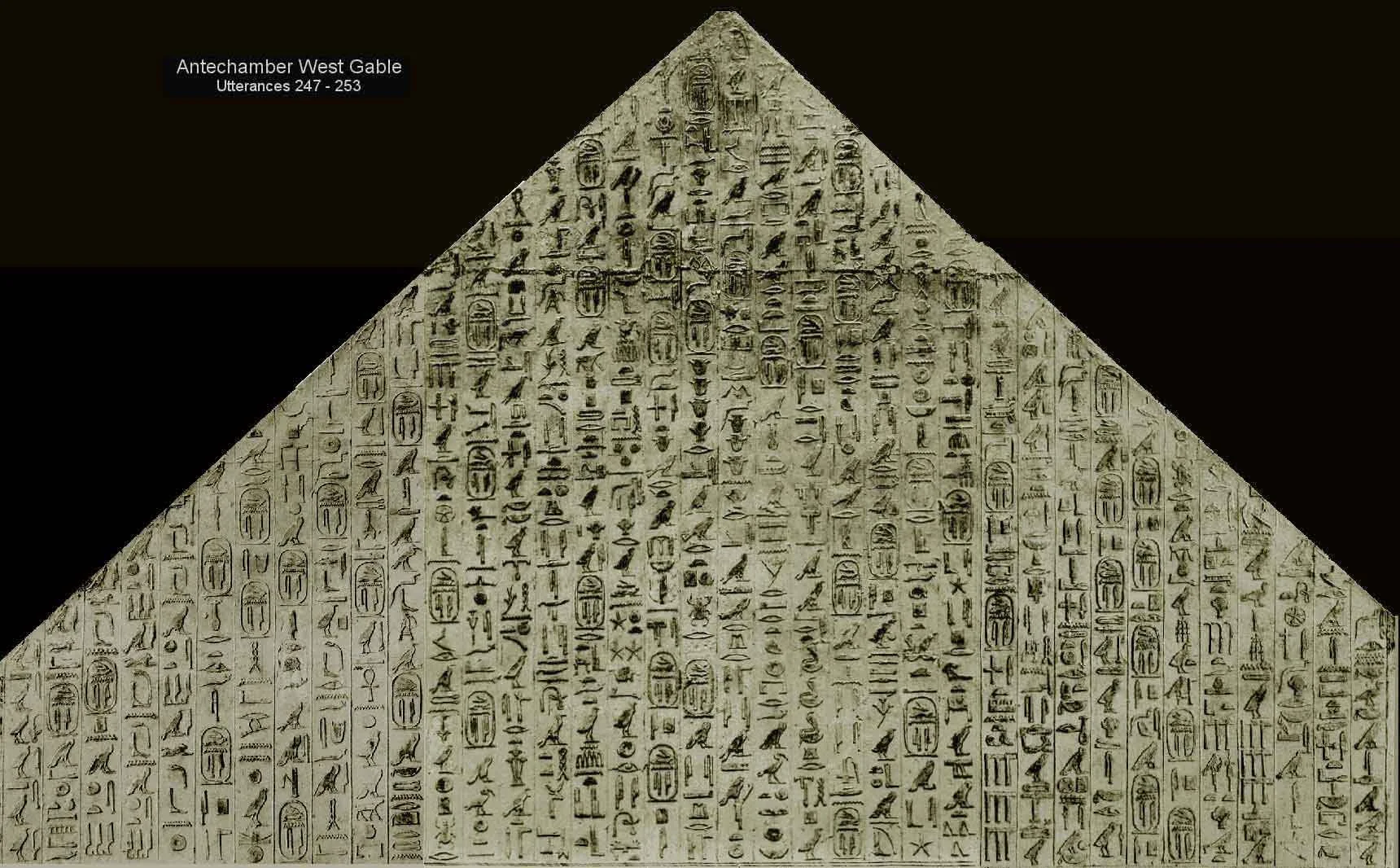
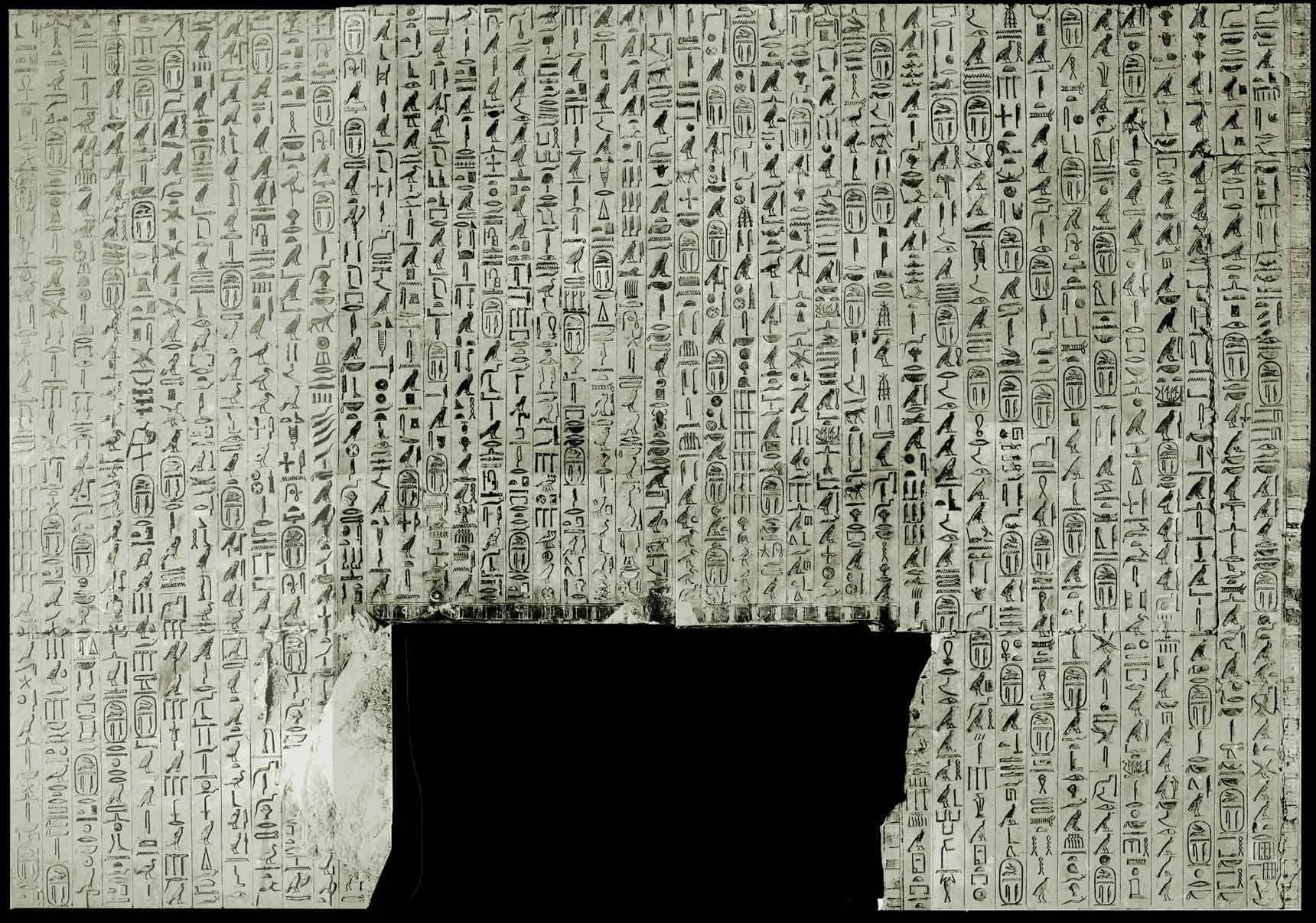
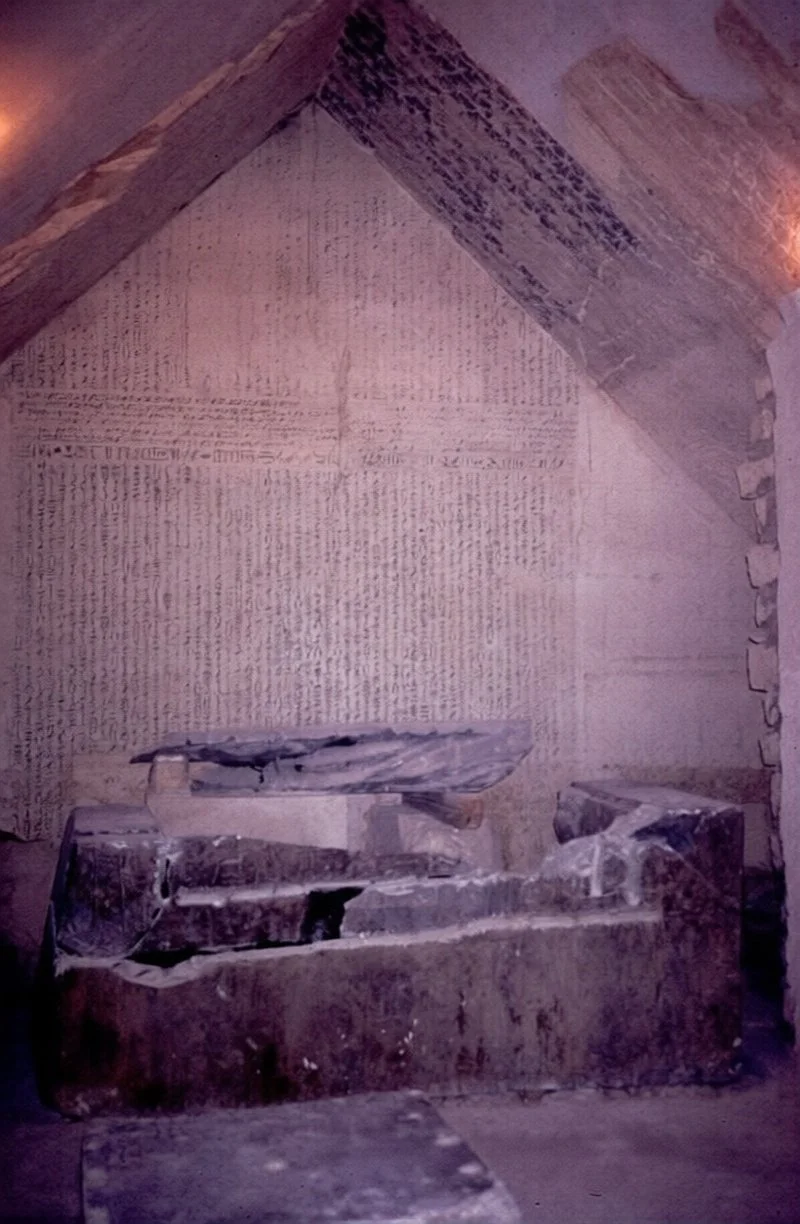
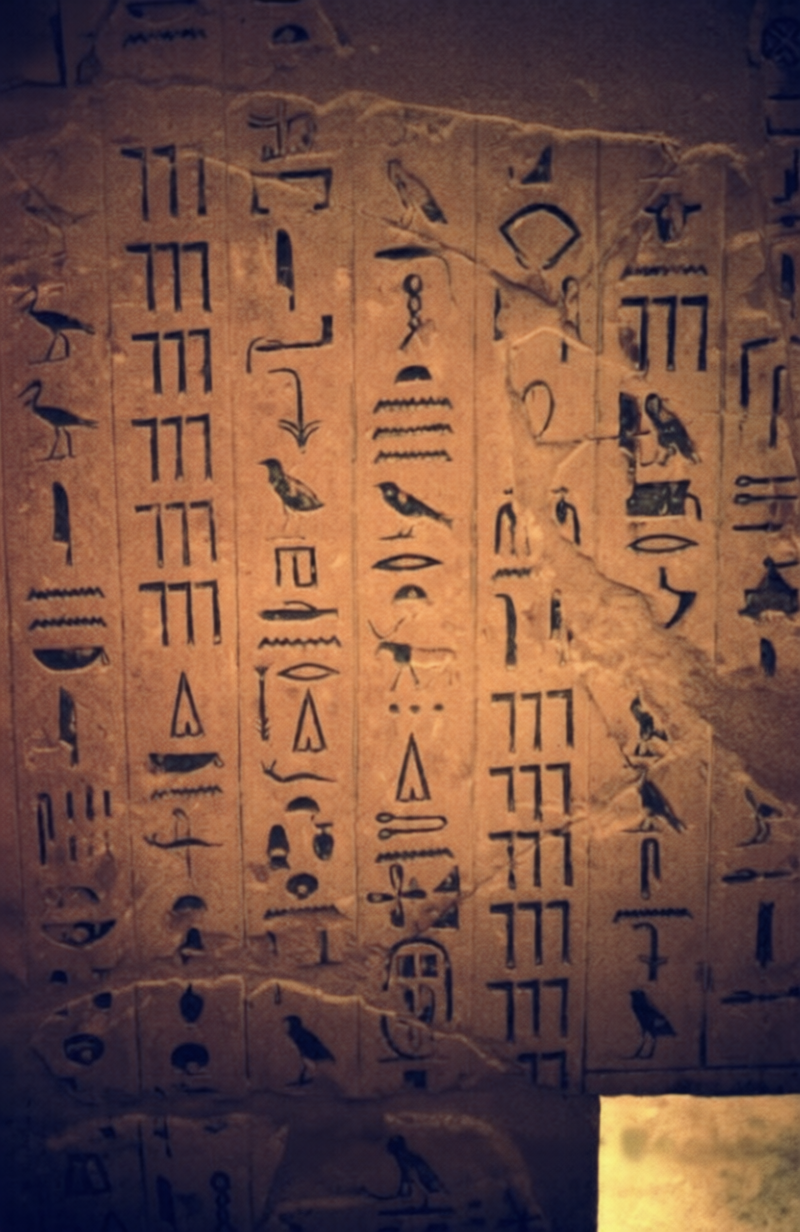
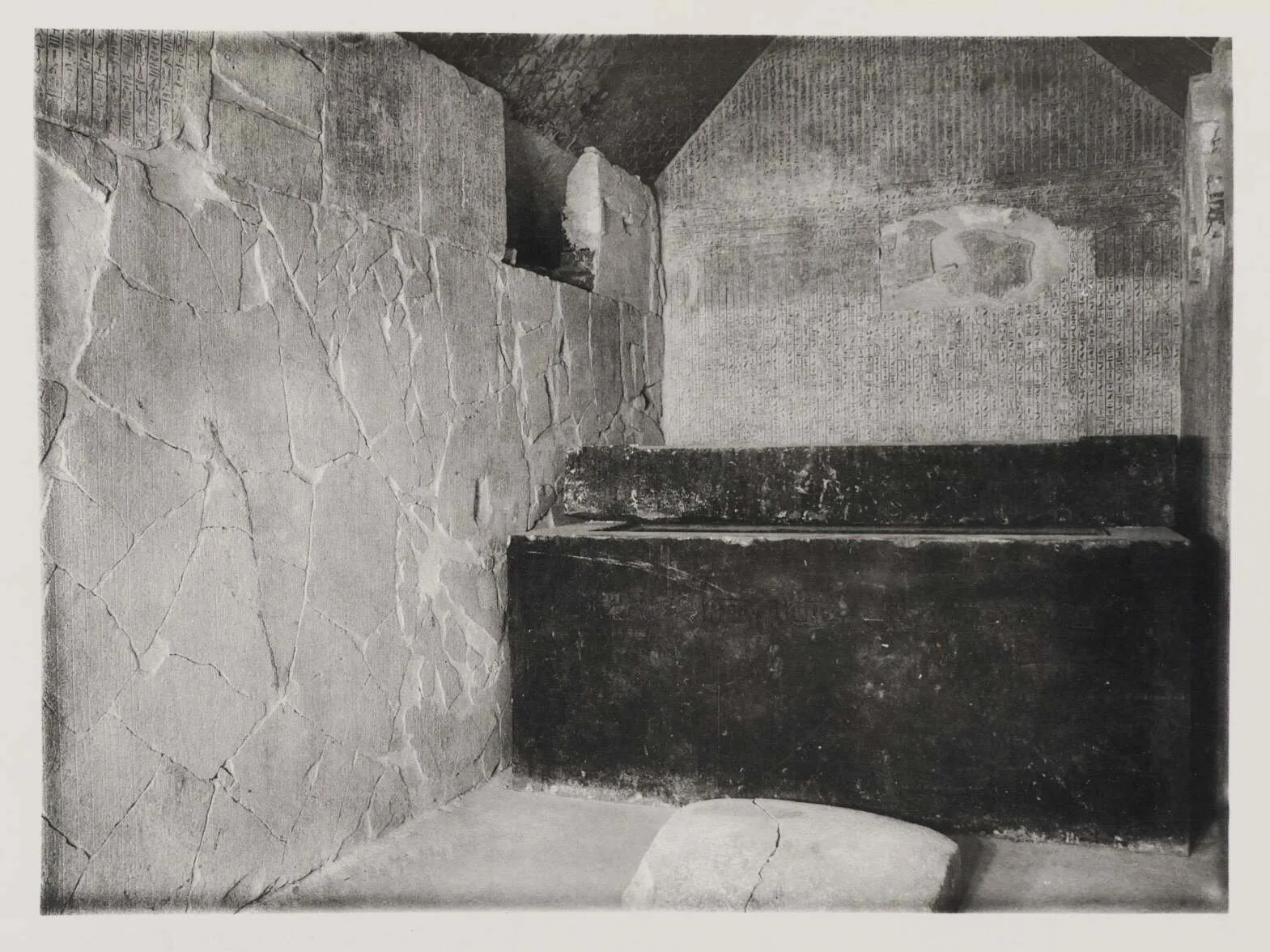
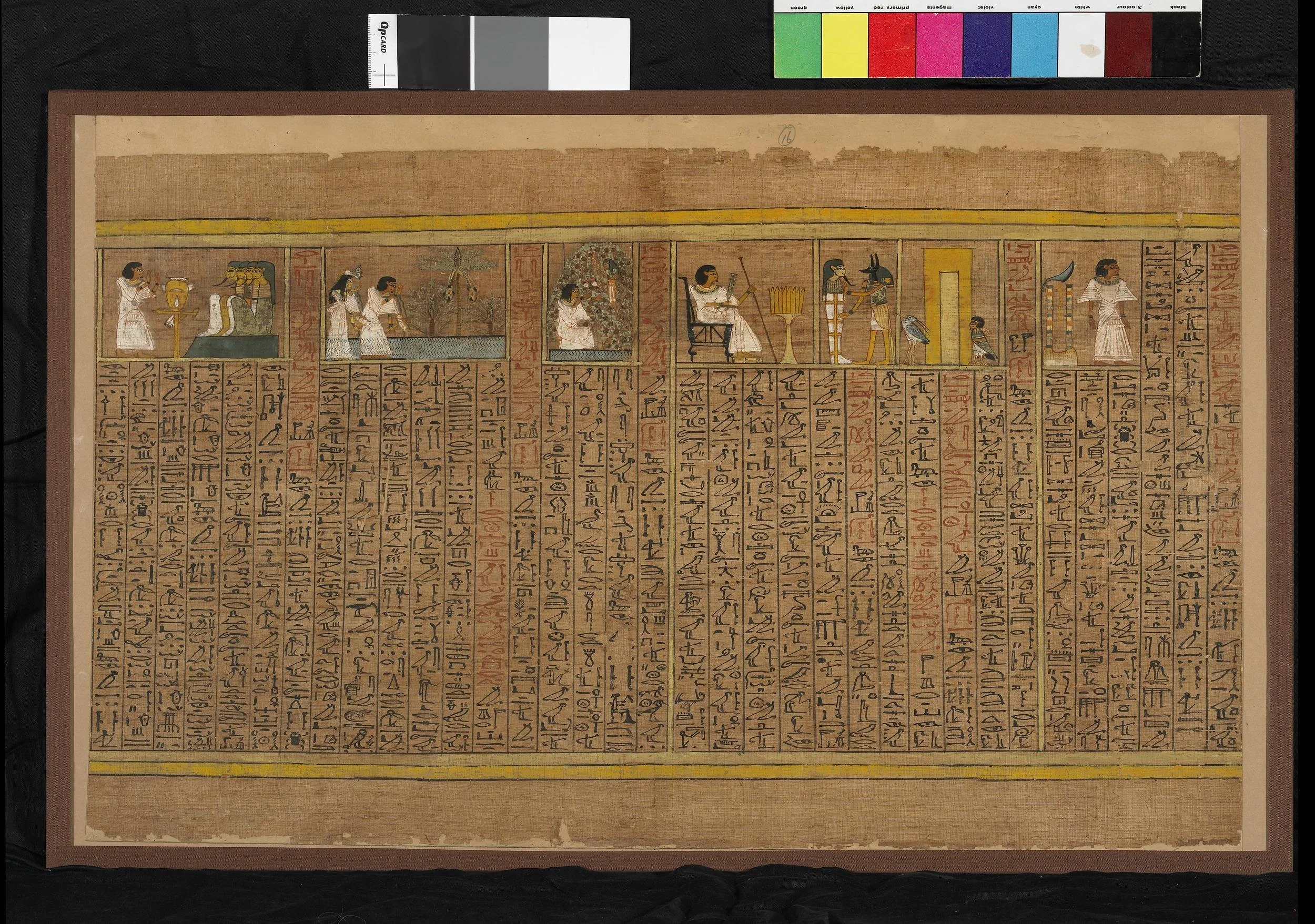
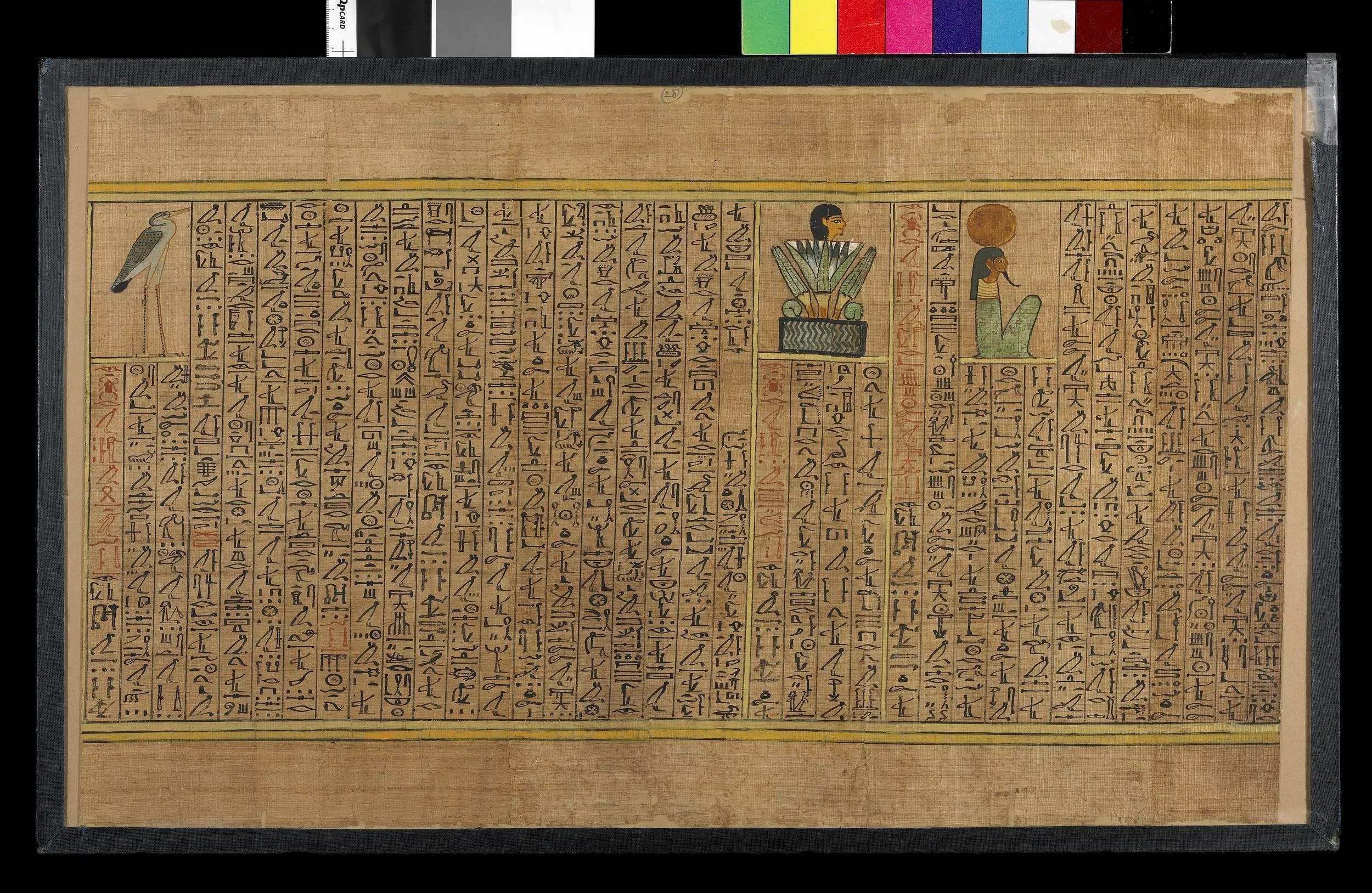
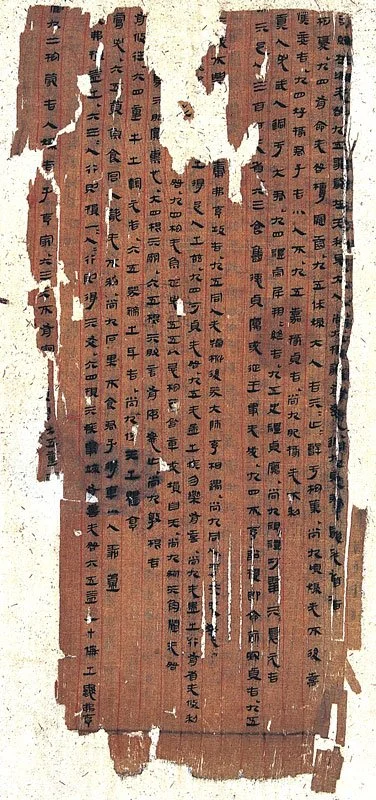
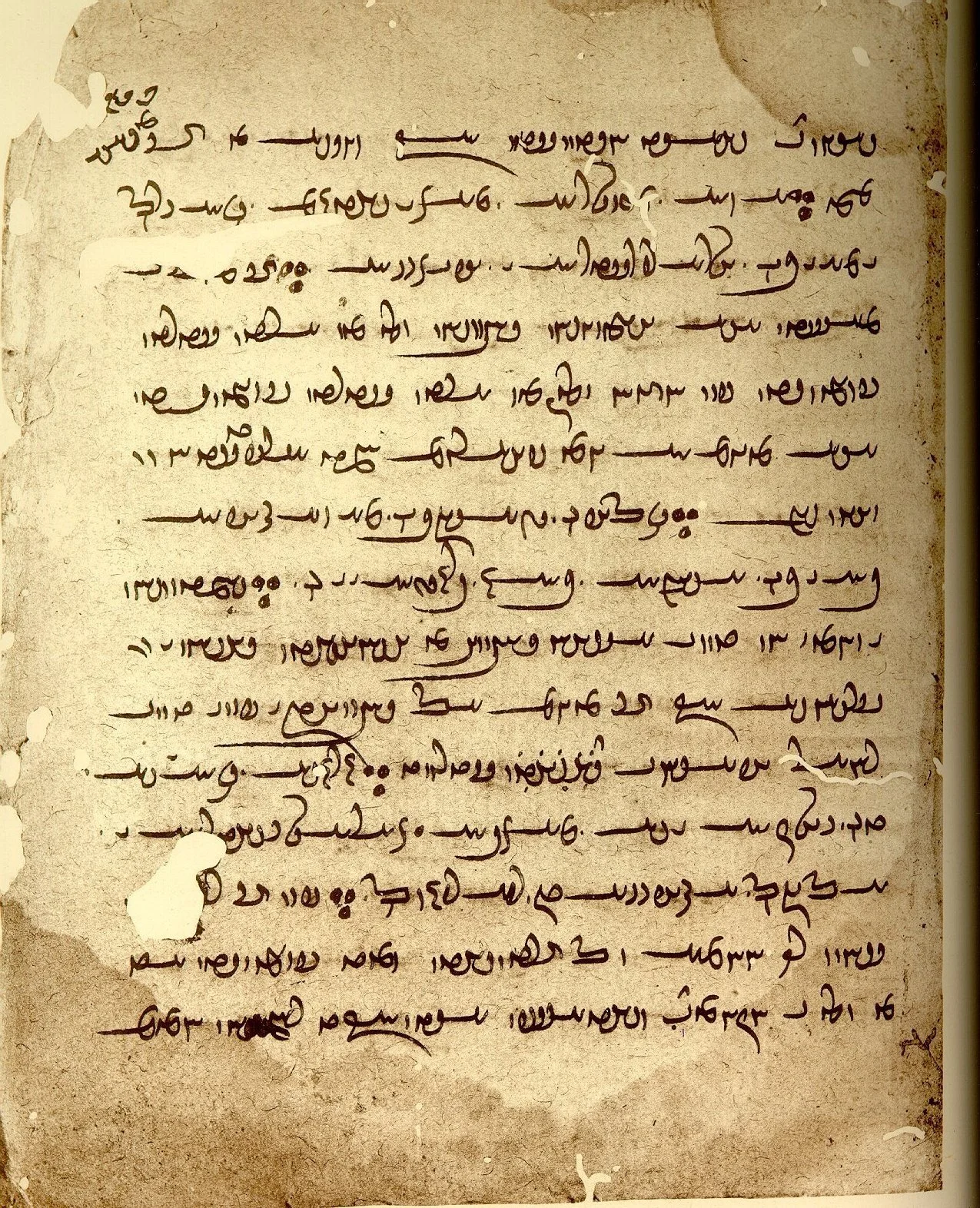
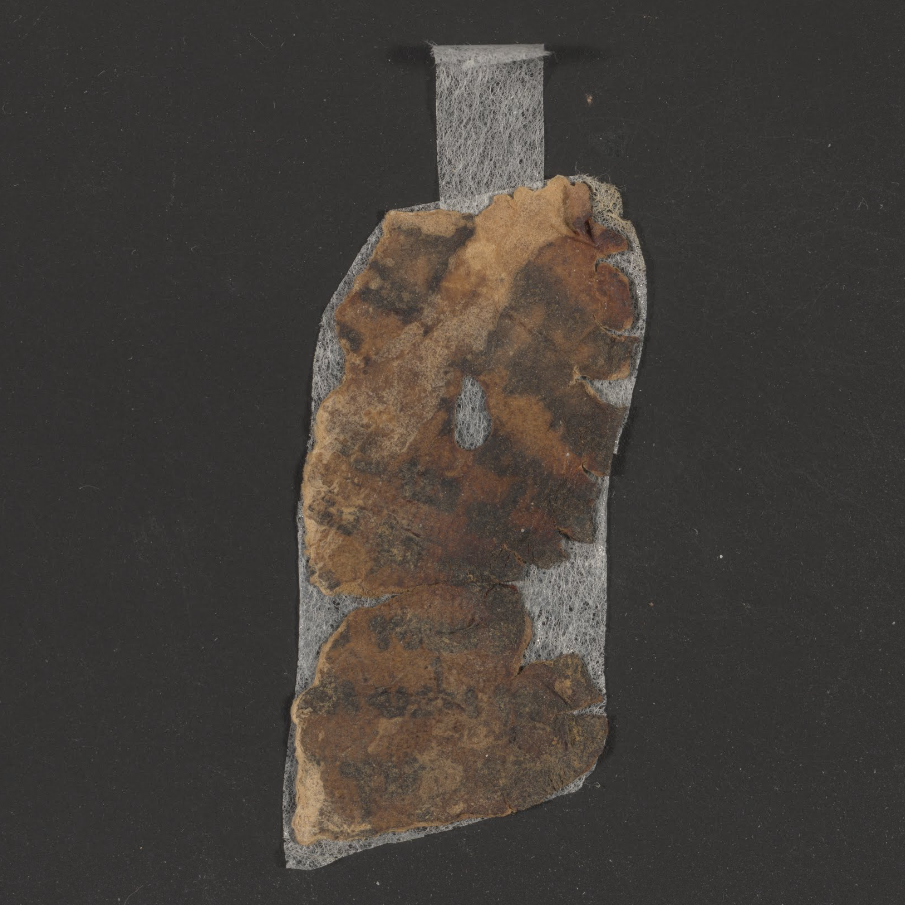

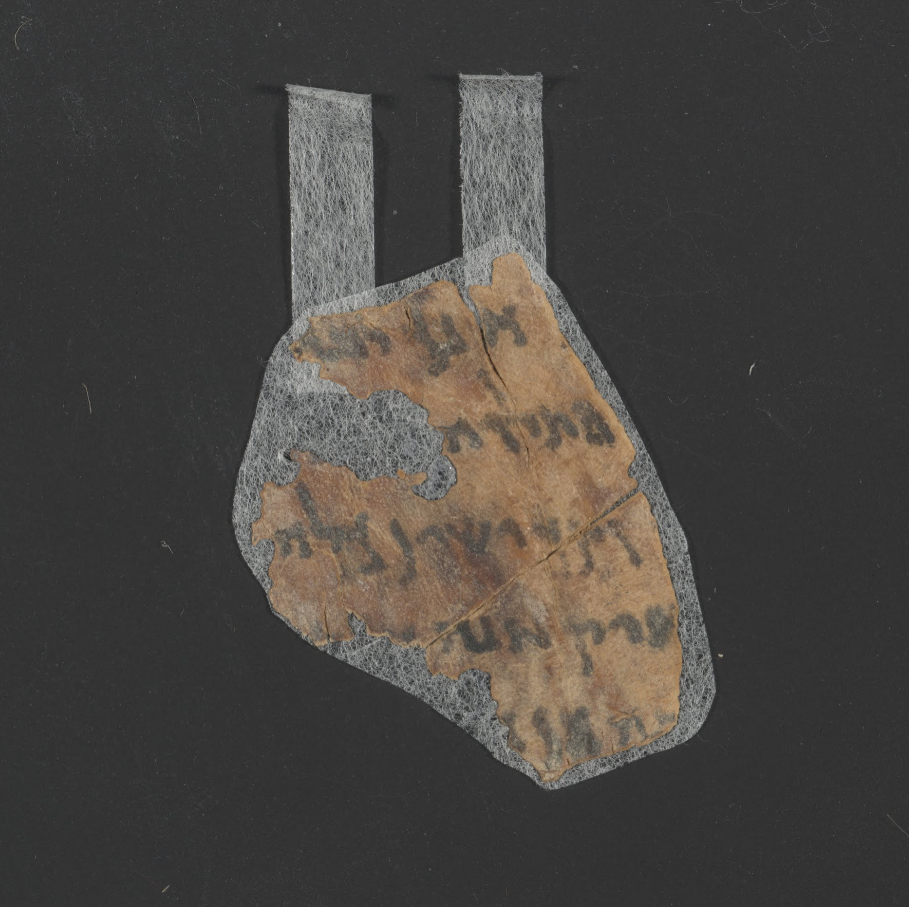
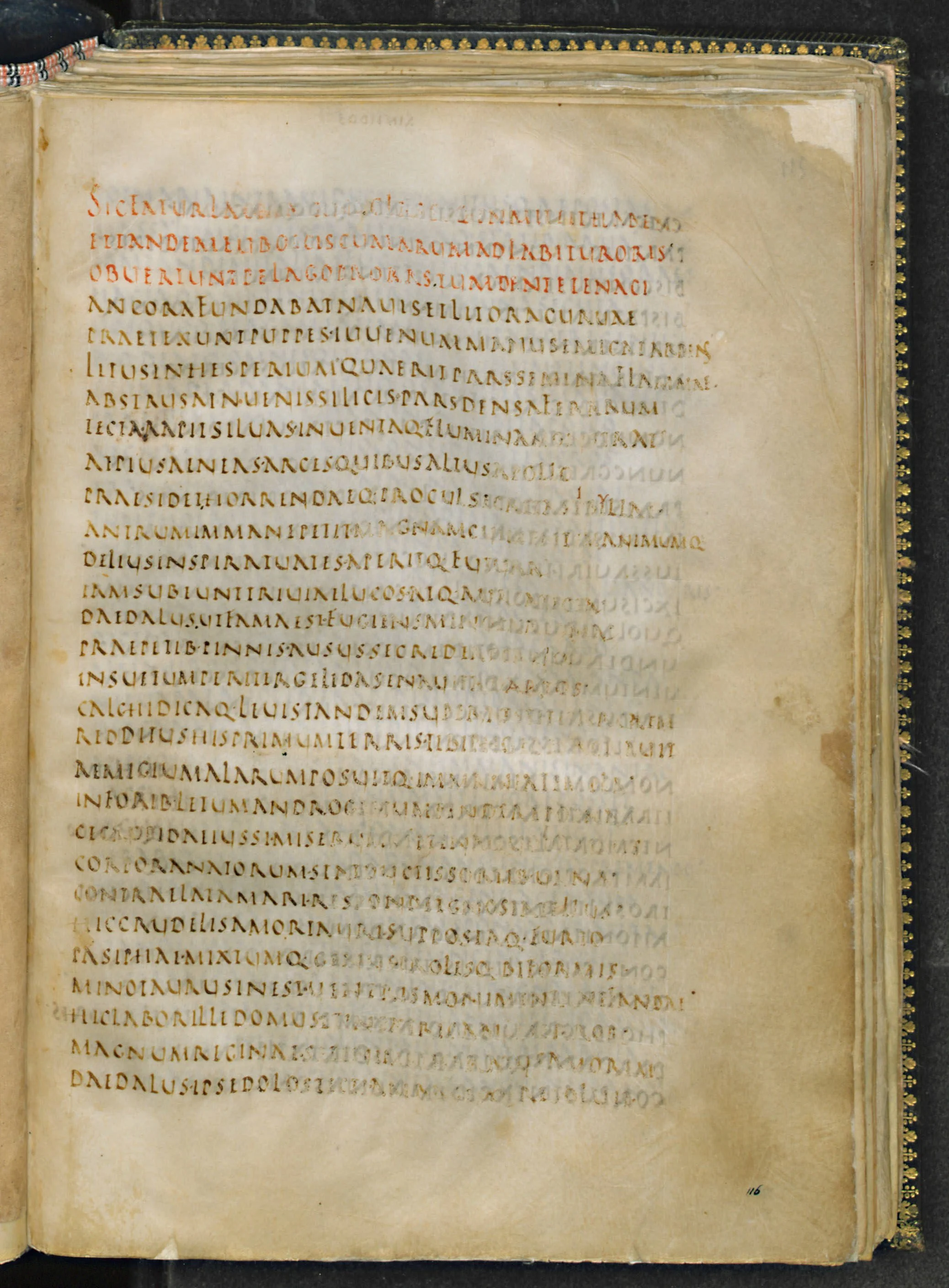
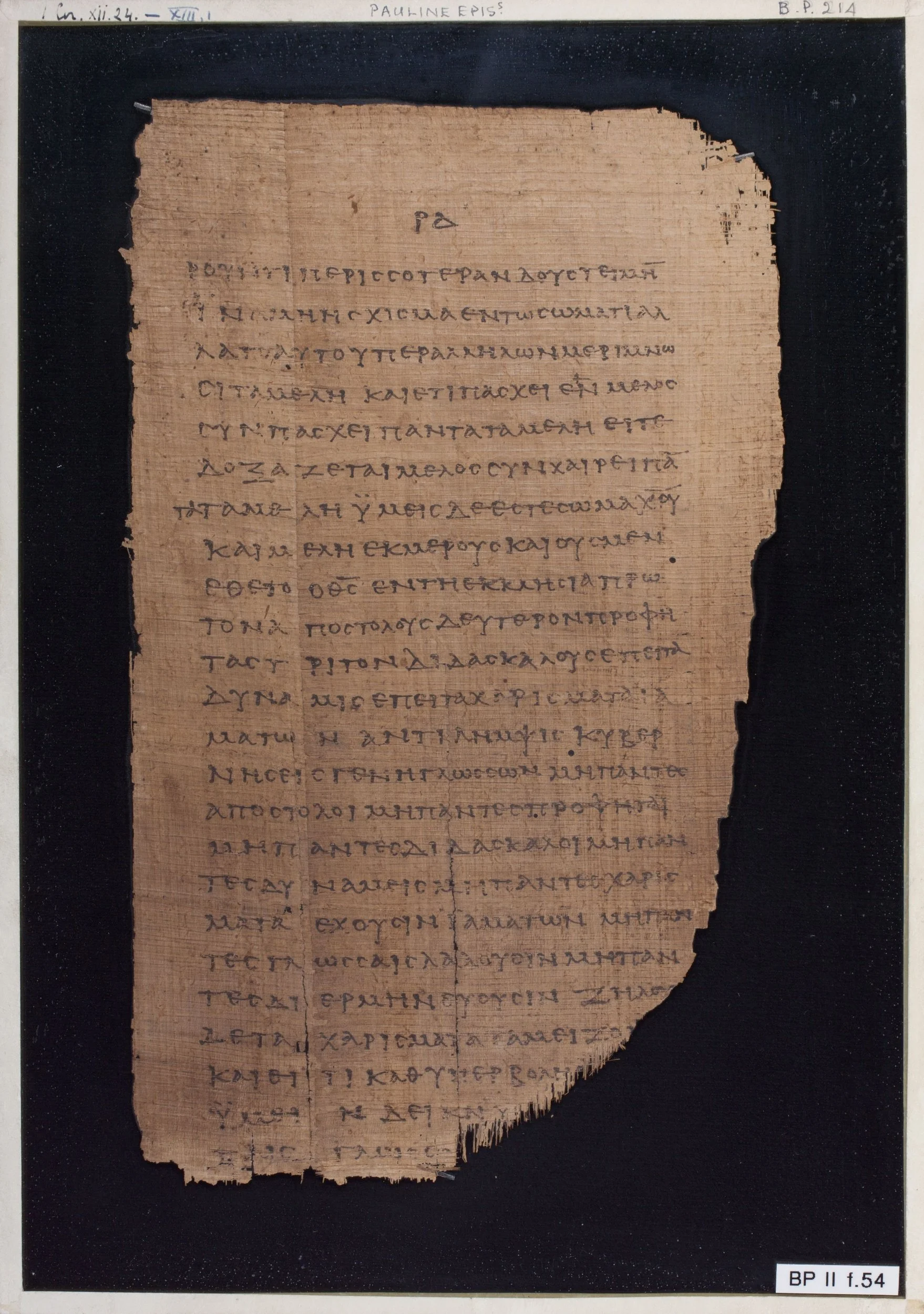
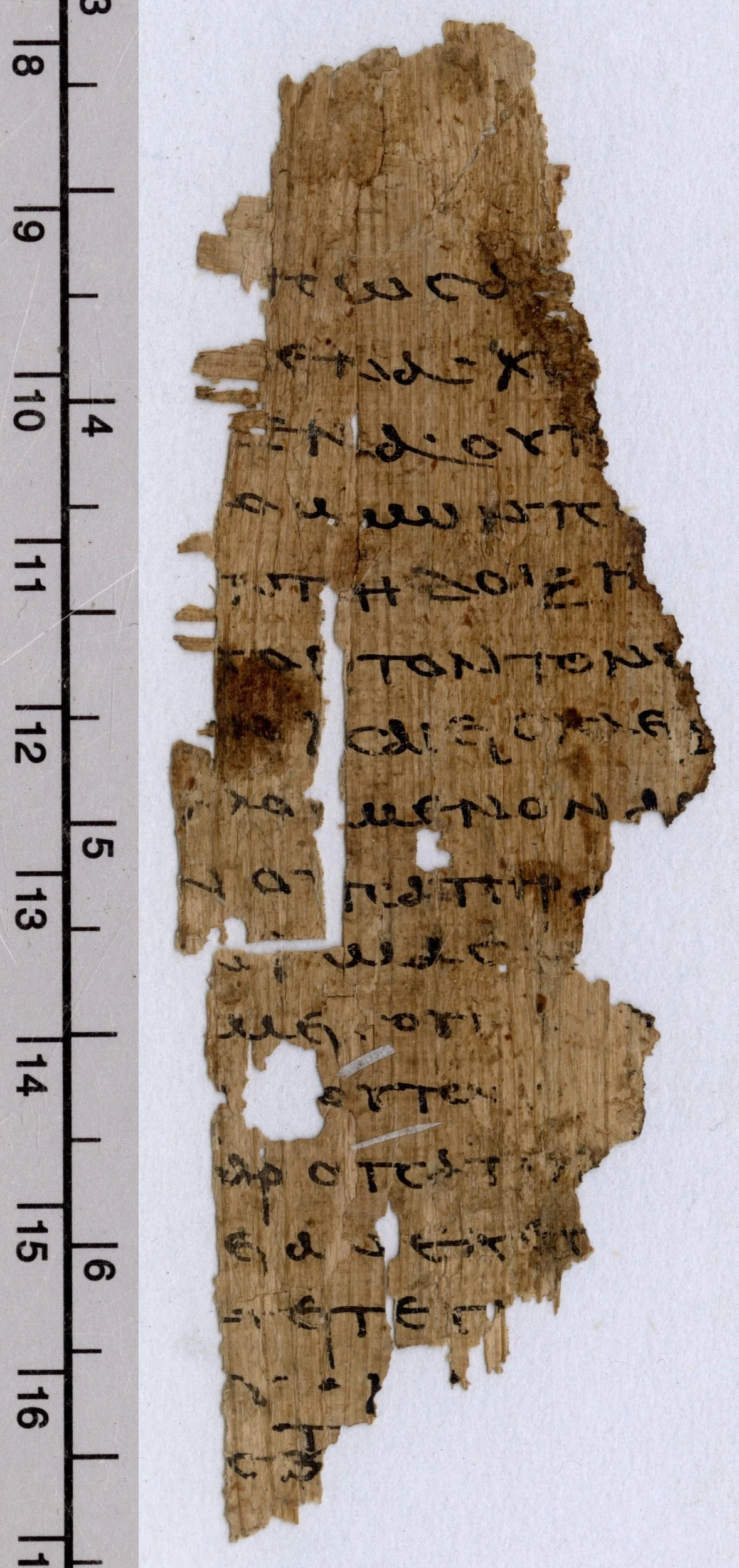
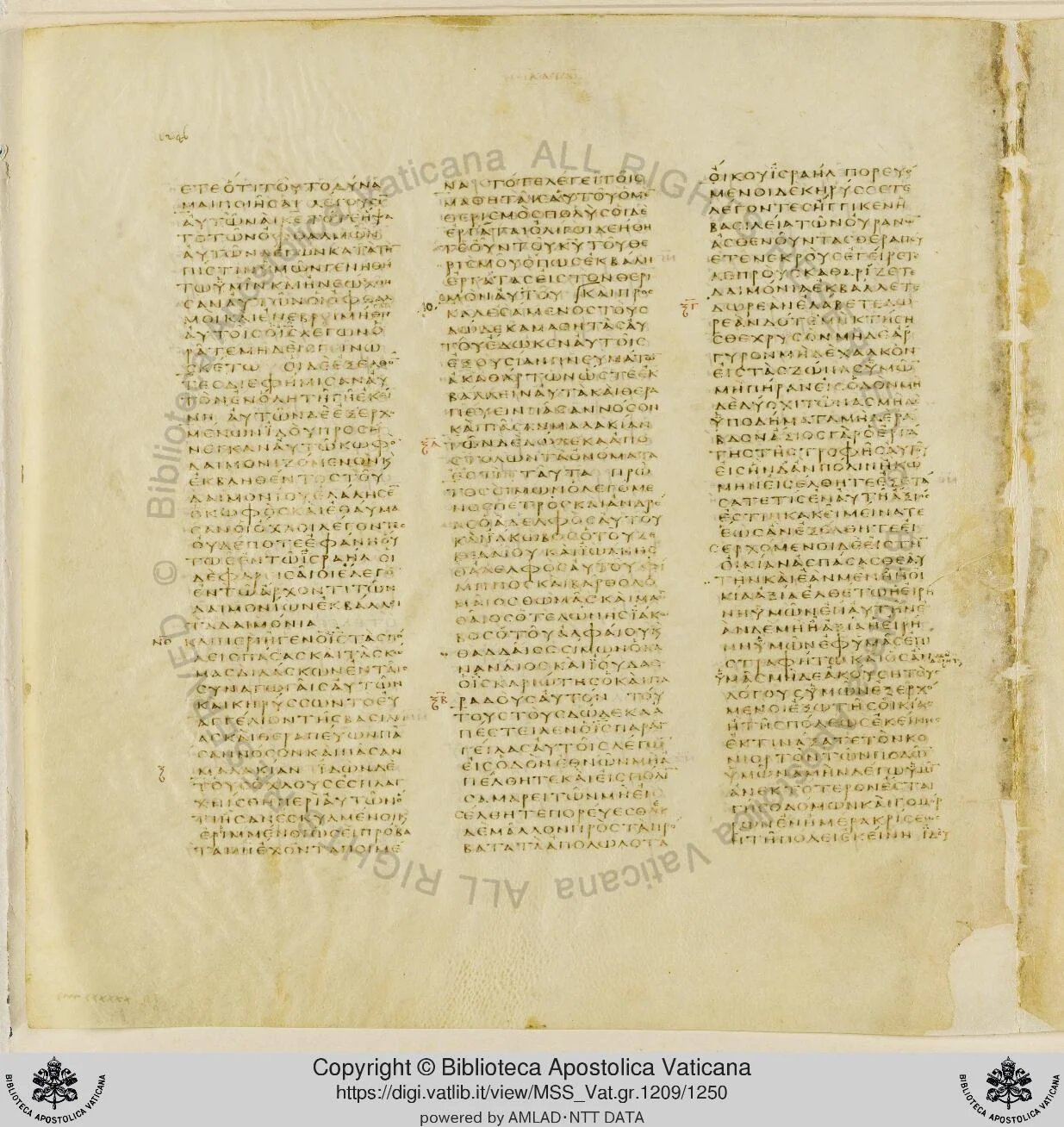
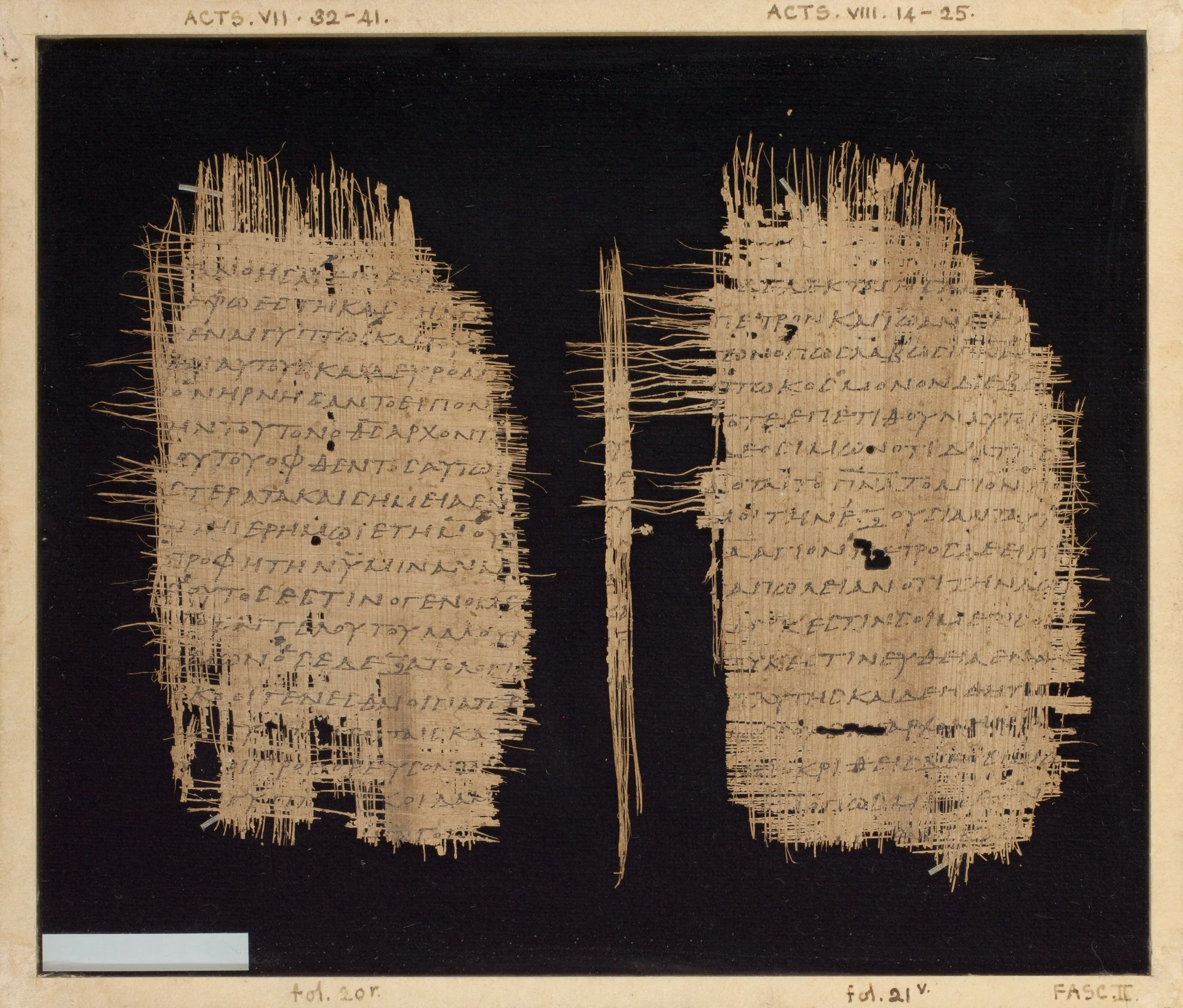
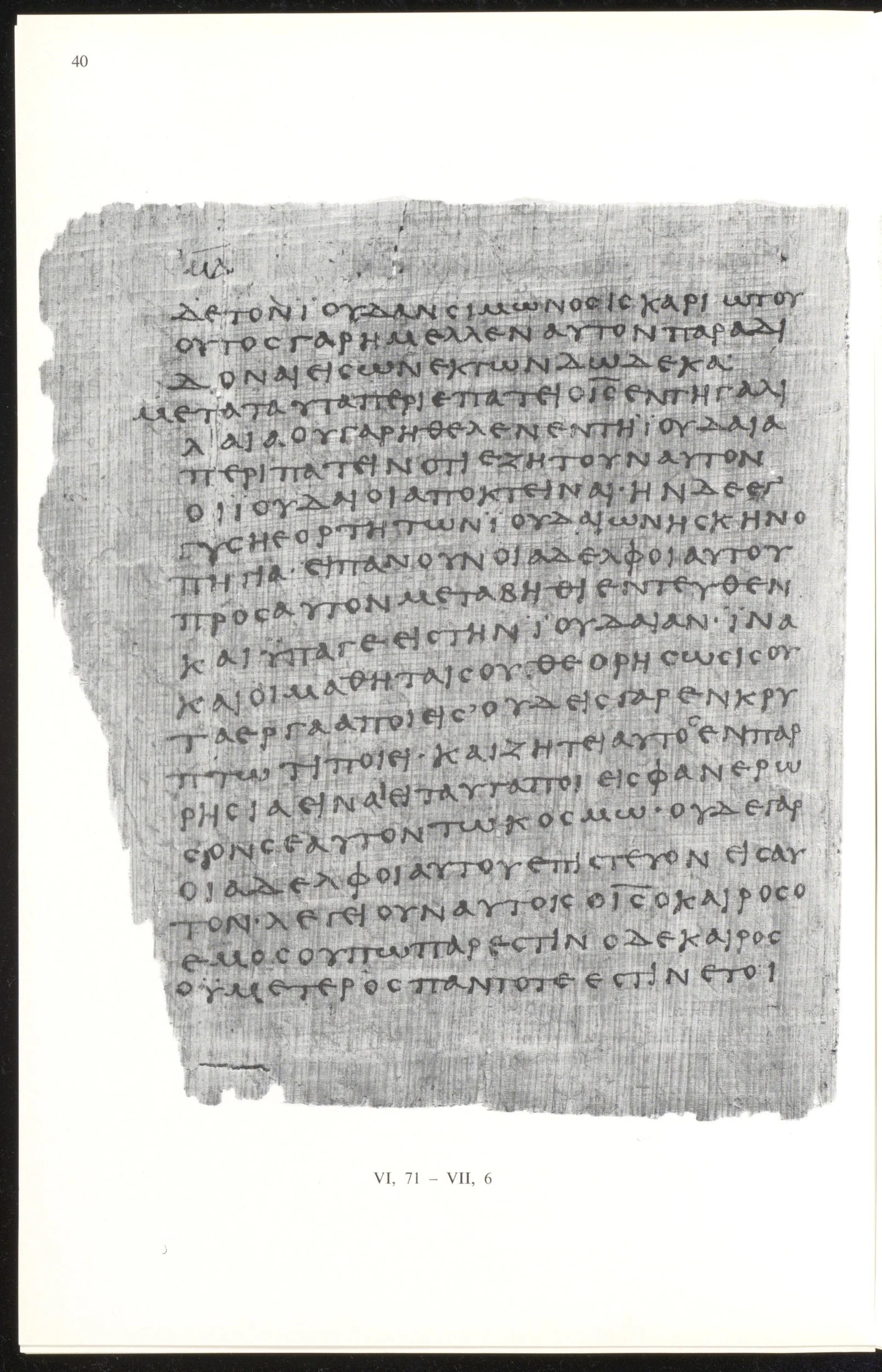
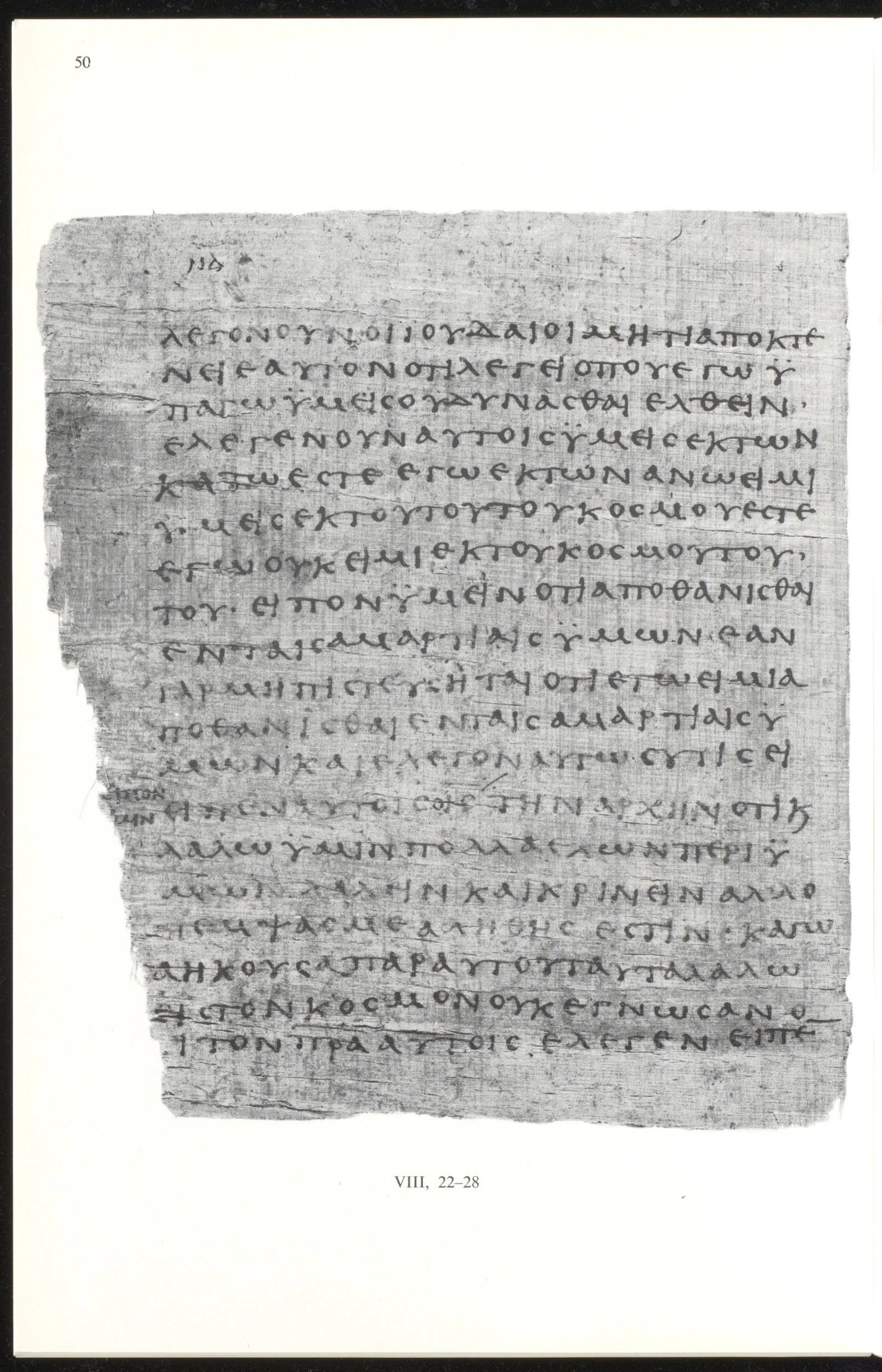
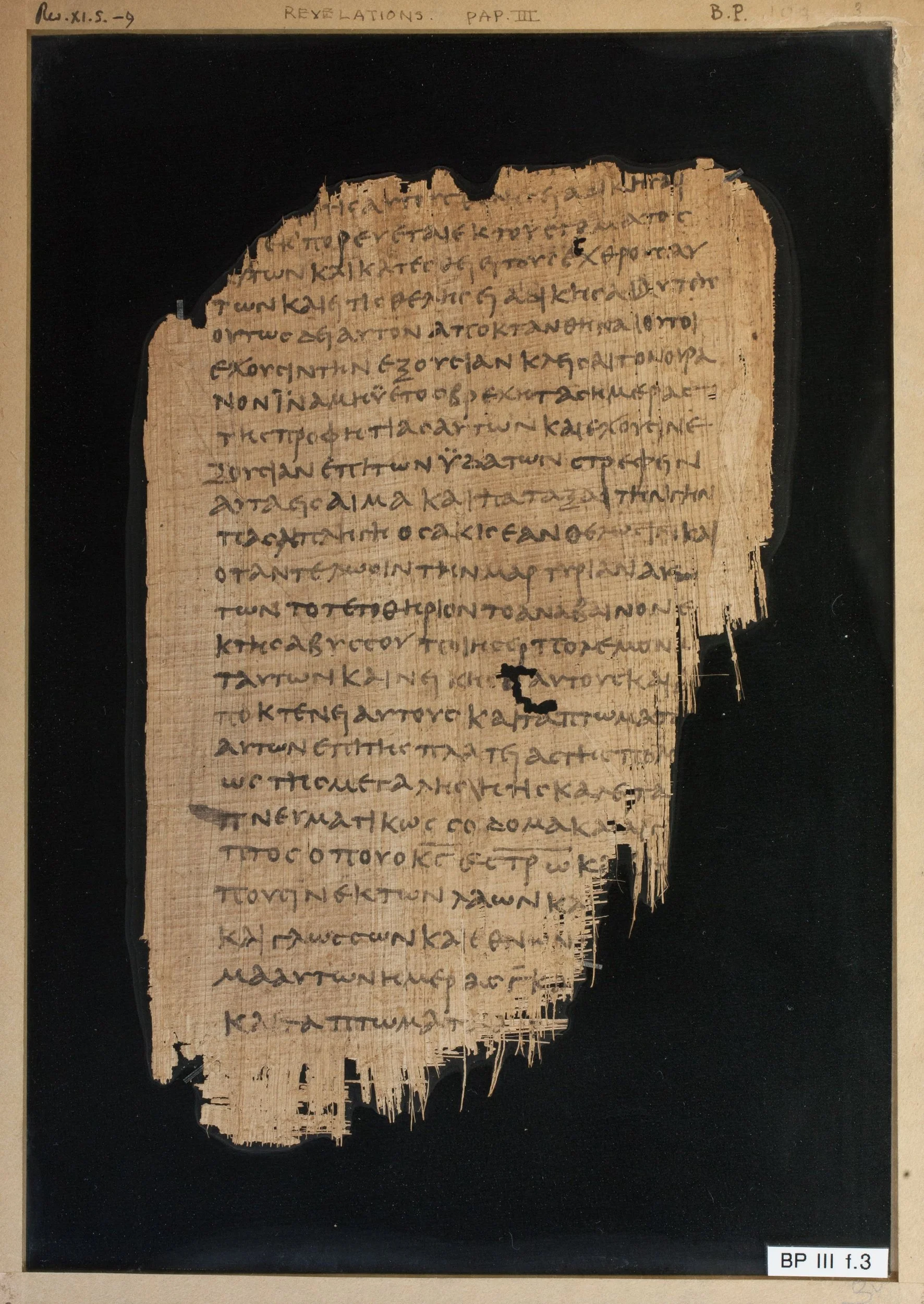
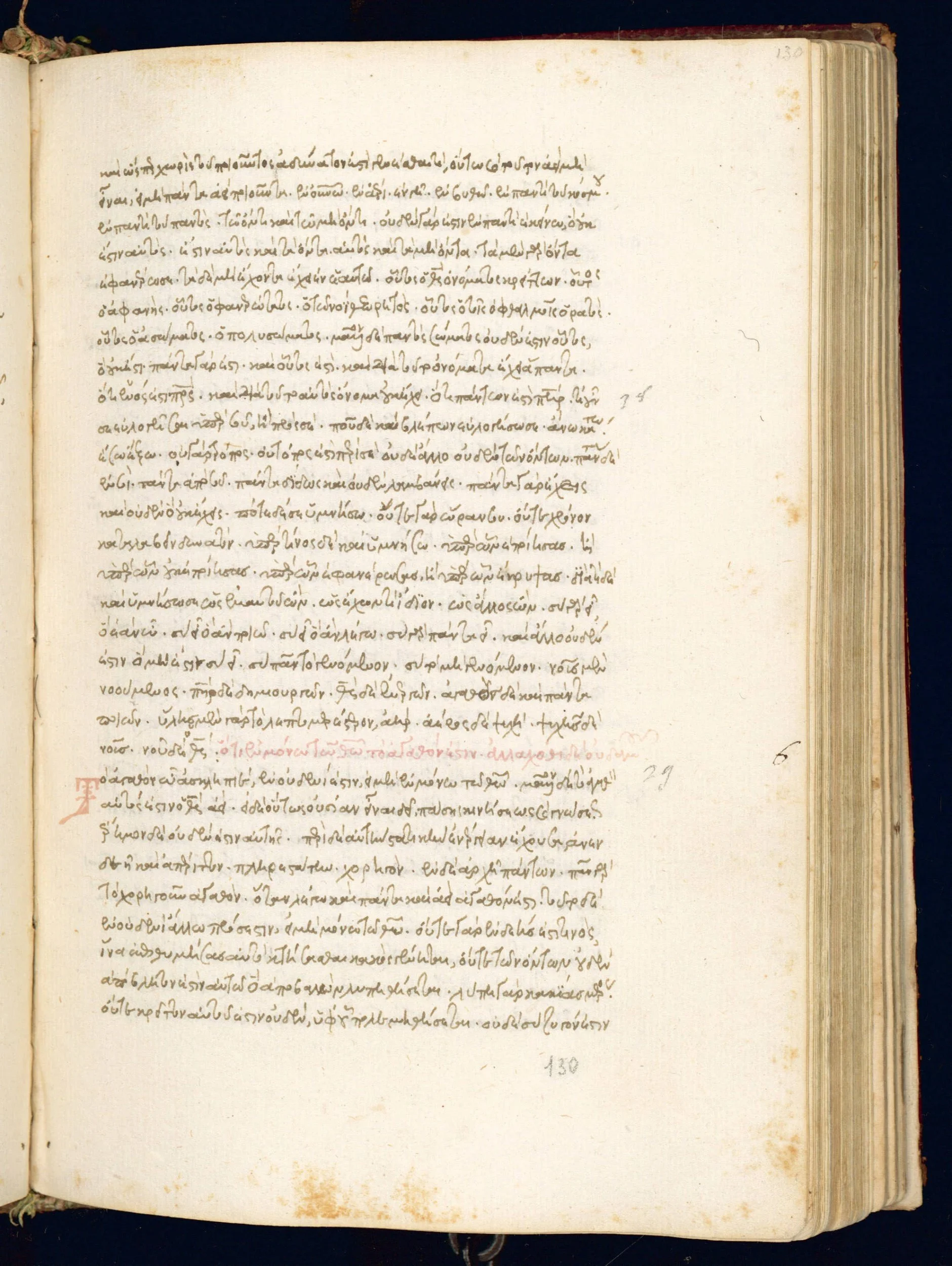
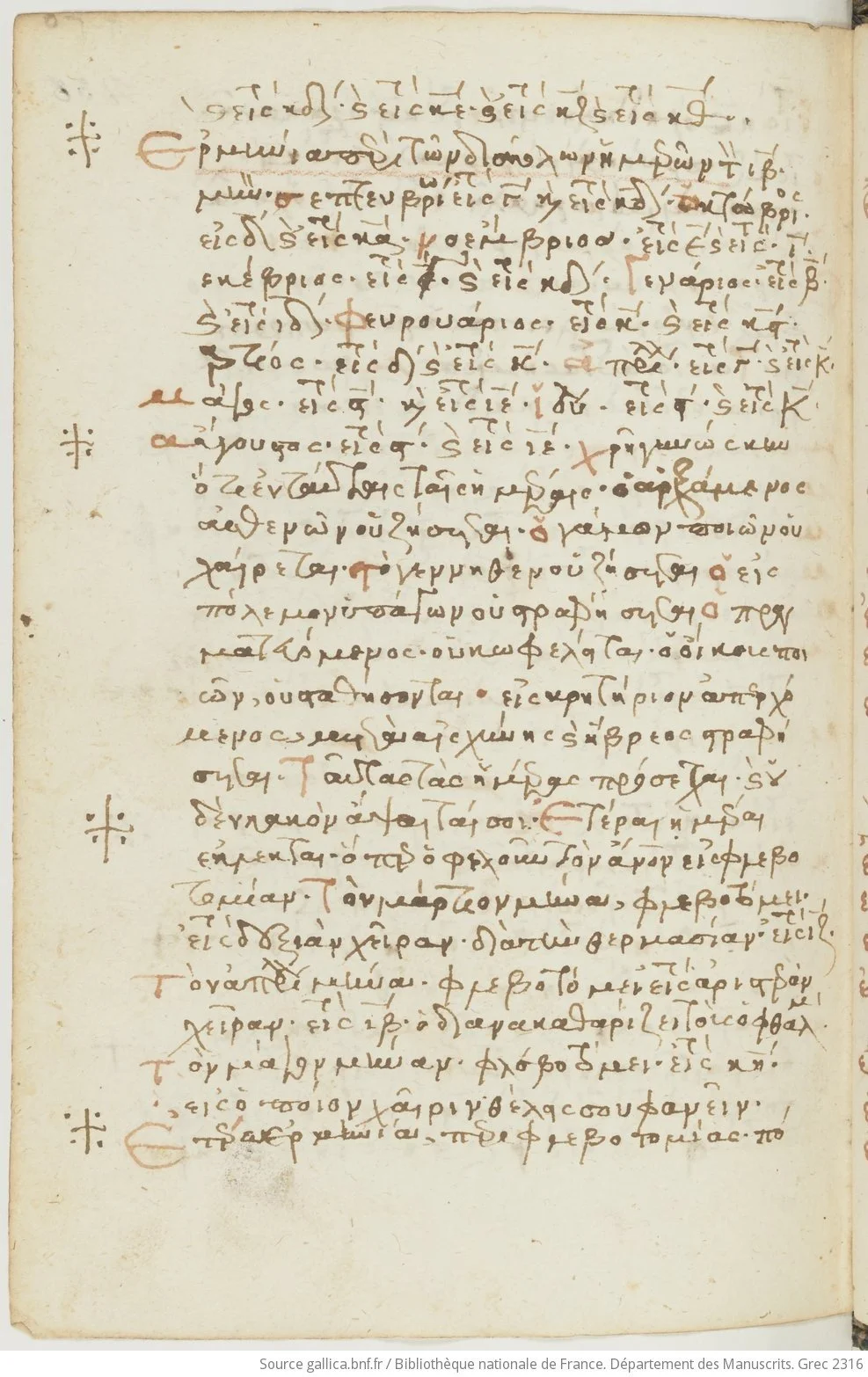
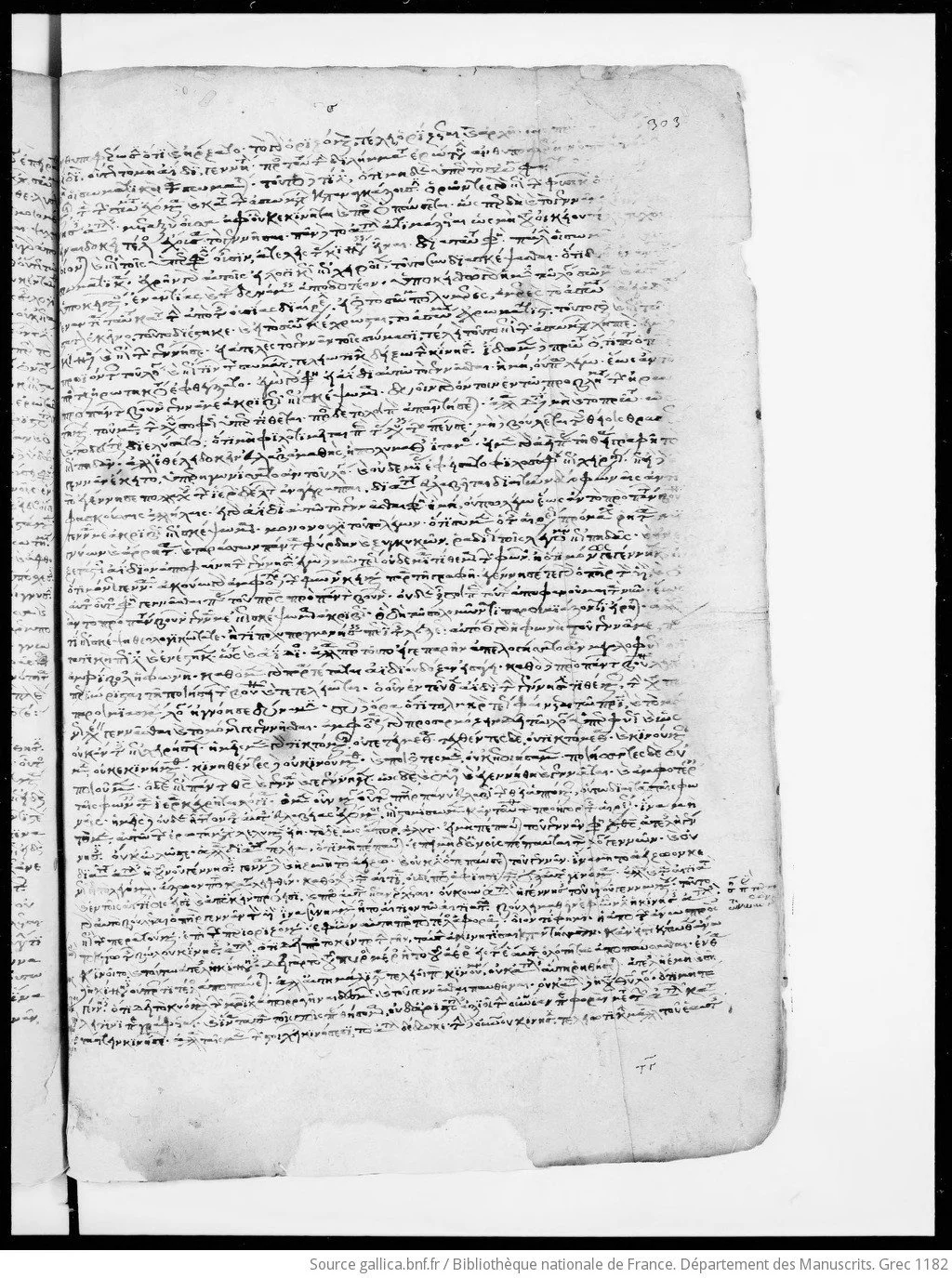
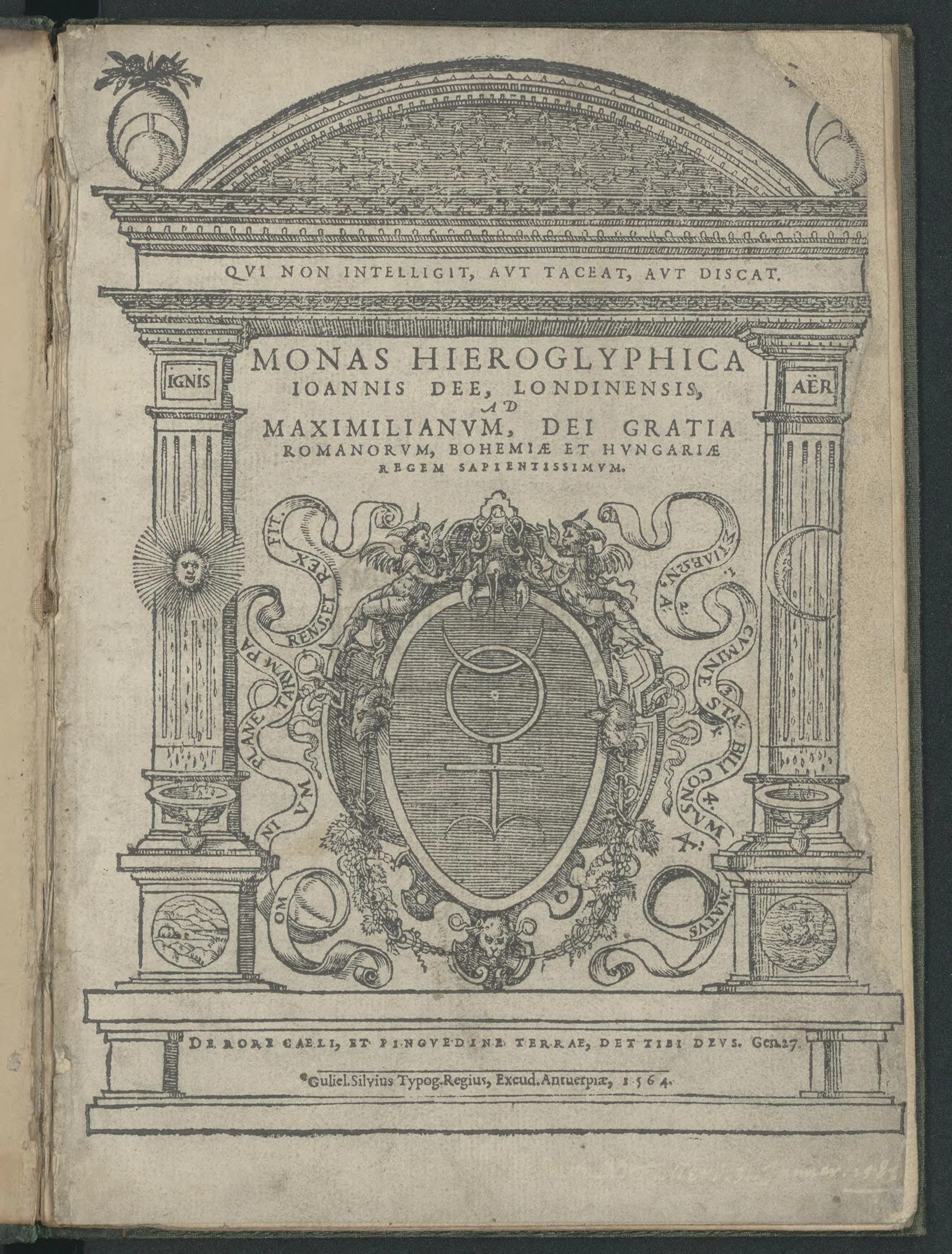

Divinations
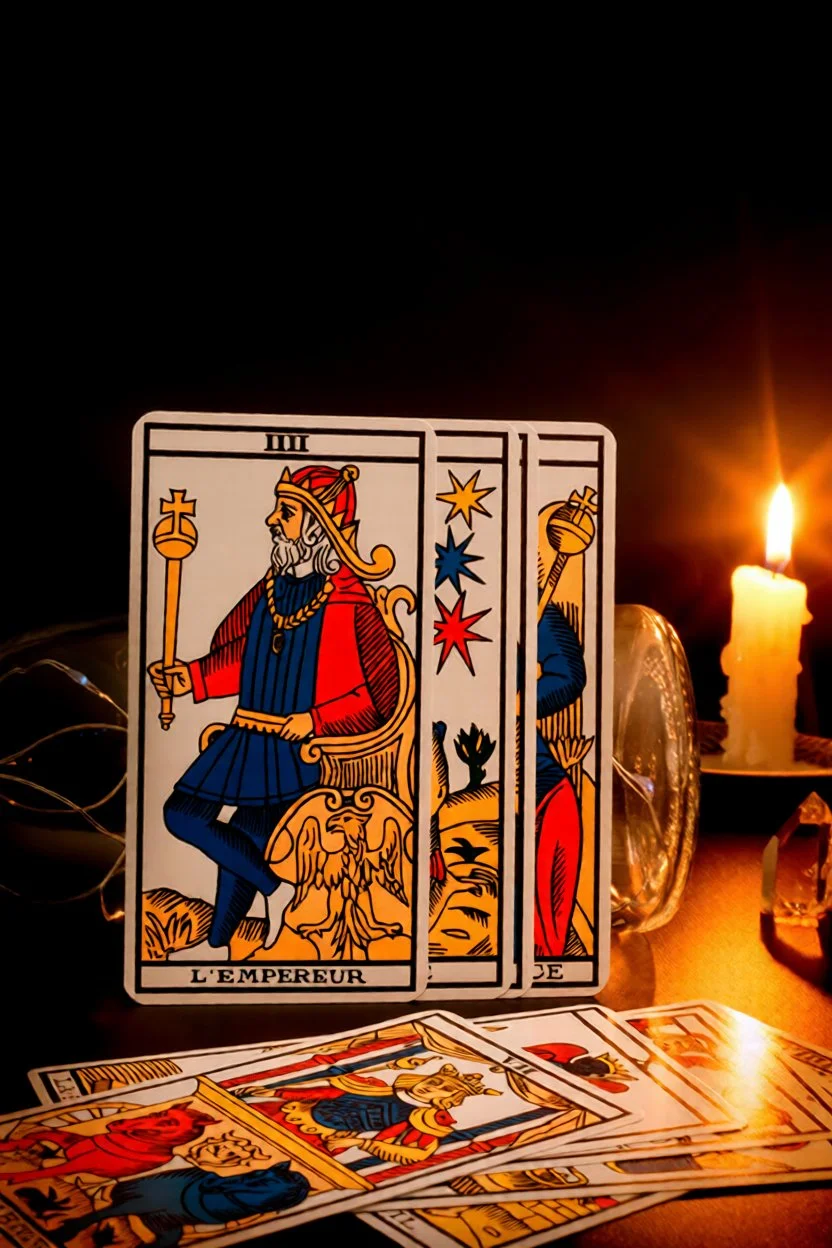
Tarot Card Reading
With a history and tradition as storied as the narratives the arrangement of its images into spreads contains, tarot readings question and mirror the seeker.
Included in this reading is a three- to five-card, or a four-card, spread considering one question or theme. An alternative to either can be arranged.
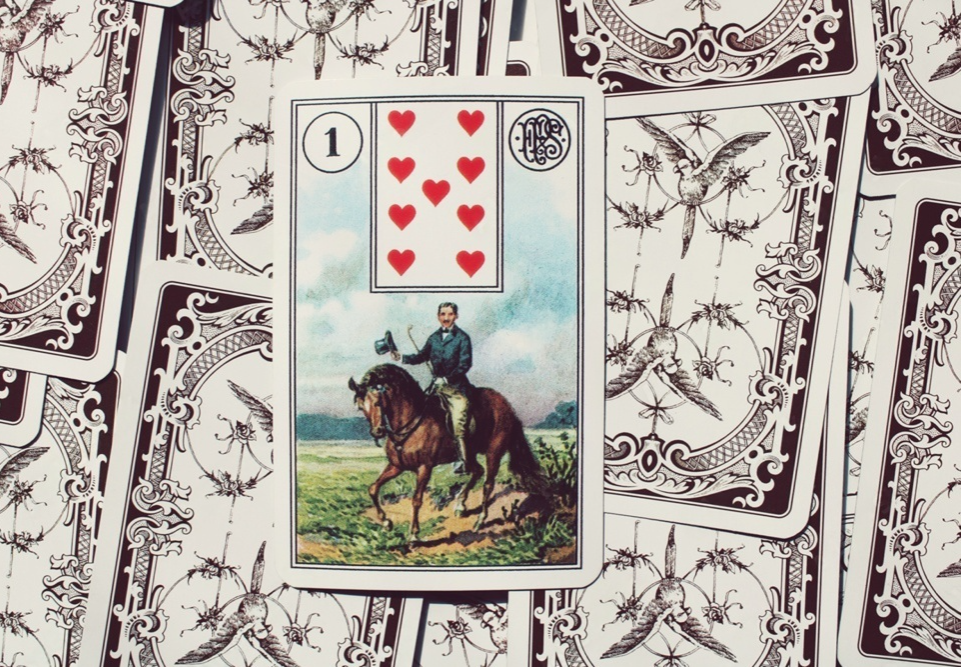
Lenormand Card Reading
A more recent historical development, though with as checkered a past, Lenormand readings likewise tell stories with pictures, yet favour practical matters unlike mystical tarot.
A reading comprises the interpretation of pairs, whether the option of a two-card or three-card spread is chosen, as meanings are derived from their relationships.
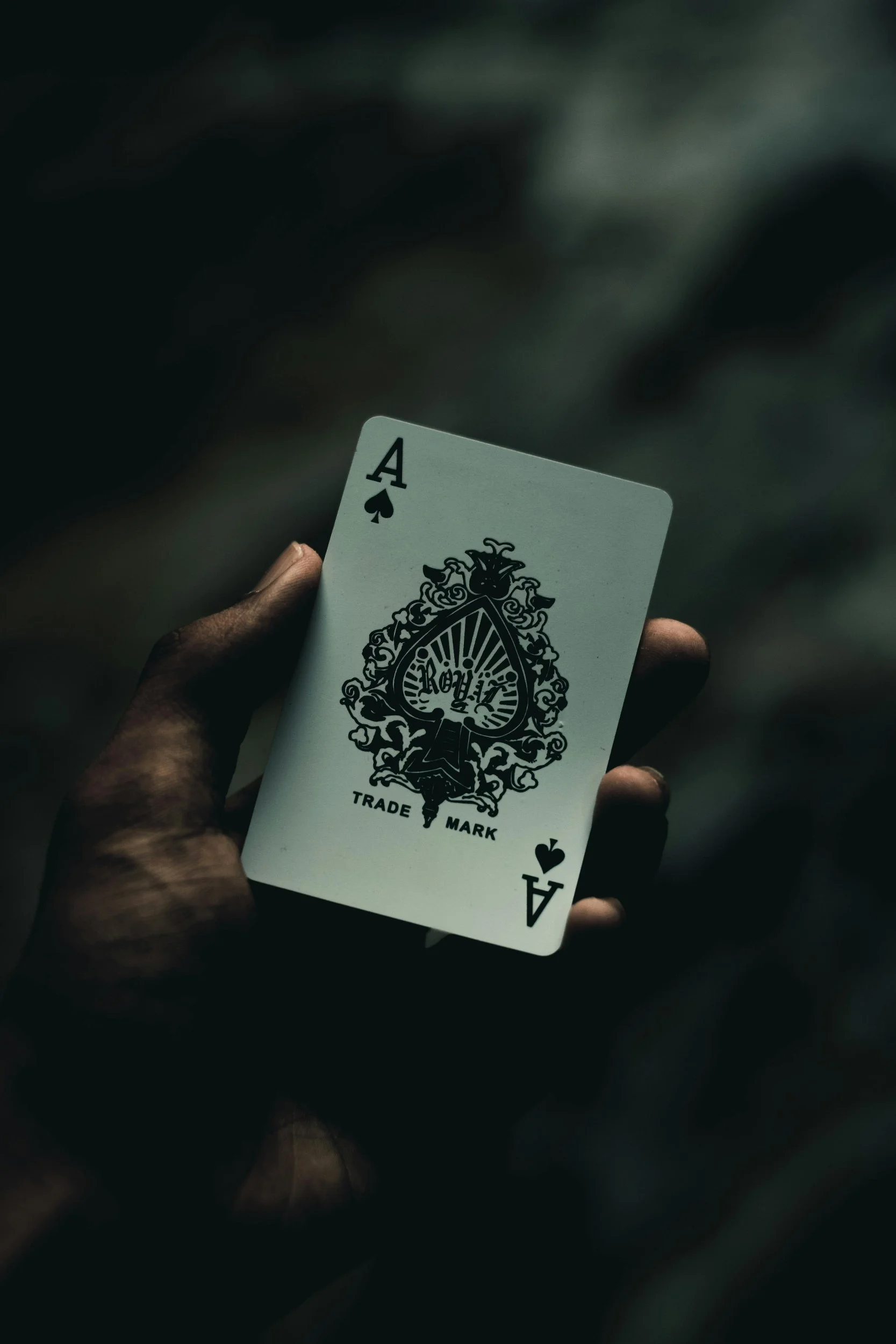
Playing Card Reading
Gritty dirt-sorcery at its finest, this unassuming and ubiquitous household article is the real deal, ordinary playing cards concealing pithy, earthy wisdom everyone should heed.
Included in this reading is a three- to five-card, or a four-card, spread considering one question or theme. An alternative to either can be arranged.
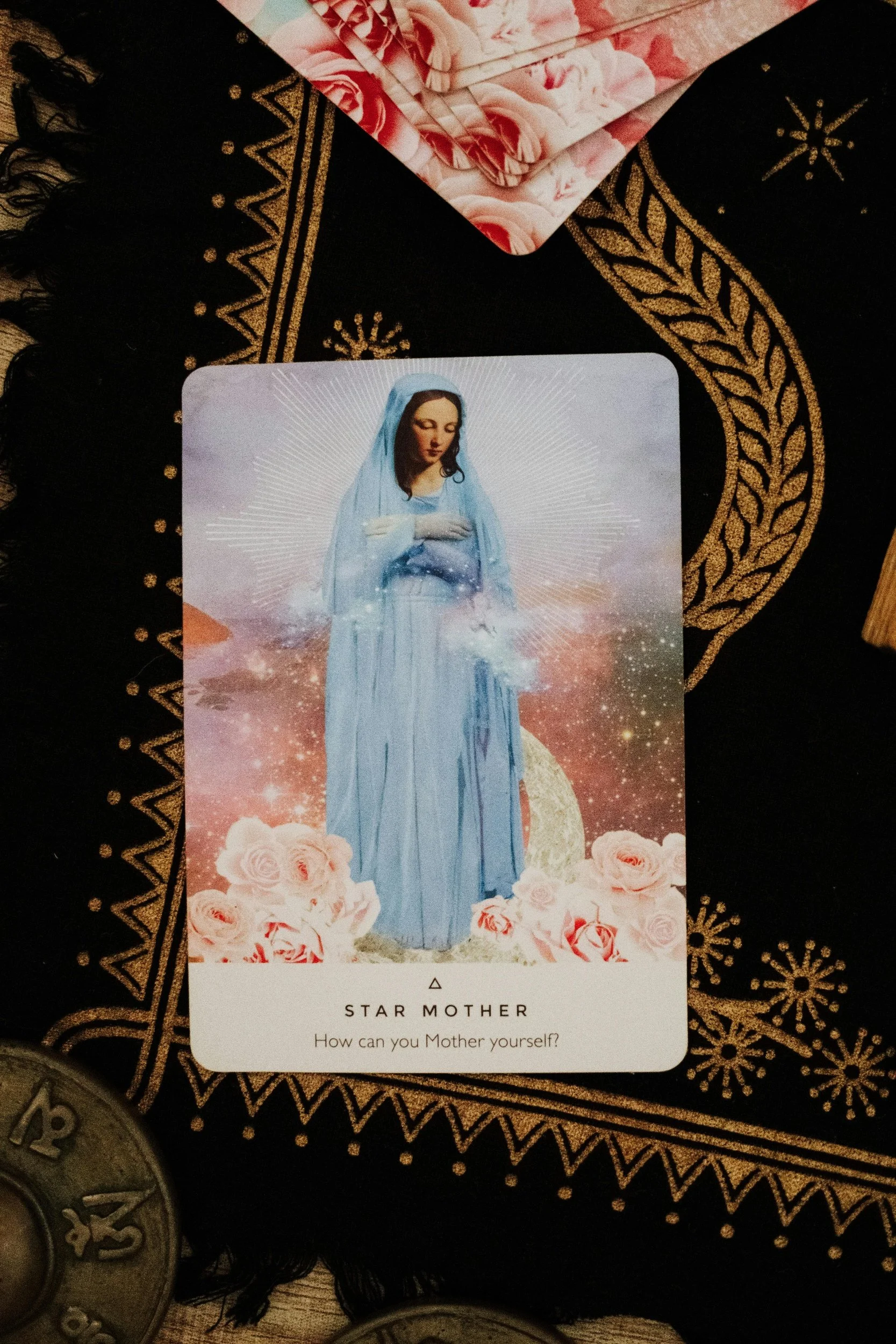
Oracle Card Reading
Diverse as their creators, oracle decks extend an ancient tradition of questioning, although the relationship between querent and diviner depends on these idiosyncratic, modern designs.
Each oracle deck is its own system of divination, its own self-contained modern tradition, so a reading will follow the pattern determined by that chosen.
Incantations

Incantation Composition
If ritual is a performance, then incantation is its song; as though waving a wand, a waving of one’s tongue manifests results, language is magic.
On offer is the composition by a poet, who happens to be a ceremonial magician, of an original charm tailored for use in ritual workings.
Word(s) of Power Composition
Vibration of speech changes the environment which receives its reverberation; a resonance words chosen carefully carry, from thoughts into others’ minds, to will into action.
Sometimes, all it takes is a powerful word, other times, several; all commissions are confidential, lest yours endure the same fate as trusty abracadabra.
Sigils & Talismans
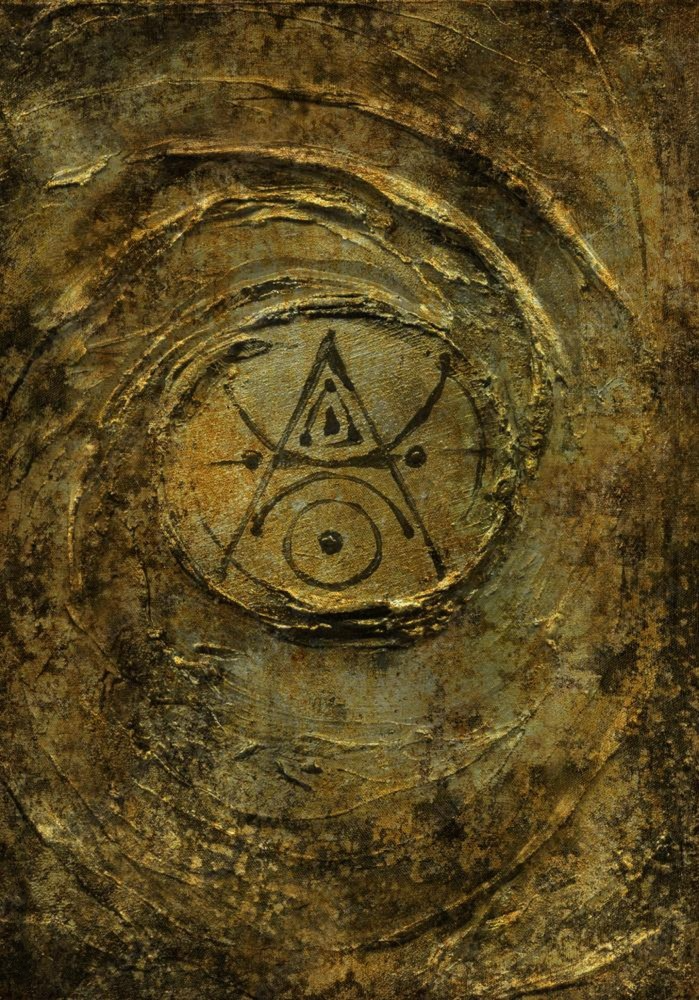
Sigil Design, Composition, and Consecration
Beings need to be identified, as do things they seek; sigils are signatures working upon the mind of the Universe, and those within its spheres.
Commission for use in ritual workings a unique seal derived from an operation of spirit contact, a sigil refining your intention to its essential elements.

Talisman Design, Composition, and Consecration
Where a sigil’s stylized sign summons to its use the spirit(s) it signifies, a talisman carries with its bearer the potential maintained in its material.
Actualizing a symbol’s potential to full magical power is what talismans do, by attracting to corresponding substance the attributes of what spirit(s) its material signifies.
Wisdom

Consultation by Aquilifer Eremita Urbanus
What elevates routine to ritual is action done with intention, where will acquires its power to manifest desire is when every element has been considered.
Commission with confidence a detailed review of your practice and proposed outcomes, having an experienced eye and discerning mind guide you planning working successful operations.

Audience with Aquilifer Eremita Urbanus
Myths emerge from traditions for centuries occulted by shadowy gaps in their histories, birthed by oral tradition; tales woven until cryptic truths elude, requiring teachers.
Master to apprentice, mentor to protégé, magic has long been whispered when transmitting secrets of its art, now you can continue the conversation with one.
Alternative Arrangements
Pro Bono Animæ

As cost should be no impediment to spiritual counsel, invoking the Scriptural precedent decreed in Matthew 10:8, access to these services may be granted free of charge in forma pauperis, considered on an individual basis when matters are urgent. Should you feel the need, please reach out; compassion shall prevail.