MEMENTO MORI

Notes Toward an Obituary
-
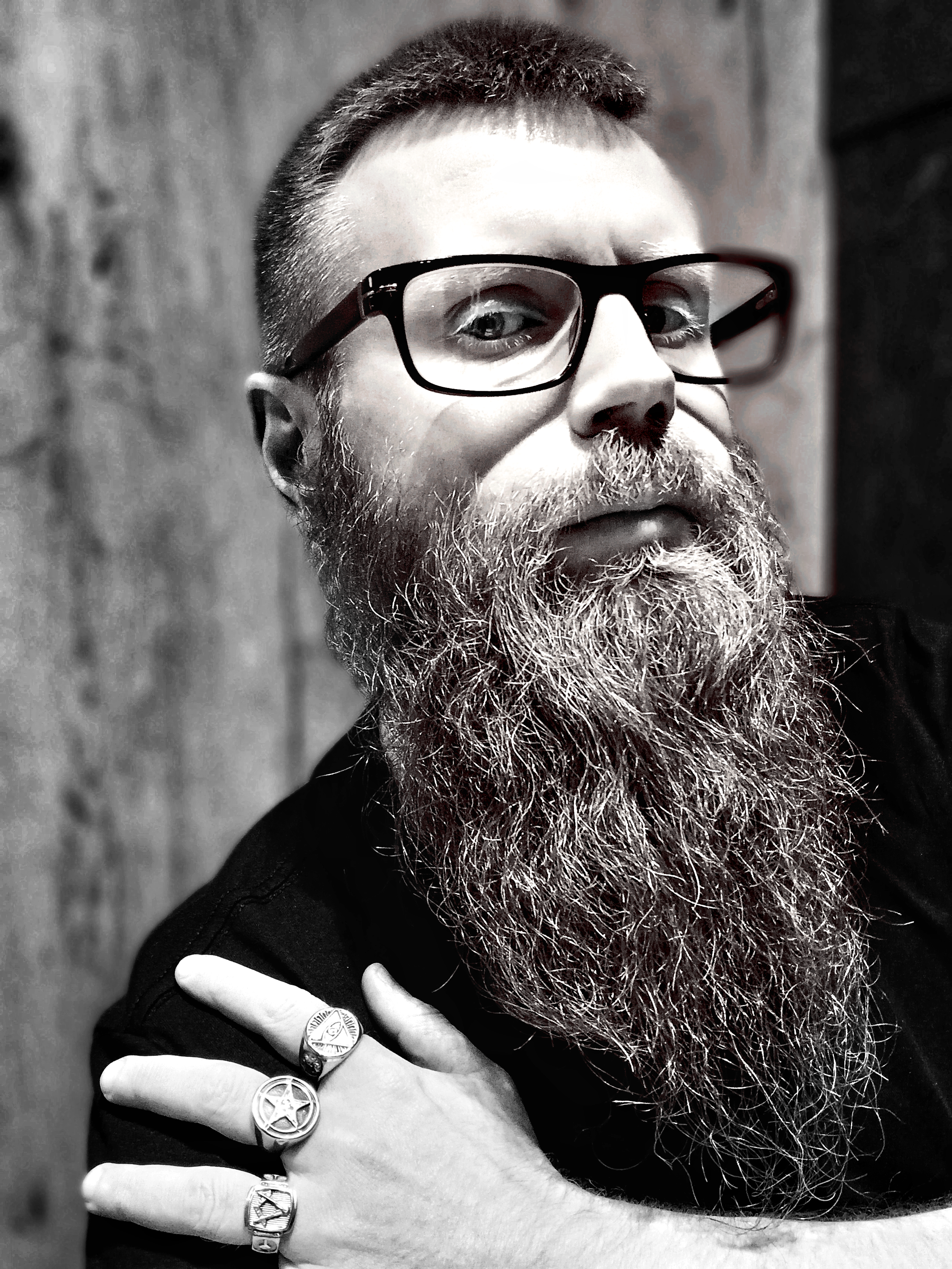
Self-Portrait, 2024
Publicity photograph, chromogenic (digital silver halide) print on paper
20.32 × 25.4 cm (8 × 10 in.)
Master printA self-portrait of Jono Borden taken by him in 2024. The alpha, or flagship, primary, specimen of his self-portraits for that year.
Printed 2024.Accession Number CP.2024.Α
Copyright © 2024 Jonathan Borden
Collectio Photographica, Bibliotheca Ionathani Bordenii, HalifaxView a gallery of official portraiture here.
-
Jono Borden, Poet and Provocateur Who Relished the Rupture, Dies at [Age]
A Conclusion He’s Written for Himself
Jono Borden, a Canadian polymath whose body of work—spanning poetry, film, and a sprawling independent empire of artistic subversion—served as a systematic dismantling of contemporary convention, died of [Cause] on [Date] in Halifax, Nova Scotia. He was [Age].
A figure of self-styled contradictions, Mr. Borden was as comfortable in the high ceremonial arts as he was in the role of the æsthetic vandal. Born into a lineage that reads like a survey of the Canadian establishment, Mr. Borden counted among his cousins the nation’s eighth prime minister, Sir Robert Borden, and the former Minister of Militia and Defence, Sir Frederick Borden. Yet, the family tree also held darker, more cinematic threads: he was cousin to the Hollywood silent-film star Olive Borden—the first to receive a star on the Walk of Fame—and, epitomizing family lore, the alleged axe-murderess Lizzie Borden. Perhaps most pivotally, he was the great-grandson of Wilkie Borden, the first licensed film projectionist in Nova Scotia, who managed and operated several cinemas across the province. Mr. Borden famously embraced this eclectic heritage, noting that while he shared the blood of prime ministers and tycoons, he felt a far greater kinship with the hatchet-wielder and the projectionist. He spent his life systematically turning this “respected” inheritance into the raw material for his own subversive artistic agenda, preferring to swing what he called his “ancestral hatchet” at the polite boundaries of literature and film. Eldest of two sons, born Jonathan David Borden at Halifax on October 20, 1987, his entrances cut swaths.
Mr. Borden’s intellectual foundations were laid at the University of King’s College and Dalhousie University, where he refined the academic discipline that would later underpin his sprawling, occult archives. A scholar of Early Modern studies and history, religious studies and film studies, he approached research which focused on the moral philosophy of the Marquis de Sade and Eighteenth Century print culture, in particular the intersection of literary pornography, libertine poetics, and book piracy, with the same interdisciplinary vigour that came to distinguish his intertextual creative projects. Known for producing intricately immersive, expressionistic works bleeding references and allusions to his many diverse interests and obscure inspirations, he approached the page and the screen with the precision of a pen-wielding surgeon, irreverent as an anachronistic anatomist eager to reconfigure the remains of dead cultures and forgotten doctrines to suit his forward-grasping vision. Yet, his artistic trajectory was defined as much by searing personal experience as it was by scholarly rigour. The murder of his father when Mr. Borden was 22 served as a foundational rupture; it crystallized a sensibility already inclined toward the transgressive and propelled the melancholic, often violent urgency that characterized his work. At one point, he even converted to Roman Catholicism and endeavoured with relentless, vehement intent to join the Jesuits as a priest among its intellectual order, ultimately deciding not to follow through on the vocation the eve of relocating to their Montréal seminary, called back to art instead. An intensive discernment and period of introspective reinvention that ultimately saw the personal plot twist of a reversal of fortunes for what, he candidly expressed, was the better.
“What he makes deviates; what he touches ruptures,” Mr. Borden once wrote of his own project, a mission he pursued with a prolific, at times overwhelming, intensity. His bibliography, which included the verse novel Isaac & Iskandar (2015), the polemic Bullets in the Temple (2025), and the late-career New Pornographies: A Backward Path to Heaven (2027), to name only three of his fourteen books, and double-album, was intended to corrode what he viewed as the sterile surface of modern life. An openly gay artist and a fiercely committed individualist, Mr. Borden occupied a singular space in the Canadian literary landscape, utilizing his position at the margins to challenge the conventions of the mainstream. Before consecrating himself to his art full-time, Mr. Borden toiled nine-to-five in libraries and archives, preserving professionally the culture crafted by others. Conservation gave way to curation, profession to passion, creating books enabled collecting them.
Mr. Borden’s professional life was as unorthodox as his prose. He operated not through traditional publishing or distribution channels, declining over time several offers for more conventional career paths, reaching his public not through typical stockists but through a constellation of entities he designed and architected himself, among them Jono Borden Publishers, Inc. and Ritualistic Pictures, Inc. By incorporating, running, and serving as his own book publisher, record label, film production company, spiritual service provider, and music publisher, he maintained a fierce, often polarizing autonomy effacing established pundits whose gatekeeping he obliterated with uncompromising articulation.
-
Persistence of the Person With a Persona
“He is set to rise from obscurity,” the poet laureate George Elliott Clarke once remarked, placing Mr. Borden in a tradition of iconoclasts from Byron and Blake to Bob Dylan, Jimi Hendrix, and Leonard Cohen. Mr. Clarke identified in him a “great, rock songsmith” with the necessary fortitude to stare into the abyss—a quality Mr. Borden cultivated with deliberate, sphinx-like intensity in his private life.
Whether through his cinematic incursions, such as The Obsidian Mirror Trilogy (2026)—comprising the divisive Byron biopic Lightning in the Veins which emphasized its subject’s gay relationships, 360 Degrees of Self-Interest that skewered Hollywood billionaires trapped in a disaster-proof museum during Los Angeles wildfires, and The Geometry of Ruin, another period piece, brought intimately close gay army officers, cosmic horror, hometown Halifax, and the British Empire—or his jagged, avant-garde verse, Mr. Borden remained committed to the role of “Disturber-of-Shit.” Sex and death coalesced. He viewed his own life as a canvas for high-ceremonial architecture, as a lifelong practitioner of ritual magic accustomed to shaping his world in accordance with his will, often noting that he found the path of least resistance to be a destination for the hollow. Embracing the unknown he sought self-certainty in cultivated mystery.
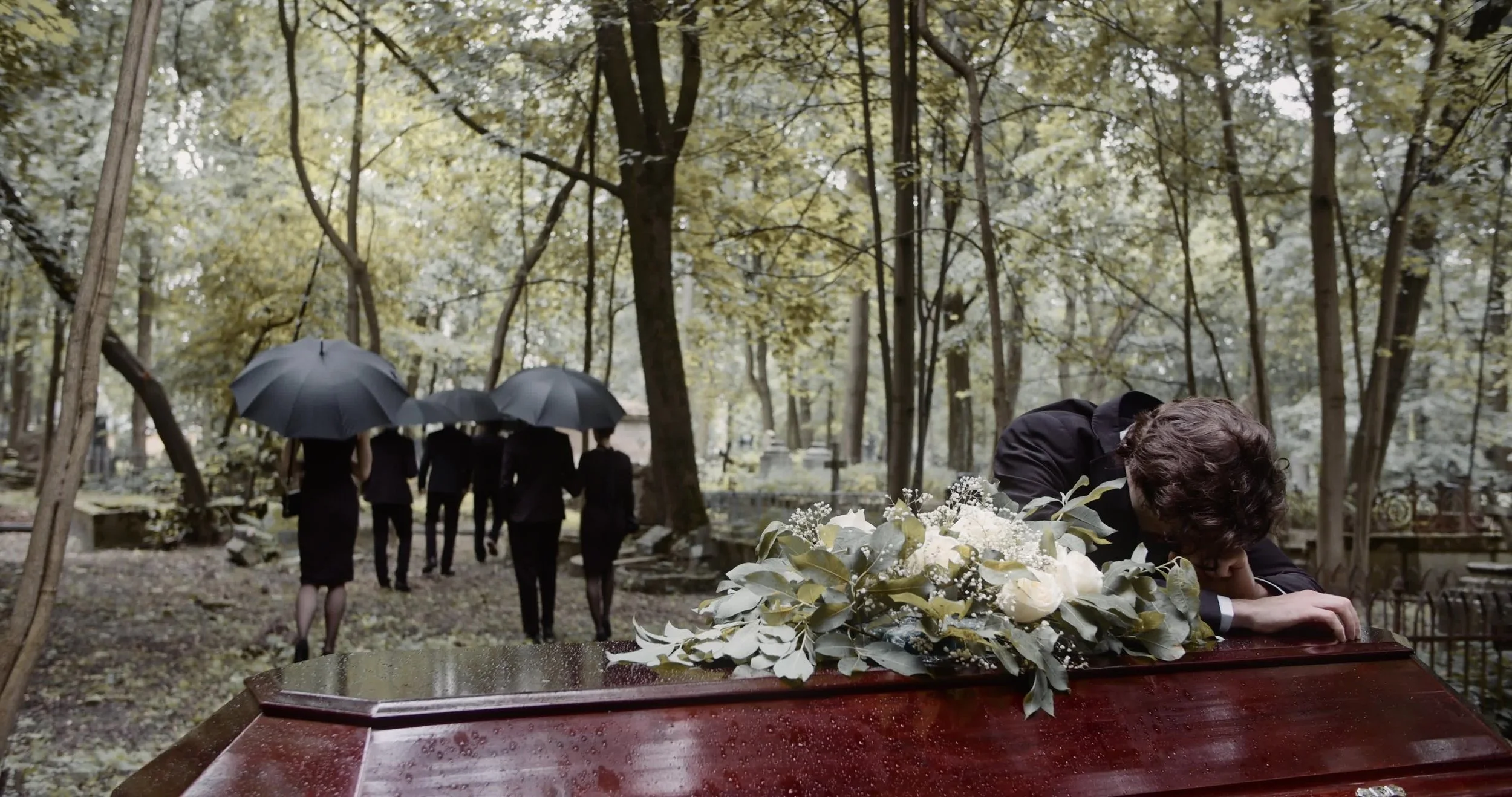
In keeping with his penchant for the ceremonial, Mr. Borden left explicit instructions for an elaborate Victorian-style funeral, mandating the strict observance of traditional mourning rituals—a final æsthetic gesture intended to underscore the gravity of the void he leaves behind. True to his lifelong defense of the unfettered voice, his estate has been directed to the support of civil liberties organizations dedicated to the preservation of freedom of expression and the protection of animal welfare, causes he championed as the necessary counterparts to human civilization.
Predeceased by his father John in 2010 and estranged from his mother for many years, Mr. Borden wore saturnine black every day paying solemn homage. Survivors include his brother Christopher, several uncles, aunts, and numerous cousins, each perpetuating the family tradition of self-determination. He provided for perpetual preservation of ancestors’ tombs and designed his own.
In his final years, working from his home in Halifax, Mr. Borden continued to map what he called “the geometry of ruin,” a pursuit that defined his public and private efforts until his final days. He left behind no blueprints for how his legacy might be softened or sanitized, preferring that the work continue to rupture on its own terms, unaltered and uncensored.
Word Count: 1,200 (including headlines)
Paragraph Count: 10
Section Count: 2
Pending Confirmation: Cause, Date, and Age of death
Revision Date: July 21, 2026
FABULAM IN PERPETUUM
Not Yet for Release: A Continuous Cut Ever Deepening
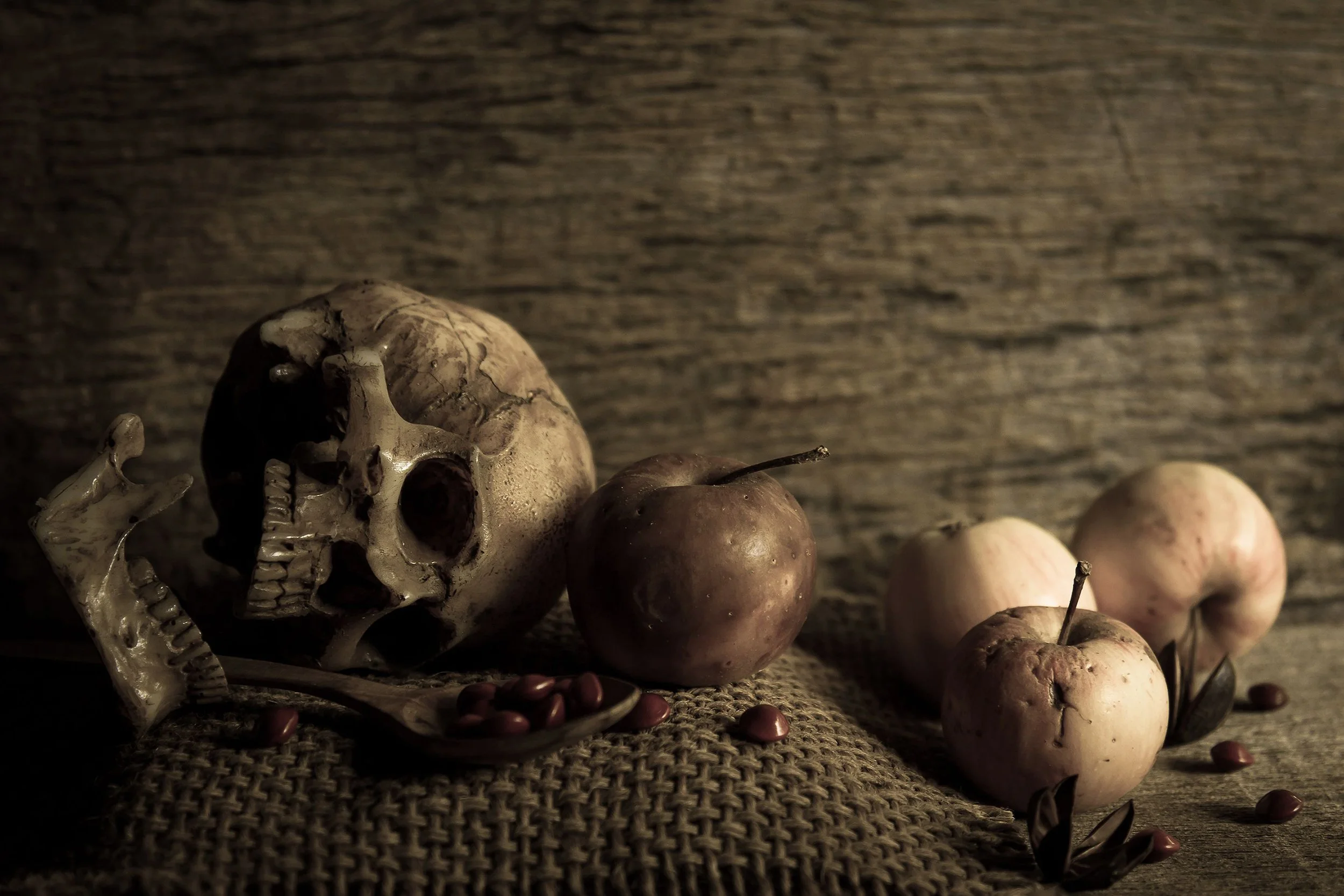
This narrative is currently in a state of flux. It is a living reflection of a life that has not yet concluded, intentionally displayed in its unfinished form. Like a vanitas painting, it is meant to serve as an ongoing reminder of the inevitable, curated by the subject before the final edit. Please regard this not as a factual finality, but as an evolving draft—a ghost in the machine waiting for its definitive ending.
☠
This obituary is a preemptive strike against the banality of the posthumous biography. It is displayed here as an active, iterative draft, maintained by the subject to ensure that the inevitable narrative is penned with the same hand that crafted the life. It is not yet intended for syndication, quotation, or general circulation, although capable of greeting those needs when occasion arises. It is a visible personal memento mori currently undergoing its final, agonizing polish.
☠
This text is a work in progress. It is not yet ready for public record. Inviting your present witness without final scrutiny to guarantee the supremacy of its narrative, it remains here only as an exercise in anticipation, a deliberate act of self-authorship, and a warning to the future. To treat this as a complete document would be to misunderstand the nature of the project. Currently drafting the end, pending final event, mirrors reflect shadows.
☠
This document exists as a series of rewrites. It is the director’s cut of a biography that refuses to finalize its third act. Please observe this as you would a storyboard or an unfinished screenplay: it is a snapshot of the narrative intent, subject to sudden and final revision without notice. It is not an obituary—not yet. A cascading slate of takes, make no rush to print a legend languishing in this editing suite.
☠
Remember you must die; leave a story for eternity.
MEMENTO MORI
“Ultimately, I wish to be remembered as a poet who built his myth with language, lived a life not as a sequence of events to be observed or a consequence of choices to be endured, but a symbolic geometry to be navigated. A confident conqueror of my Self whose own vast wilderness of complications and contradictions I explored undaunted by whatever truth I might discover.”