
360 Degrees of Self-Interest
It’s the survivalism of the unfit.
“Incineration as a lighting choice.”
“Glowing up soon.”
“The world is burning to look in. Please, no flash photography.”
“Wealth can’t buy a fire extinguisher big enough to save an ego!”
“It’s the art of the burn.”
—Jono Borden, taglines for promotional materials, 2026
Logline.
When a wildfire encircles a disaster-proof museum, a crew of chic billionaire collectors must outlast both flame and flaw, discovering that the fiercest competition is not for art but for who survives being seen. ✺


THE UNQUIET GUEST
There is a presence at the threshold.
A figure pacing the frame
as if the reel cannot contain him.
He moves in fragments—
ink and saltwater,
ruin and allure,
a heart too loud for the century that held it.
This film is an invitation to witness the fire
that history tried to name,
but never extinguished.
Synopsis.
Many things to many people, but never the same to everyone, here is Los Angeles in January 2025: a glittering technocratic panopticon perched above an evacuating metropolis, where art, algorithms, and utter delusion collide. Assigned to host an exclusive gala during an historic climate disaster, a coterie of chic billionaire collectors—masters of disruption, venture hubris, and frictionless wealth—find themselves trapped within a disaster-proof fortress of culture. As an encircling wildfire consumes the canyons below, their initial cocktail-circuit chatter yields to an incendiary, toxic friction, proving that the museum’s fortress-grade steel is no match for their own unbearable egos.
They sip vintage champagne beneath the unyielding scrutiny of global livestreams, algorithmic feeds, and their own inflated self-importance. Yet, as the smoke darkens the galleries and the heat climbs, their refusal to evacuate exposes a terrifying vacuum where empathy should be—a monstrous, bleeding symptom of techno-idiocy hungry to consume them whole. Ranging from automated evacuation glitches, climate denial, elite privilege, venture capitalism, psychological dissociation, curated narcissism, tech-utopian hypocrisy, live-streamed panic, absurd posturing, and corporate paranoia.
Enriched with glimpses of billionaire meltdowns and the horrific weight of their own irrelevance, the film is not a standard disaster movie, but a visceral, satirical depiction of the ultra-wealthy trapped between luxury, vanity, and unspeakable ridicule. Wet with designer sweat, artificial mist, chilled vintage, and fine art dust, the rising temperature serves as a punishing mirror as the tone and content of the synched music matches that of the project, promising a haunting experience filtered through a devastating amount of irony. The prototypical proponents of disruption and unchecked power, the elite guests’ reason to be was to outsmart any catastrophe, only to discover that the true disaster was built into their own algorithms, knowing supreme arrogance will always find a way to roast those who refuse to leave. ✺
Alternate Synopsis.
Born for disruption, destined for ridicule, and built for excess, a crew of chic billionaire collectors meet inside the Getty Museum during the catastrophic January 2025 Los Angeles wildfires, a vital cultural citadel defending priceless antiquities. One, a visionary tech titan trained in digital logic, disruption, and silent sociopathy, carries no desire for collective survival; the other, a venture-capital icon haunted by plummeting stock values, commands the algorithmic networks that rule the digital public square. Bound together by stubborn hubris as the city below evacuates, they walk the proverbial line between cocktail decorum and total cognitive collapse, speaking through polite condescension, shared equity portfolios, and quiet delusion inside a panoptic glass fishbowl.
Their age is one at the edge of automated collapse, when apps, crypto, and artificial intelligence redefine global dominance, yet human obsession remains bound by staggering tech-idiocy. Great museums dot strategic hillsides, borders burn, global elites project unprecedented authority, and the venture machine turns people into precise instruments of self-promotion. In the museum—society’s principal fortress of art—the gala attendees inhabit a closed glass ecosystem of climate-controlled vaults, bulletproof glass, and constant indifference to an emergency that rages right outside.
As well, creeping irrelevance. Behind thick blast-proof walls, these elites live in claustrophobic confinement where every algorithmic eye is watching, leaving zero margin for self-awareness, genuine panic, or psychological recovery. Yet, as the wildfire burns closer to the museum’s core, their locked doors unearth a grotesque truth sealed deep within their own disruption models—an unnatural, malevolent power capable of undoing the empires they fund. The tech bros built the vanity into the architecture; the billionaires live among them. Together, their desperate self-interest and terrifying exposure converge, forcing everyone to choose between saving their reputation or revealing a horror that could devour them whole, yielding a gruesome comedy of errors buried beneath the gallery floors. ✺
Summary.
An original satirical dark comedy set inside the Getty Museum during the January 2025 Los Angeles wildfires. A dark, visceral drama, terrifying in tone and razor-sharp in mood, exploring the insulated absurdity of a crew of chic billionaire collectors as they throw a gala while the city burns below. Bound by rigid tech-utopian codes and their own burning self-interest, their night unravels when they refuse to evacuate—one that threatens to expose who survives being seen. No prior knowledge of venture capitalism or museum curation is necessary to appreciate the cinematic experience. ✺

Thematic Overview.
In 360 Degrees of Self-Interest, we delve into the dark psychological tension and biting satire of a trapped elite, set against the oppressive architecture of a disaster-proof museum. This film explores the undercurrents of techno-idiocy, exposing the transgressive nightmare of billionaires torn between rising temperatures and a terror that could consume a fortune. ✺
Source: Original theatrical release poster for The Bad Lord Byron (dir. David MacDonald, 1949), written by Paul Holt, Laurence Kitchin, Peter Quennell, Anthony Thorne, and Terence Young, produced by Sydney Box Productions, distributed by General Film Distributors Limited and International Releasing Organisation, from the production and marketing materials in the J. Arthur Rank Organisation Collection, ITV Archive, Leeds; Copyright © 1949, 2025 ITV Studios Global Distribution Limited, ITV Studios, a subsidiary of ITV plc.
THEATRICAL


“I am become a celebrated victim of my own fame—a veritable Celebrity.”


Source: Original broadcast release poster for Byron (dir. Julian Farino, 2003), written by Nick Dear, produced by BBC Drama Group, distributed by British Broadcasting Corporation (BBC) and BBC Worldwide, from the production and marketing materials in the BBC Television Archive, BBC Archive, Perivale, London; Copyright © 2003 BBC Studios Distribution Limited, British Broadcasting Corporation (BBC), Department for Culture, Media & Sport, His Majesty's Government of the United Kingdom of Great Britain and Northern Ireland
TELEVISION


Three hundred and sixty degrees of rising heat. Only in the dark, suffocating depths of a disaster-proof museum does tech-idiocy conceal its most ridiculous secret. Now, stubborn vanity, corporate decay, and horrific satire erupt onto the screen. The definitive luxury survival comedy. ✺
For over a century, the hilltop museums of Los Angeles have guarded their treasures, yet never before has the psychological panic of an elite gala taken centre stage on screen. Now, the story of a crew of chic billionaire collectors unfolds in all its complex intensity—the fierce rivalry, panoptic fishbowl scrutiny, and terrifying truth that threaten their pampered survival. ✺
The definitive luxury disaster satire of modern cinema.

Before the images assemble,
before the story chooses its shape,
there is only the poet—
raw, restless, radiant with contradiction.
We meet him in the half-light of becoming,
where biography melts into fever,
where the past exhales
and the present listens.
In this darkroom,
Lord Byron develops not as legend,
but as living apparition.
THE POET IN THE DARKROOM
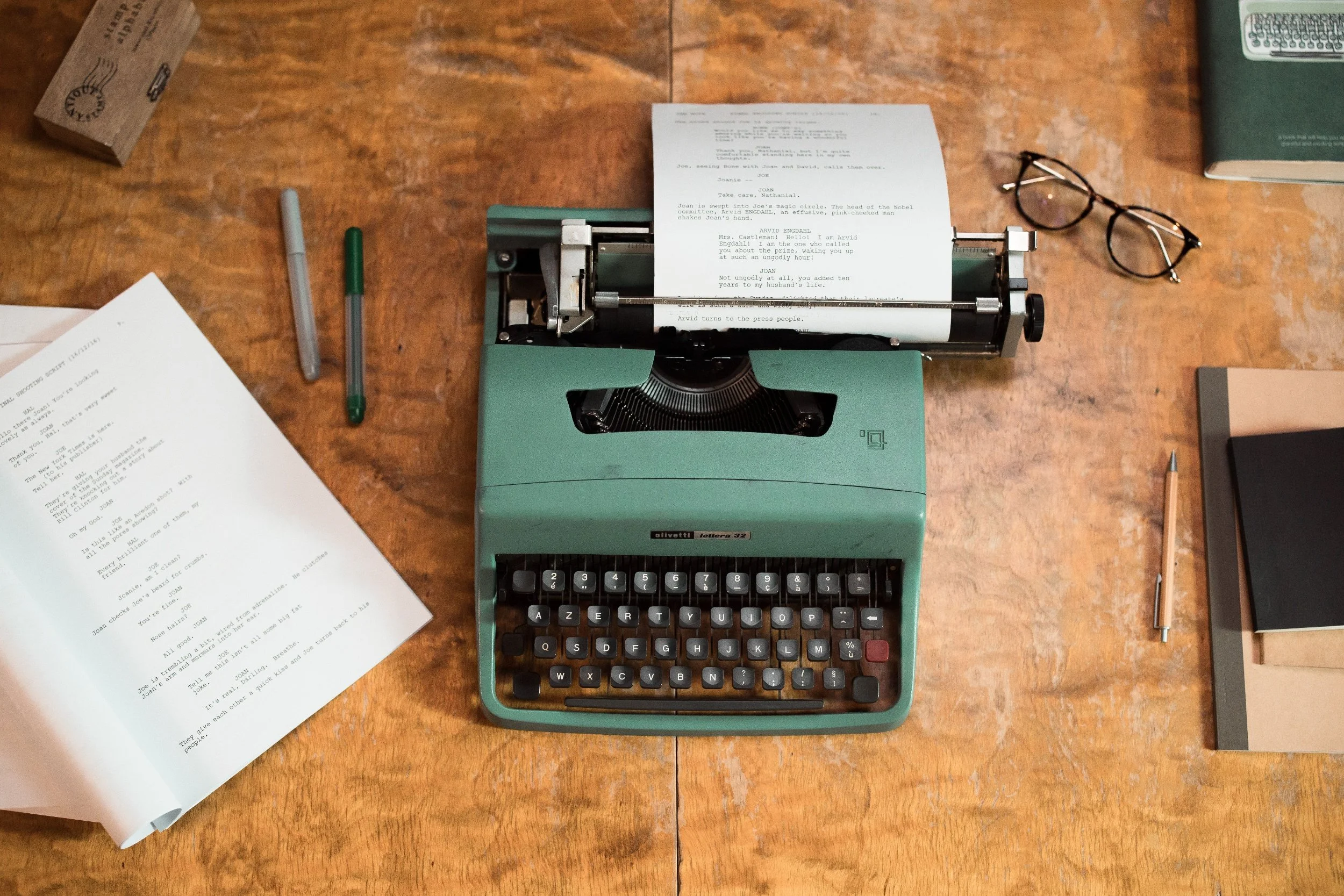
Excerpt (First Draft).
FADE IN:
EXT. GRAND CANAL, VENICE, MAY 1819 – NIGHT
An icon in silhouette dissolving into focus takes form impossible to ignore: LORD BYRON (31 here), pale, brooding, athletic, big fish-minded small-fry upstart upstream swimmer of changing currents astride this new world and the old.
Weathered contrarian. Firebrand wielder of words. Privileged champion of every underdog. Wounded, brunet pursuer and seducer of anything with a pulse. A spectre or a caricature in ill-fitting, well-worn black clothing. His story is one more enemies than friends have told.
As adept with a quill as with a pistol, his lips or his fists, this is he whose calculated scowl only complements his vanity.
Accompanied as it is with enough wealth, and wealth of literary talent, to balance out his moral bankruptcy’s many controversies borne of as many drawn-out swinging moods. Most of which are self-promoting stories of his own design. Legendary wreckage to leave behind. Good time kind-of-guy.
He is a man who, apart from the dark art-form of his perfect tantrums, has written many lives inspired by the one he has decided to live for his ravenous public. A spectre or a caricature or a character. Antihero of his own story, villain of his own myth.
Transformed in every way by worldwide fame at an early age, except for childhood trauma’s stinging memories and his deformity’s crippling embarassment, he needs always to prove himself. In particular, now.
He emerges from the ebbing, murky waters of the moonlit Grand Canal, its obsidian ribbon a silent witness over which glides undulating slivers of reflected torch-light splintering into frenetic ripples as his heavy clothing clings to his body, saturated head-to-toe.
From windows above lining the crumbling faces of ancient grey palazzos, billowing curtains tease glimpses of glowing warmth from the apartments of lovers busying themselves within. Shadow drapes the streetscape in high contrast, mocking discretion. Shadows are dancing against stoic stone as his chiseled face crumbles into disgust.
He climbs over the edge of the pavement bordering the dark pool and, like a poet’s pen from an inkwell, lifts the hulk of himself, as though he were the diluted idea of his ideal self, shivering onto the cobblestones and unfolds his trembling limbs from a crouch into a determined hobble, dignified despite wearing the sopping mess of his obvious misadventure.
Though he has fallen or jumped in, he limps on his right foot, regardless. Ever self-conscious, looking in either direction at the deserted corridor of claustrophobic street down which his voice echoes.

Excerpt (Final Draft).
Status Indicator.
IN PRE-PRODUCTION

Taglines.
Chaos fills the void—cut a path or perish!
Chaos fills the void.
Cut a path or perish!
He may be a libertine but he’s a liberator, too.
Electricity meets enigma where shadows ignite.
Electricity meets enigma.
Where shadows ignite.
He’s mad, bad, and dangerous to know.
A celebrated victim of his own fame.
Truth is always strange; stranger than fiction.
Pleasure’s a sin, and sometimes sin’s a pleasure.
Among them, but not of them.
Development Resources.
The Setup: Structured as a non-linear puzzle of memory and military logs in 1870s Halifax, a principled Royal Engineer and a traumatized Royal Artillery officer work to construct an impenetrable coastal fortress. Underneath the rigid protocols of the Victorian military machine, the two men carry a perilous secret: their forbidden, ravenous love for one another.
The Catch: As construction deepens into the stone, layers of institutional secrecy begin to unspool. The fort’s design isn’t merely defensive; it is a meticulously calibrated mathematical machine aligned with high-level British imperial strategy, masking a far more insidious agenda than simple border control.
Scenario & Rundown.
Comedy ✺ Thriller ✺ Drama
Comps:
Vertigo (1958, writs. Alec Coppel, Samuel A. Taylor, Pierre Boileau, Thomas Narcejac, and Maxwell Anderson, dir. Alfred Hitchcock), Entrapment (1999, writs. Ron Bass, William Broyles, Jr., and Michael Hertzberg, dir. Jon Amiel), The Thomas Crown Affair (1999, writs. Alan Trustman, Leslie Dixon, and Kurt Wimmer, dir. John McTiernan), The Lobster (2015, writs. Yorgos Lanthimos and Efthimis Filippou, dir. Yorgos Lanthimos), The Neon Demon (2016, writs. Nicolas Winding Refn, Mary Laws, and Polly Stenham, dir. Nicolas Winding Refn), The Square (2017, writ./dir. Ruben Östlund), and Velvet Buzzsaw (2019, writ./dir. Dan Gilroy). ✺
The Climax: Burrowing into the fortress’ lowermost subterranean chambers, the officers peel back the final layer of imperial classification only to discover a terrifying, non-human, cosmic horror trapped in the earth—an entity the Empire intends to harness and weaponize to ensure perpetual global dominance.
The Fate: Bound together by their love and burdened by the unbearable knowledge of what lies beneath the masonry, the two officers must decide whether to protect the terrifying cosmic secret to preserve the Empire, or destroy the geometry and risk total madness.
Cinematic Reliquary.
“The main task for any biographer intrepid enough to take on the subject of George Gordon, the sixth Lord Byron, is to give equal time to both versions of the man: Byron as he really was, and Byron as a symbol—what he meant to the world, what he stood for and to some extent still stands for today. These two Byrons are so very different that it is sometimes hard to make them coalesce into a single figure.”

“A true story rooted in a distant yet universal reality, the film is an original screenplay, not an adaptation, and not based on any particular published biography, but the product of its author’s research and imagination, with drama and dialogue drawn from and inspired by Byron’s timeless works, lively correspondence, and incisive journals, giving vision and voice to a monolithic man at once at odds with society, his own myth, and his place in history.”
Watch Byron love boldly, scandalize ruthlessly, and reveal passions, romances, and forbidden desires long hidden. ✺
Biography ✺ Romance ✺ Drama
The Right Honourable George Gordon Byron, 6th Baron Byron of Rochdale, FRS, MA (1788–1824)
PRESENTING BYRON
Through the Artist’s Eye
These portraits are more than artistic interpretations; they are authentic likenesses of Lord Byron, each created from sittings where the poet himself posed and personally approved. Captured during his lifetime, these images offer a rare and intimate glimpse into the man behind the legend—an invaluable record of his persona as seen through the eyes of the artists who immortalized him.
✺
Byron’s portraitists often noted his paradox: a man who could laugh and smile in life but would adopt a gloomy, scowling pose for his painted likeness. He knew that the brooding, tortured genius would captivate—and he leaned into the myth. Selling an attitude, influencing generations. Perpetuating the image of him we still live with ever since. Many of those closest to His Lordship claimed none of these pictures even remotely resembled the poet. This gallery encapsulates how he used his public persona as a cultural commodity. A true icon, whether or not you buy into his body of work. Byron’s mythic status transcends his poetry, forever etched in the collective imagination.
“Mad, bad, and dangerous to know.”¹
“I awoke one morning and found myself famous.”²
✺
Notate Bene:
¹Lady Caroline Lamb, describing Lord Byron, writing of her first impression of him the same night they were introduced to one another at a ball, in a diary entry for Tuesday, March 24th, 1812, according to Elizabeth Jenkins’ Lady Caroline Lamb, published at London by Victor Gollancz Ltd in 1932; page 95.
²Lord Byron, in his unpublished memoirs, Memoranda—and not Confessions, composed by the poet at Venice between July 10th and August 26th, 1818 and given by him to his colleague, correspondent, friend, confidant, and official (though by no means first or only) biographer Thomas Moore on October 11th, 1819; a scattered, candid, autobiographical manuscript then of 78 folio sheets (156 oversized pages) covering his life, opinions, adventures, fame, relationships, scandals, and reputation, in his own words, as of that date current through to 1816, with Byron sending scintillating additions to Moore on a regular basis up until his death in 1824. ¶ Considered to be one of the most notorious crimes and greatest losses in literary history when, at the overly-cautious behest of Byron’s longtime publisher, John Murray (fearful of igniting further scandal by their much-anticipated publication), the only copy of the memoirs—Byron’s voluminous manuscript compilation tell-all (then filling two handwritten volumes)—was burned in Murray’s parlour fireplace at 50 Albemarle Street, London on May 17th, 1824, with Moore (the only one to object to this desecration) and others of the poet’s inner circle in attendance, no known copies having ever been made. ¶ Quoted for the first time in “Notices of the Life of Lord Byron[:] A.D. 1812” of Letters and Journals of Lord Byron: with Notices of His Life, by Thomas Moore. In Two Volumes. Vol. I, published at London by John Murray in 1830; page 347. ¶ That Moore had in his possession, and close at hand, Byron’s coveted memoirs (now lost) from which to quote is as close to the primary source for this oft-repeated musing of the poet as any researcher will ever get. Every subsequent use of this phrase can be traced to Moore’s biography, the only authorized story of Byron’s life and—for more than a century after his death—long the standard version of events until recent scholarship unearthed what prior eras’ pretensions to decency sought to purge. The phrase does not come from Byron’s works or letters, since uncensored, but is a quotation as well-known as the poet himself. ¶ For more on dates of composition, destruction, and other details, refer to Norman Page’s A Byron Chronology, published at Houndmills, Basingstoke, Hampshire by Macmillan Press in 1988, pages 56–57, 63–64, 68, and 93; as well, Leslie A. Marchand’s Byron’s Letters and Journals, Volume VI: ‘The flesh is frail,’ 1818–1819, published at Cambridge, Massachusetts by Harvard University Press in 1976, pages 58–59 and 63–64. Autograph letters to John Murray in which Byron mentions penning and finishing the first iteration of his memoirs: Manuscript 43489, folios 243 and 246, at the National Library of Scotland, Edinburgh.
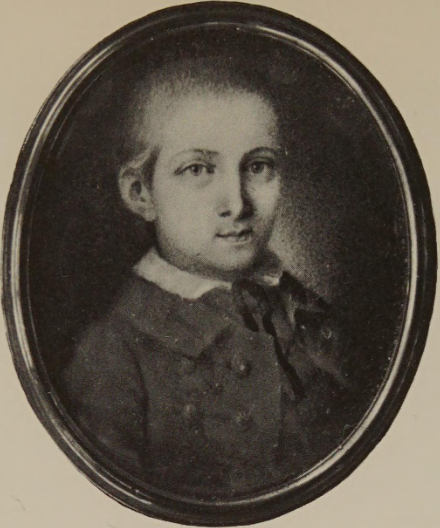
Source: Unknown Artist (floruit 1795), “George Gordon Byron,” 1795, watercolour miniature on ivory, 9 × 6.3 cm (3 35/64 × 2 31/64 in.), Old Speech Room Gallery (OSRG) Arts Society Collection, accession number unknown, Vaughan Library, Harrow School, Harrow on the Hill, Greater London
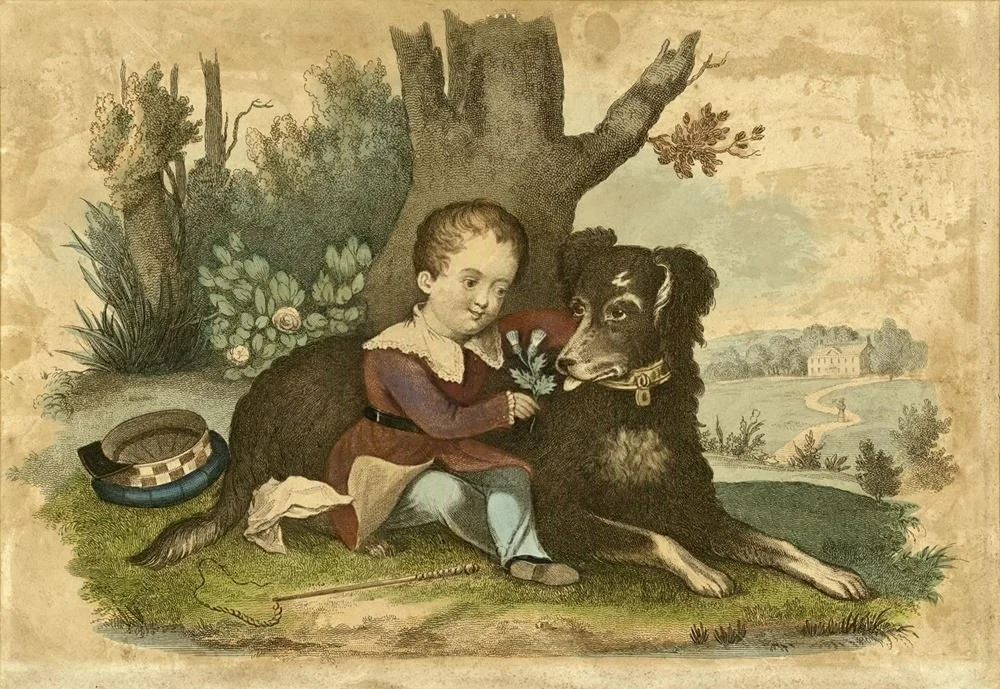
Source: Unknown Artist (floruit 1796), “Infant Byron and Favourite Dog,” 1796, hand-coloured engraving, 37 × 52.8 cm (14 9/16 × 20 51/64 in.), Nottingham Local Studies Library Photograph & Image Collection, accession number NTGM009204, Newstead Abbey, Nottingham City Museums & Galleries, Nottingham City Council, Ravenshead, Nottinghamshire
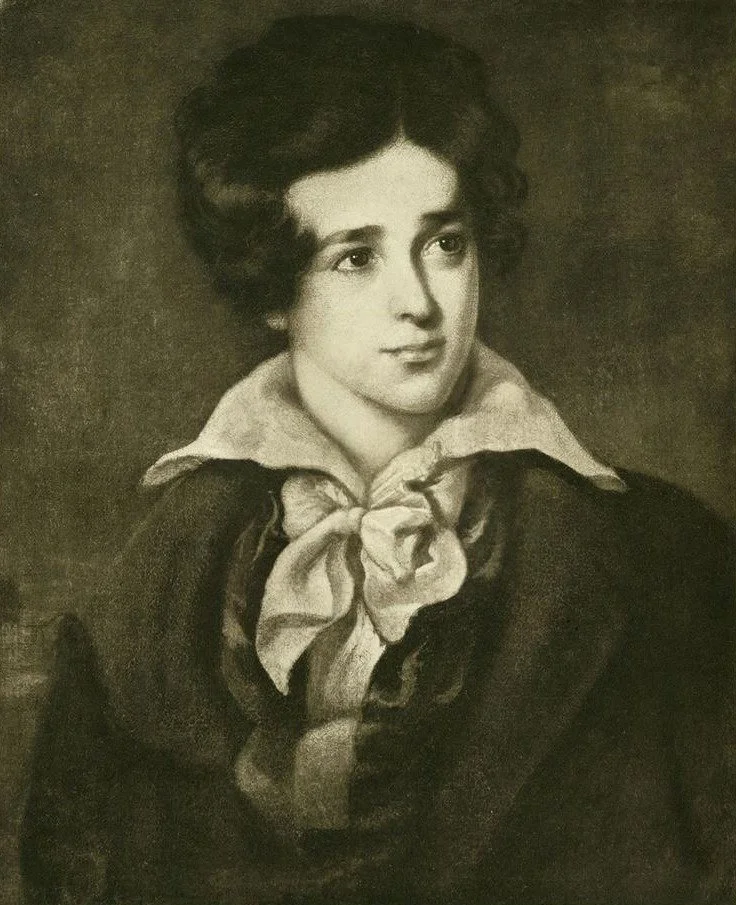
Source: Thomas Lawrence (1769–1830), “George Gordon Noel Byron, 6th Baron, as a Boy,” 1800, mezzotint, 48 × 39 cm (18 29/32 × 15 11/32 in.), Nottingham Local Studies Library Photograph & Image Collection, accession number NTGM009314, Newstead Abbey, Nottingham City Museums & Galleries, Nottingham City Council, Ravenshead, Nottinghamshire
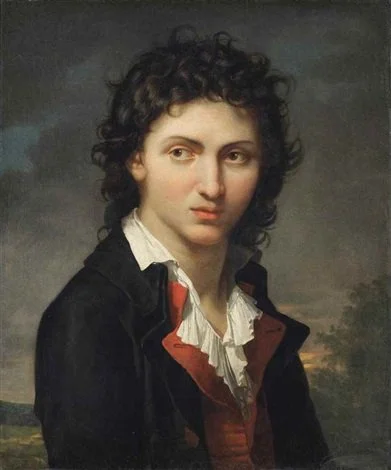
Source: Élisabeth Louise Vigée Le Brun (1755–1842), "Lord Byron," April 1802–May 1805, oil on canvas, 56.5 × 47.6 cm (22 ¼ x 18 ⅞ in.), Auctioned at Christie's London, South Kensington, on 5 December 1969 in an Anonymous Sale [The Property of a Lady of Title], lot number 103, Auctioned at Christie’s London, South Kensington, on 2 November 2016 (Live Auction 12307) in the Old Master and British Paintings Sale, lot number 99, Private Collection
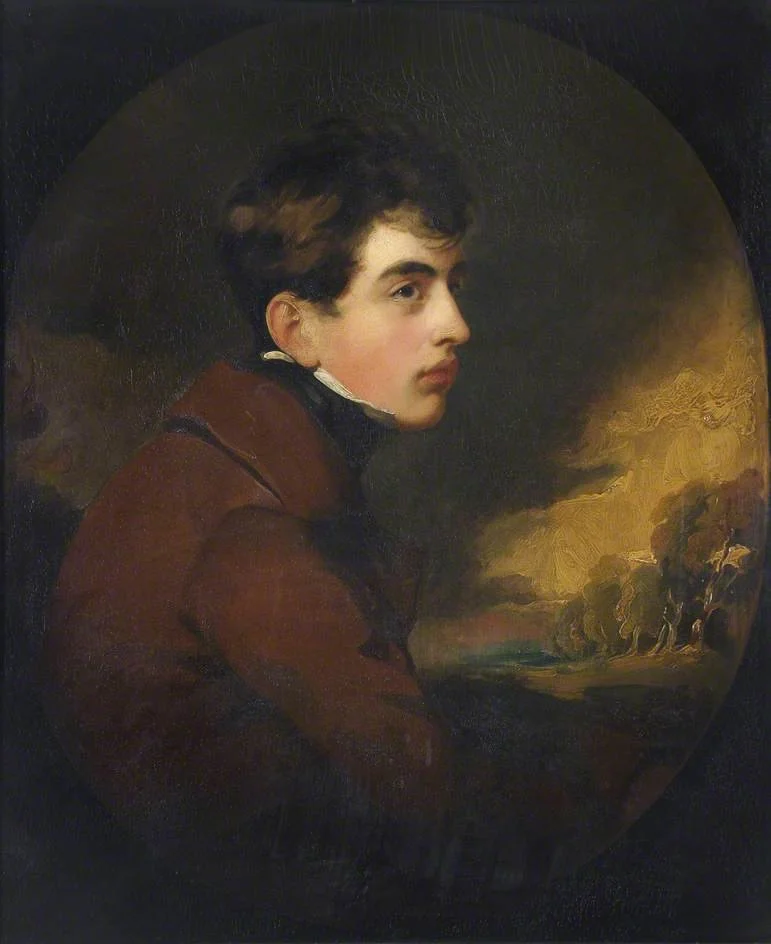
Source: Thomas Lawrence (1769–1830), “George Gordon Noel (1788–1824), Lord Byron, Poet,” circa 1805–1808, oil on canvas, 74 × 61 cm (29 ⅛ × 24 1/64 in.), Gift from A. C. Benson, 1907, accession number TC Oils P 32, Trinity College, University of Cambridge, Cambridge
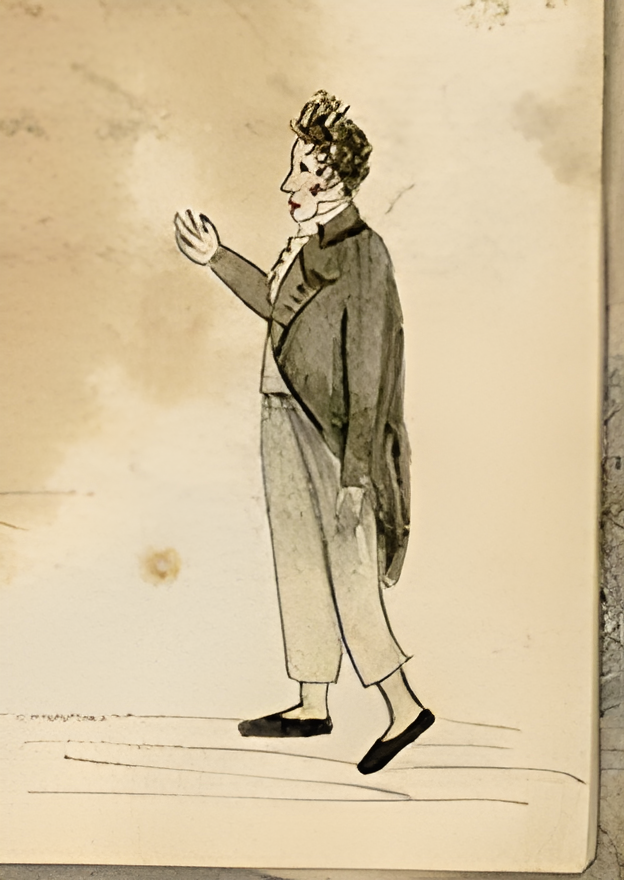
Source: Elizabeth Bridget Pigot (1783–1866), “Byron Visits the House of Reverend Thomas Beecher and Boatswain, Turned Vicar, Says to Byron: ‘Repent Ye Wicked, Resist Temptation’ (Illustration from The Wonderful History of Lord Byron and His Dog),” March 26, 1807, ink and watercolour on paper, 7.5 × 5 cm (2 61/64 × 1 31/32 in.), Purchases, 1961, 1964, 1965, 1966, 1970, 1974, 1977, and Gift, 1970, accession numbers R887, R2209, R2722, and R7837, The Wonderful History of Lord Byron and His Dog, folio 4, Box 6 Folder 8, Series III. Third Party Correspondence and Manuscripts, George Gordon Byron Collection, Harry Ransom Center, The University of Texas at Austin, Austin, Texas
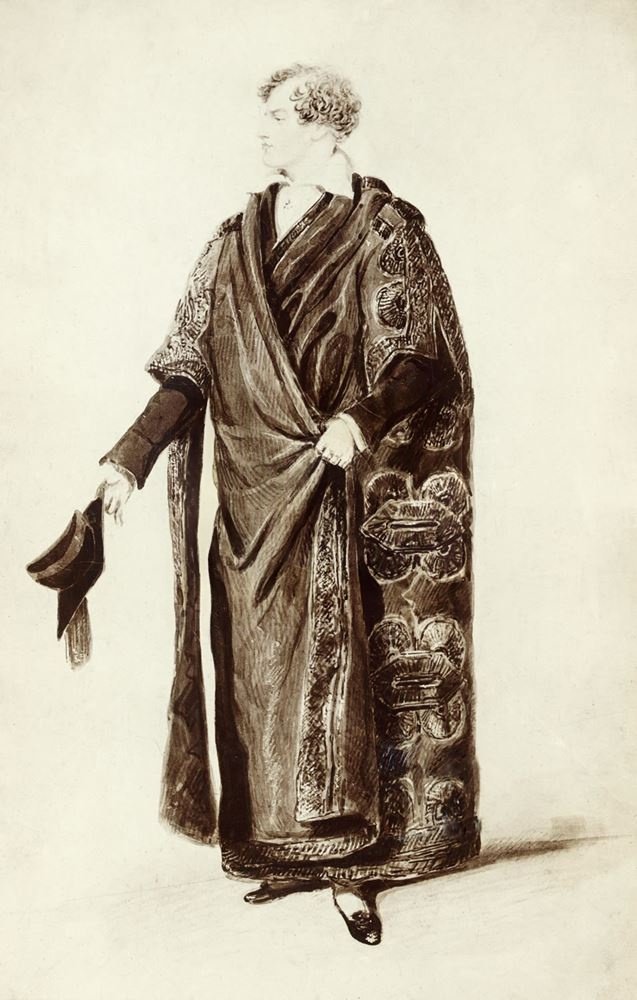
Source: Gilchrist of Cambridge (floruit 1807), “George Gordon Noel Byron, 6th Baron (Byron in a Nobleman’s Academical Robes as an Undergraduate at Cambridge),” 1807, watercolour, 52.9 × 33.7 cm (20 53/64 × 13 17/64 in.), Nottingham Local Studies Library Photograph & Image Collection, accession number NTGM009319, Newstead Abbey, Nottingham City Museums & Galleries, Nottingham City Council, Ravenshead, Nottinghamshire
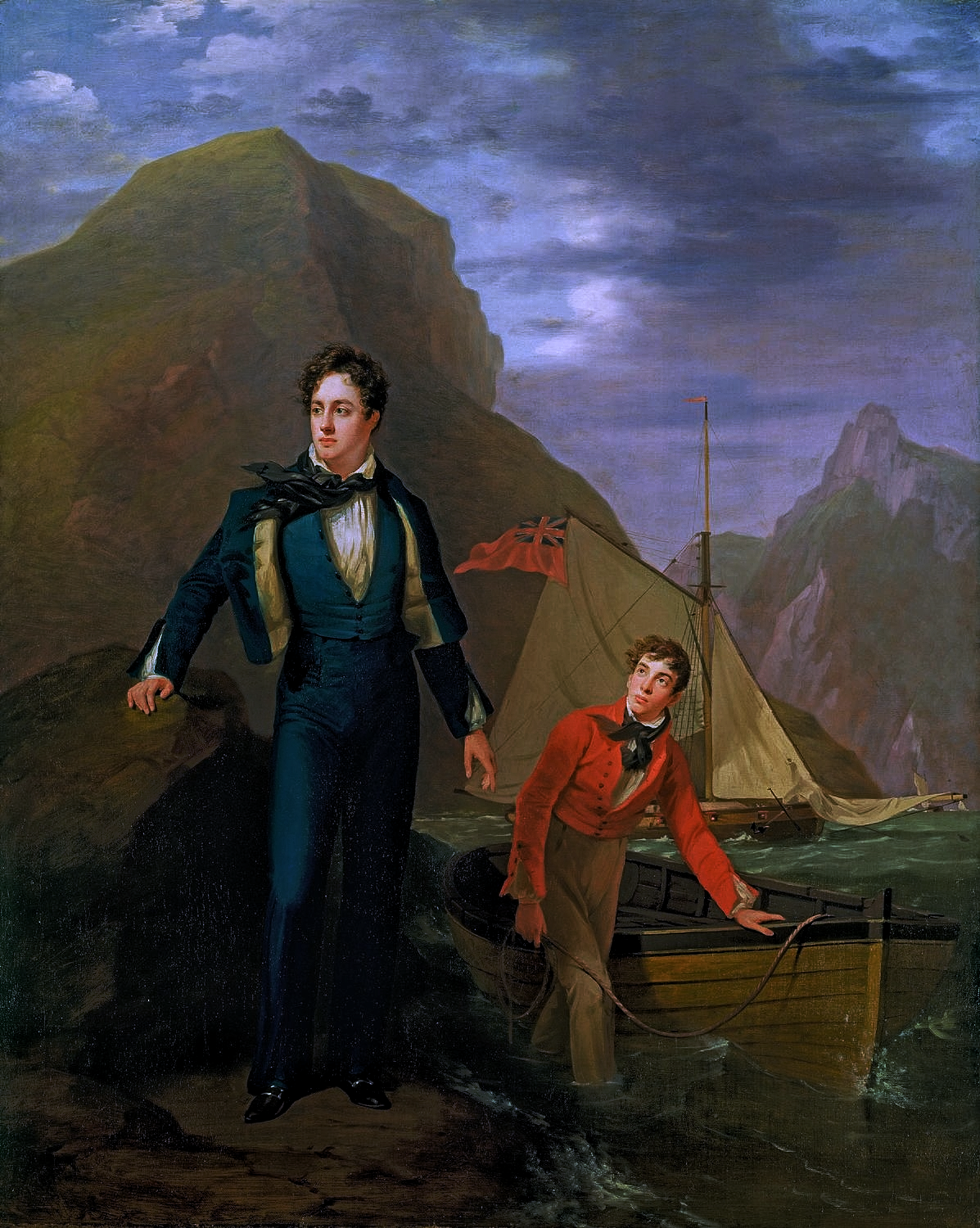
Source: George Sanders (1774–1846), “George Gordon, 6th Lord Byron (1788–1824), called also Lord Byron and His Servant Robert Rushton (1793–1833),” 1807–1808, oil on canvas, 112.5 × 89.4 cm (44 9/32 × 35 3/16 in.), Bequeathed to King George V in 1914 by Charlotte, Lady Dorchester, daughter of Lord Hobhouse, accession number RCIN 402411, Royal Collection Trust, London (on view at The King’s Gallery, Palace of Holyroodhouse, Edinburgh); Copyright © His Majesty King Charles III

Source: Samuel Drummond (1765–1844), “George Gordon Byron in His Graduate Gown (M.A., Trinity College, Cambridge),” 1808, oil on canvas, 63.5 × 53.4cm (25 x 21 1/64 in.), Auctioned at Christie’s London, South Kensington, on 11 November 2004 in an Anonymous Sale, lot number 303, Auctioned at Bonhams London, Knightsbridge on 4 October 2017 in the Capital Style: Two London Collections Sale, lot number 186, Private Collection
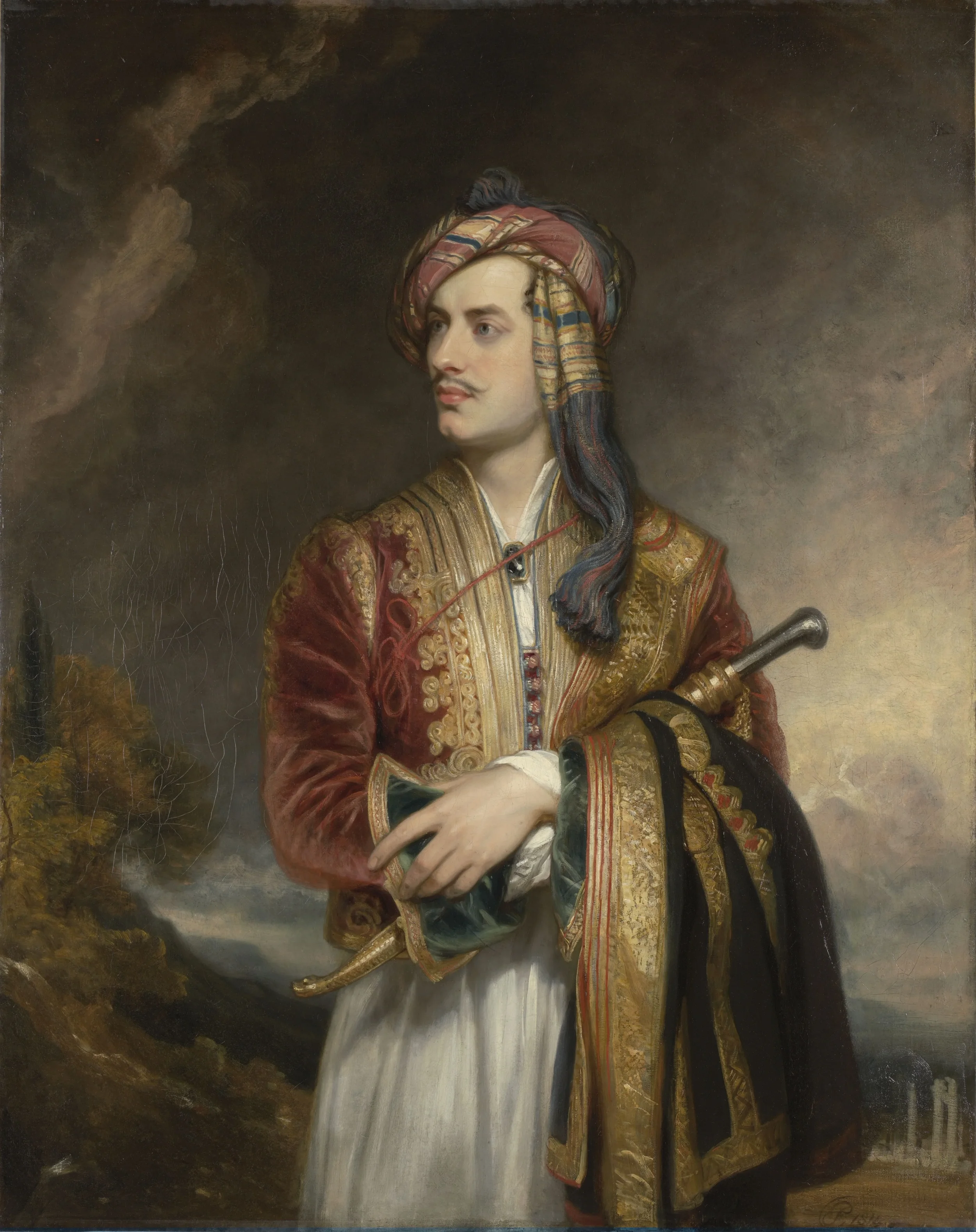
Source: Thomas Phillips (1770–1845), “George Gordon Noel Byron (1788–1824), 6th Baron Byron, Poet, called also Lord Byron in the Dress of an Albanian,” 1813, oil on canvas, 127 × 102 cm (50 × 40 5/32 in.), Purchased from the 4th Earl of Lytton via Leggatt Bros., December 1952, accession number GAC 1976, Government Art Collection, Department for Culture, Media & Sport, His Majesty’s Government of the United Kingdom of Great Britain and Northern Ireland, London (normally on view at the Ambassador’s Residence, British Embassy Athens, currently exhibited at the Benaki Museum, Athens during renovations)
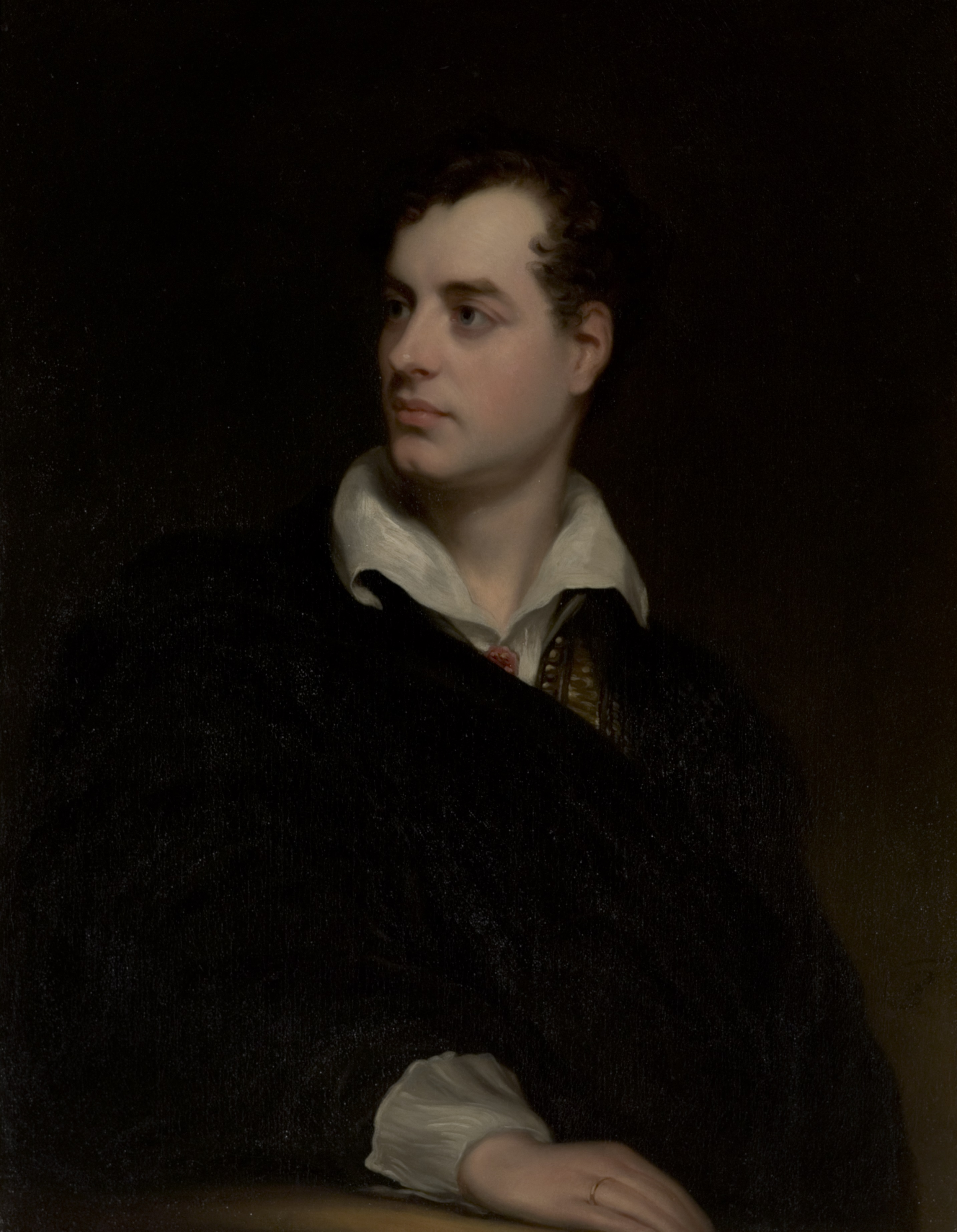
Source: Thomas Phillips (1770–1845), “6th Lord Byron (1788–1824),” 1813, oil on canvas, 91 × 71 cm (35 13/16 × 27 15/16 in.), Gift from Charles Ian Fraser, 1931, accession number NA 532, Newstead Abbey, Nottingham City Museums & Galleries, Nottingham City Council, Ravenshead, Nottinghamshire
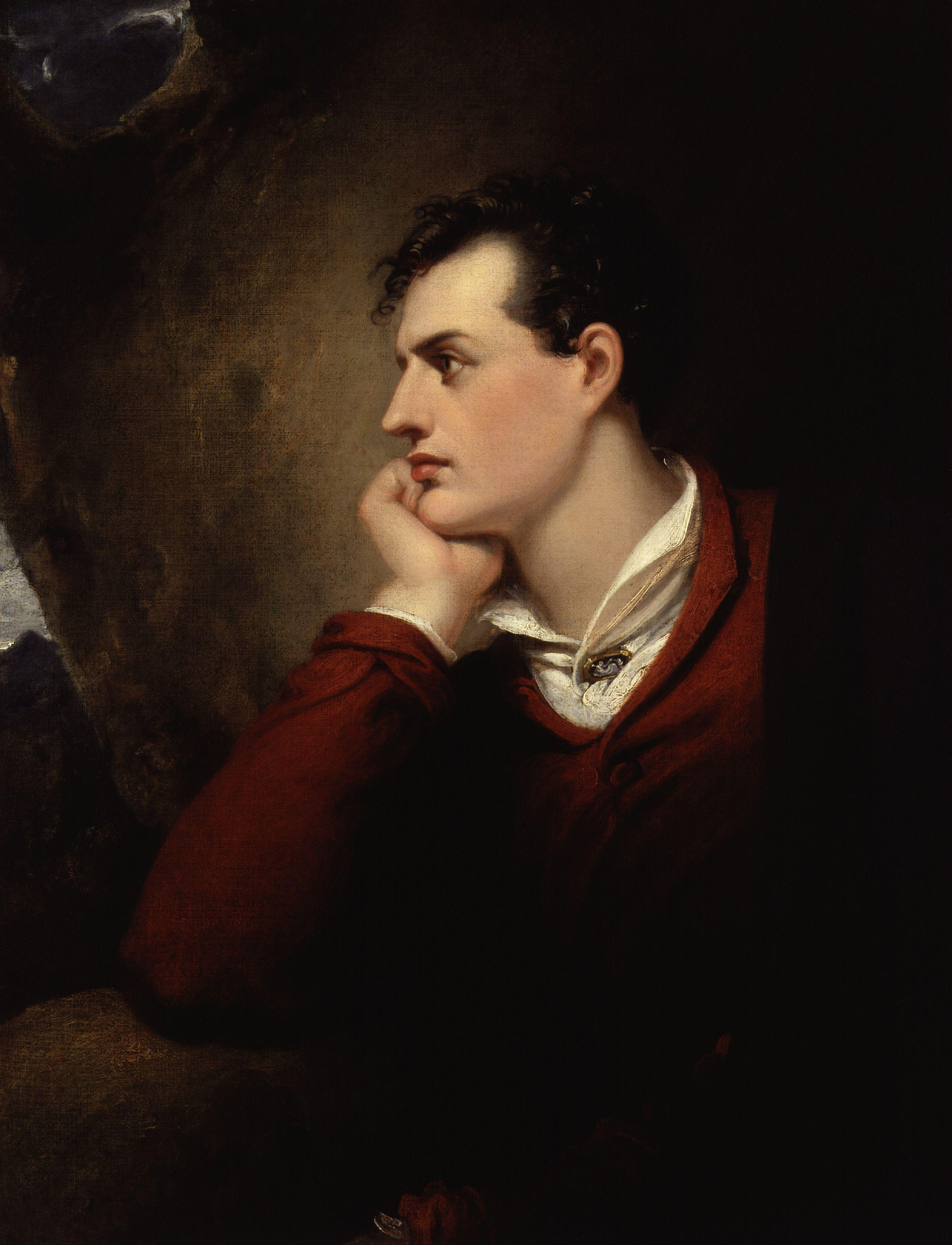
Source: Richard Westall (1765–1836), “Lord Byron,” 1813, oil on canvas, 91.4 × 71.1 cm (36 × 28 in.), Purchased, 1961, Primary Collection, accession number NPG 4243, National Portrait Gallery, London
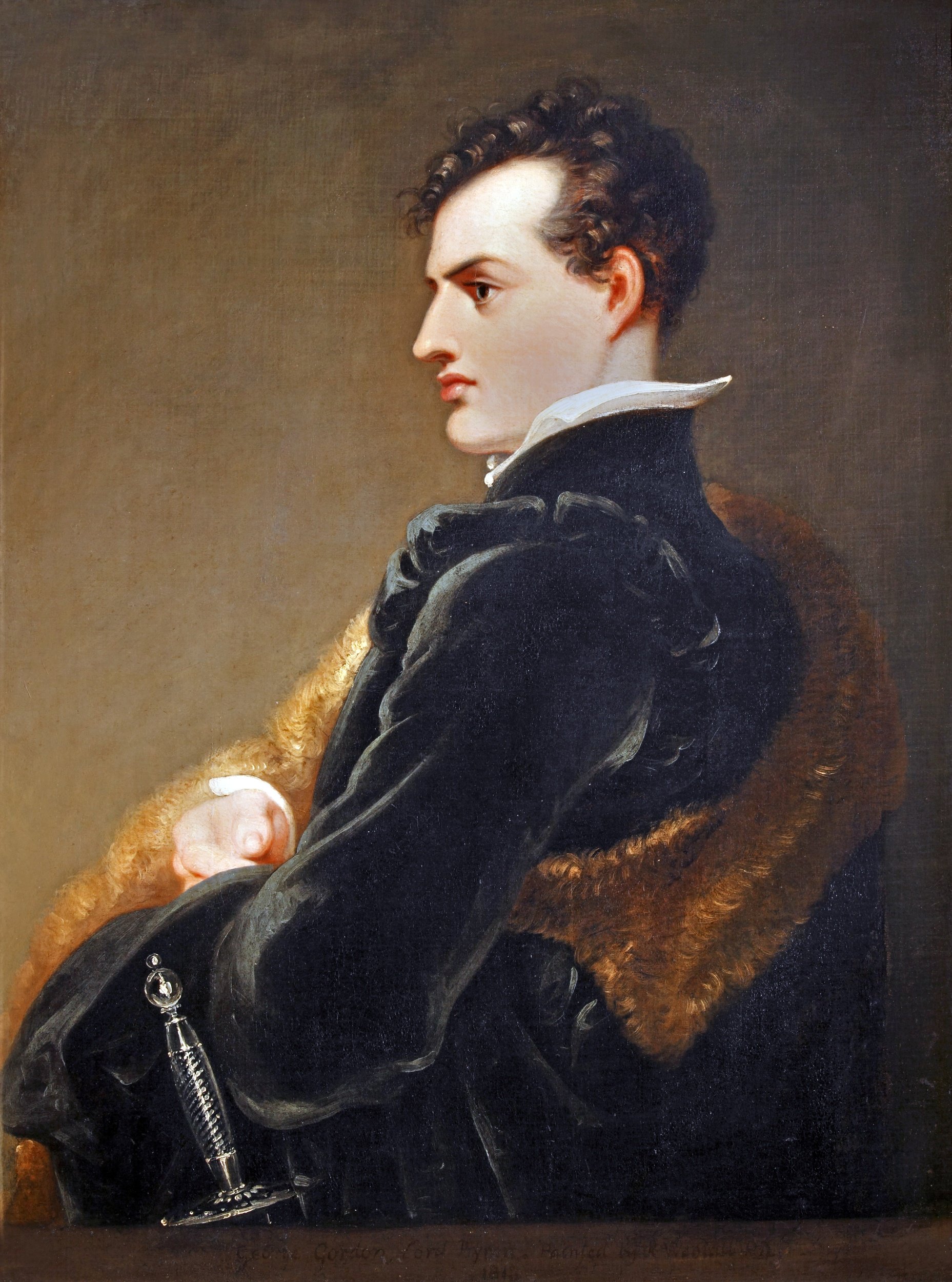
Source: Richard Westall (1765–1836), “George Gordon (1788–1824), Lord Byron,” 1813, oil on canvas, 124.5 × 104.1 cm (49 1/32 × 40 31/32 in.), Gift to the National Trust with Hughenden Manor by the Disraelian Society, 1947, accession number 428981, Hughenden Manor, The Disraeli Collection (National Trust), High Wycombe, Buckinghamshire

Source: George Henry Harlow (1787–1819), “Lord Byron,” 1814–1815 (engraved by Henry Hoppner Meyer [1783–1847] and published at London by Henry Colburn [1784–1855] in New Monthly Magazine, August 1, 1815), black chalk drawing with touches of sanguine, 11 × 8 cm (4 21/64 × 3 5/32), Carl H. Pforzheimer Collection of Shelley and His Circle, call number Pforz VMAT (Byron, G.) (1815. Meyer), The New York Public Library, New York
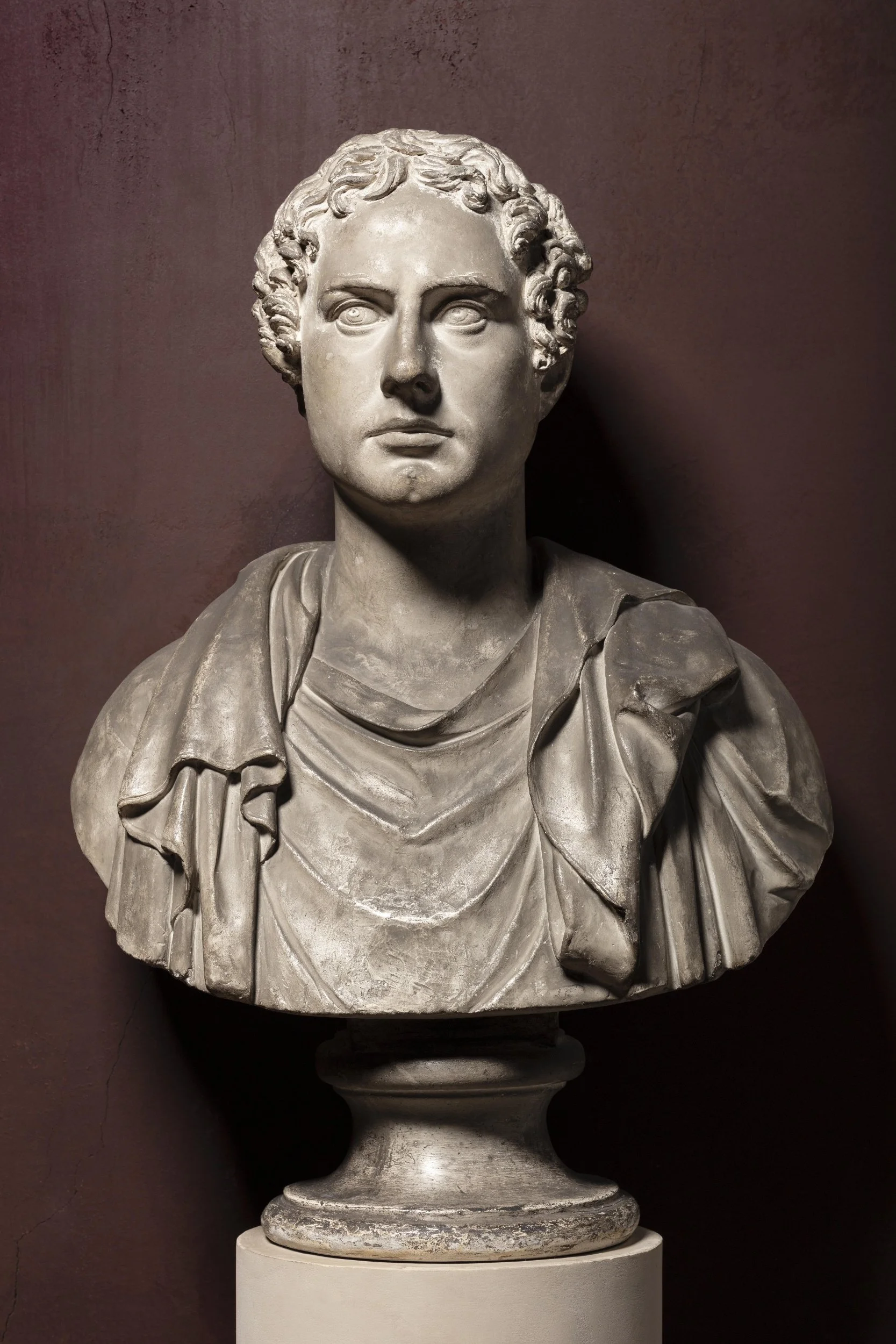
Source: Bertel Thorvaldsen (1770–1844), “George Gordon Byron (Original Model),” April 29, 1817–May 20, 1817, plaster cast portrait bust from initial clay sketch, 66.9 cm (26 11/32 in.) (height), Bequest from Bertel Thorvaldsen, March 24, 1844, accession number A257, Thorvaldsens Museum, Copenhagen
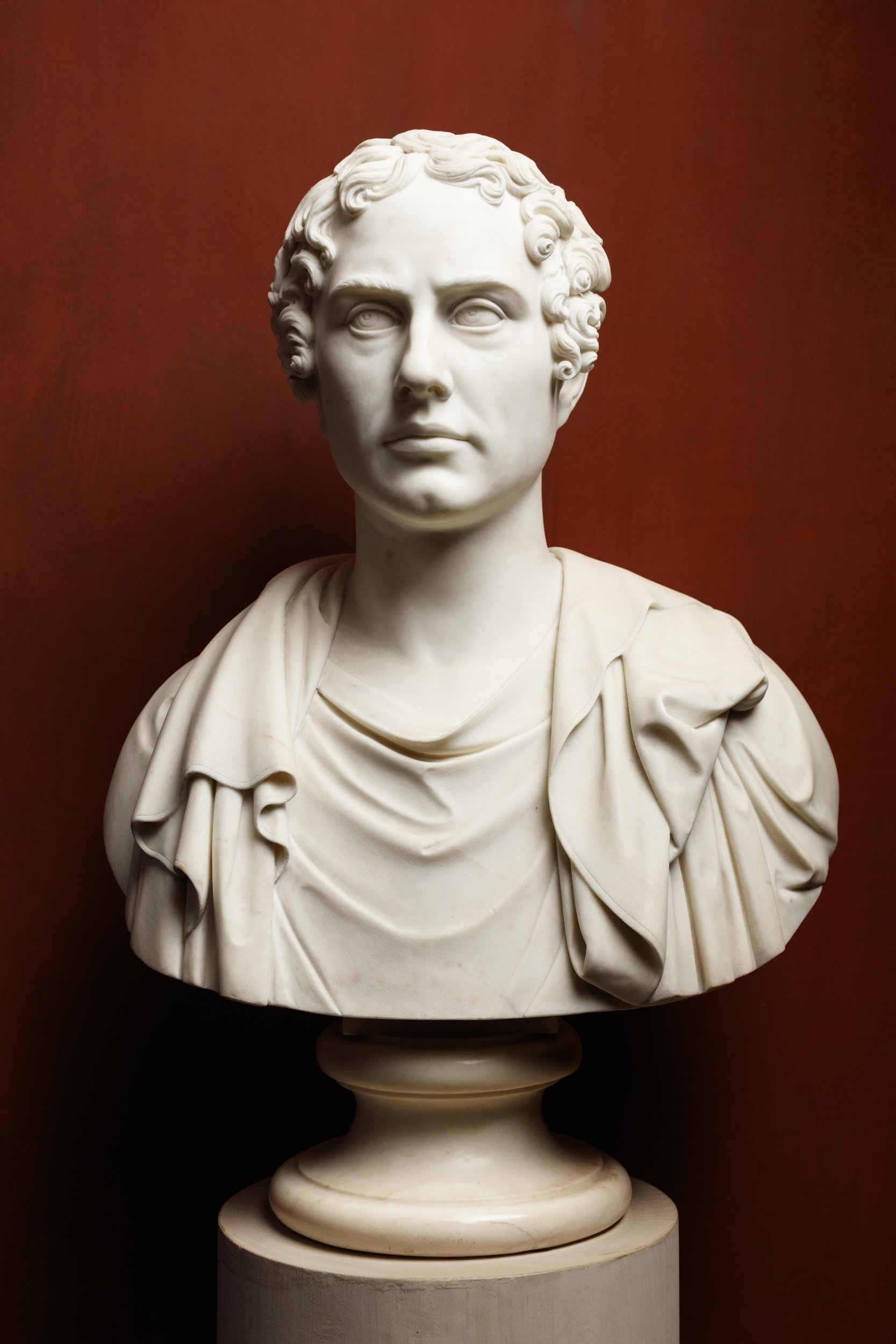
Source: Bertel Thorvaldsen (1770–1844), “George Gordon Byron (Marble Version),” May 1817 (production date presumably 1824), carved marble portrait bust, 65.3 cm (25 23/32 in.) (height), Commissioned by John Cam Hobhouse, Bequest from Bertel Thorvaldsen, March 24, 1844, accession number A256, Thorvaldsens Museum, Copenhagen
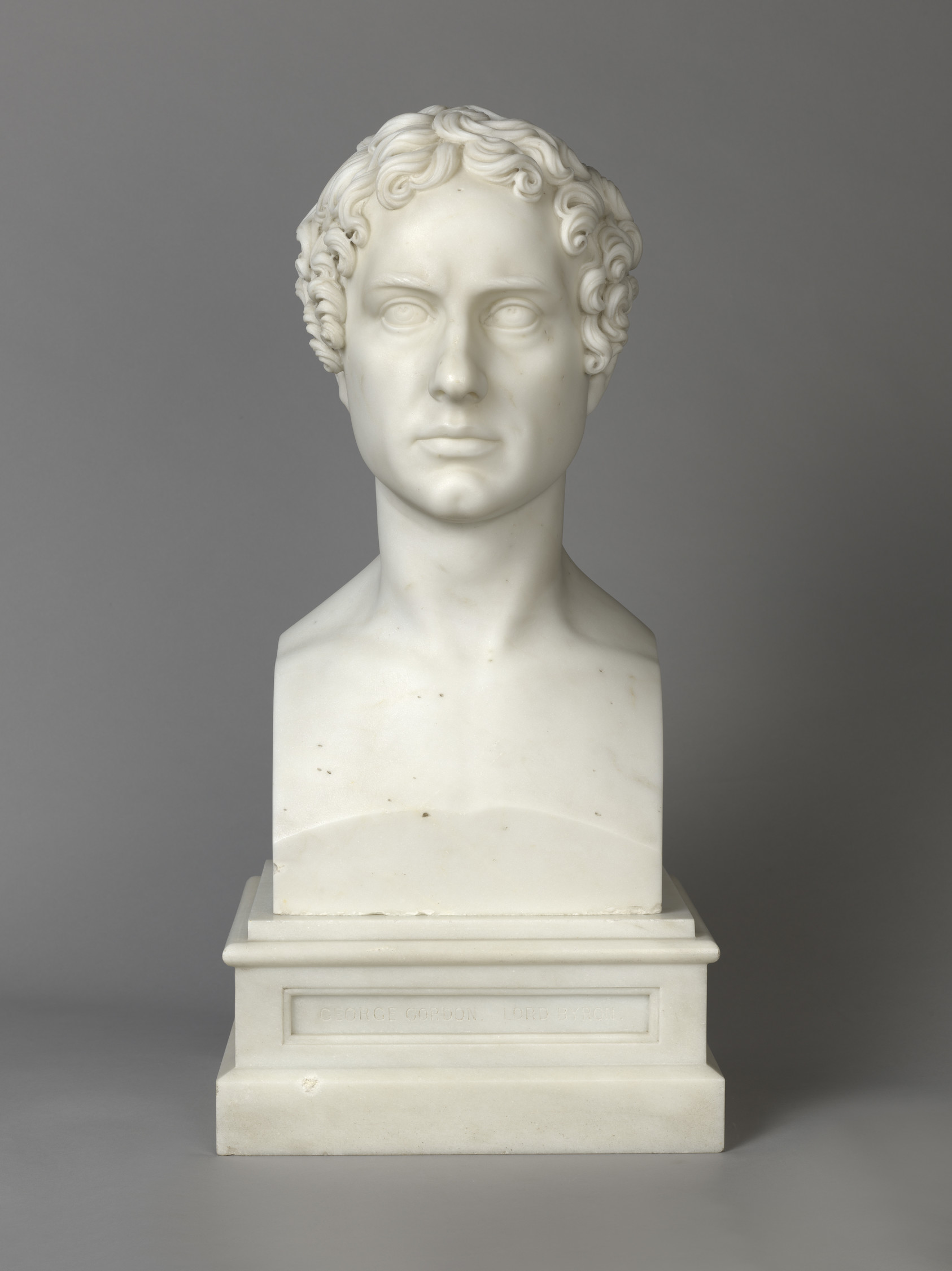
Source: Bertel Thorvaldsen (1770–1844), “George Gordon Byron (1788-1824), when 6th Baron Byron,” 1817, marble, 60.0 × 29.3 × 22.2 cm (23 ⅝ × 11 17/32 × 8 ¾ in.), Bequeathed to King George V in 1914 by Charlotte, Lady Dorchester, daughter of Lord Hobhouse, for whom the bust was modelled, accession number RCIN 35425, Royal Collection Trust, London (on view at Windsor Castle, Windsor); Copyright © His Majesty King Charles III

Source: Jean-Louis André Théodore Géricault (1791–1824), “Portrait d’homme (Byron),” circa 1820, oil on canvas, 61.5 × 50 cm (24 13/64 × 19 11/16 in.), Bequest of Alfred Bruyas, 1876, accession number 876.3.36, Musée Fabre de Montpellier Méditerranée Métropole (Fabre Museum of Montpellier Mediterranean Metropolis), Montpellier

Source: Marianne (née Kent) Hunt (1788–1857), “Silhouette of Lord Byron, as He Appeared After His Daily Ride at Pisa and Genoa,” 1822 (engraved by Samuel Freeman [1773–1857] and published at London by Rudolph Ackermann [1764–1834] in New Monthly Magazine, October 6, 1826), cut paper silhouette, 25.3 × 25.3 cm (9 1/32 × 9 1/32 in.), Carl H. Pforzheimer Collection of Shelley and His Circle, call number Pforz (FF. A-0004), The New York Public Library, New York
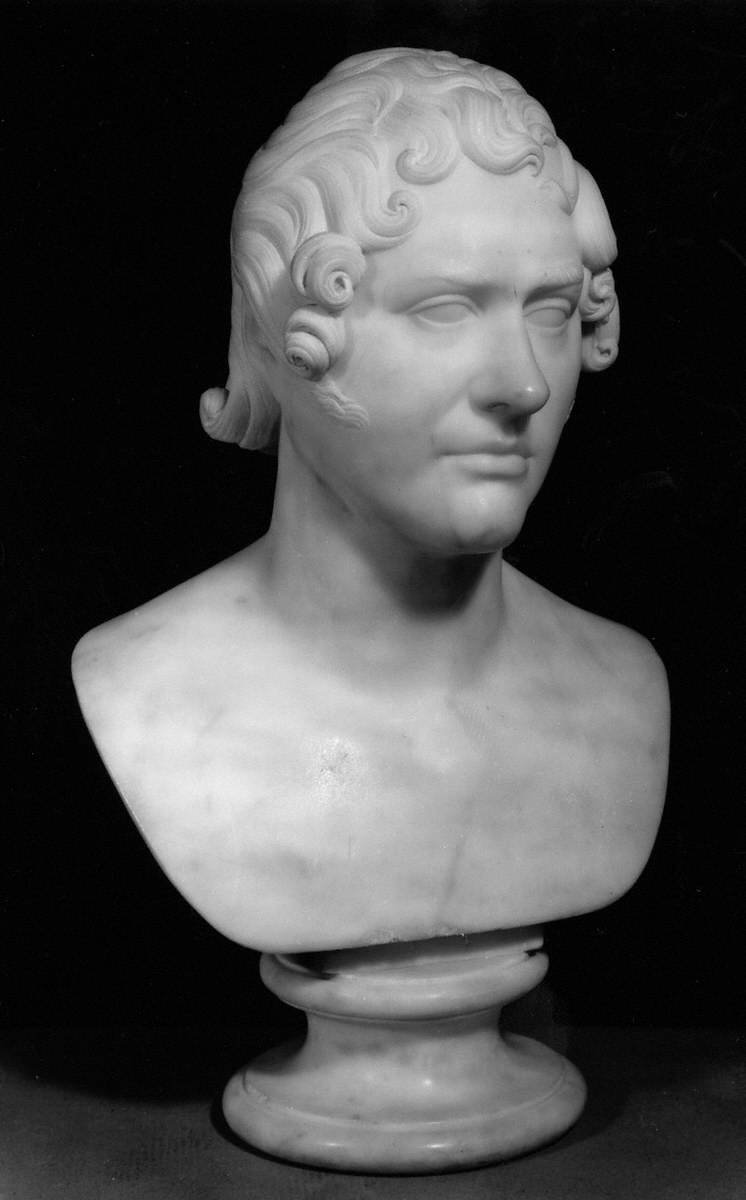
Source: Lorenzo Bartolini (1777–1850), “Lord Byron,” 1822, marble, 59.5 × 34.5 cm (23 ⅜ × 13 ⅝ in.), Purchased, 1904, Primary Collection, accession number NPG 1367, National Portrait Gallery, London
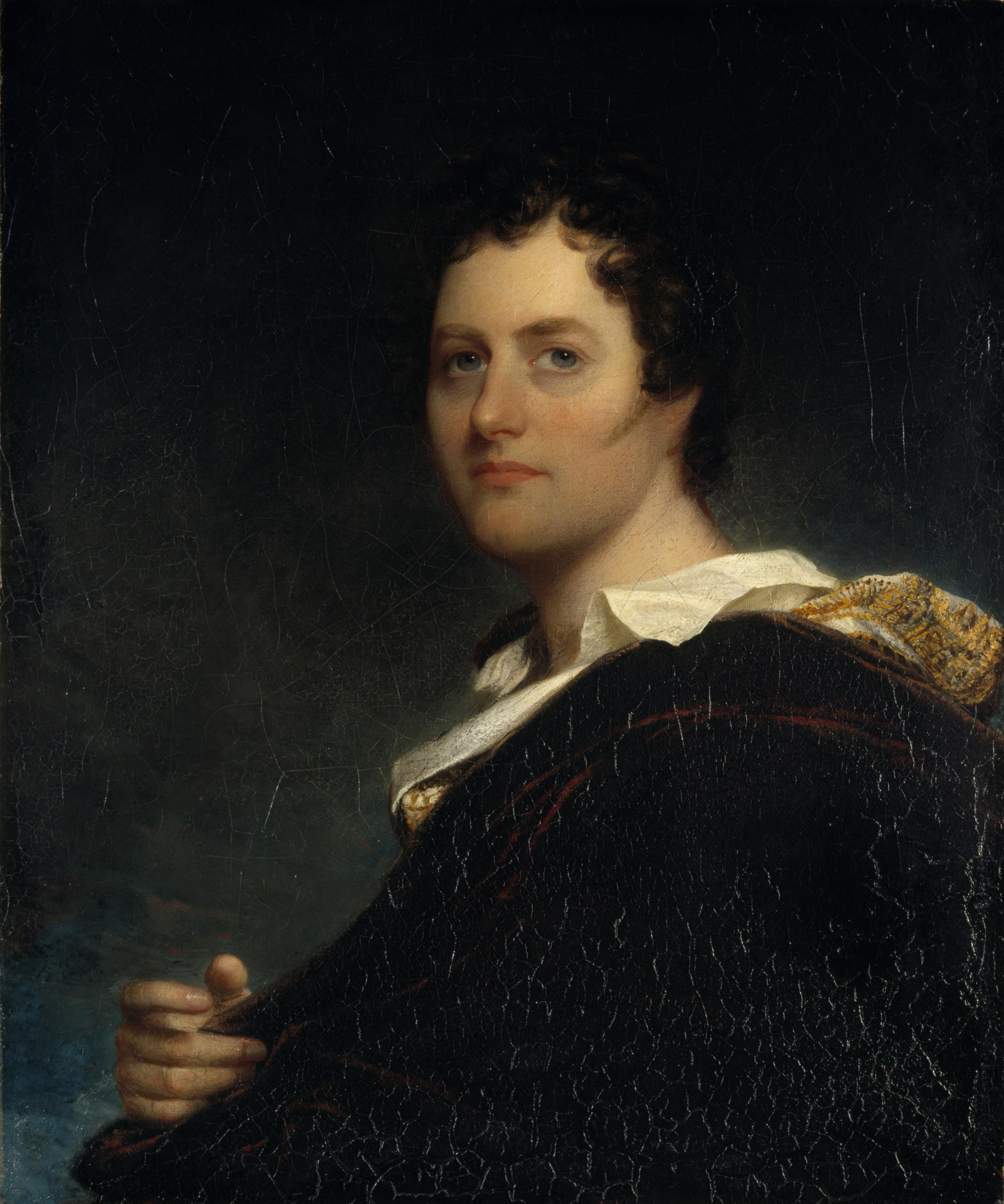
Source: William Edward West (1788–1857), “George Gordon, 6th Lord Byron, 1788–1824, Poet,” 1822, oil on canvas, 72.40 × 62.20 cm (28 ½ × 24 ½ in.), Presented by Colonel William Stirling of Keir, 1951, accession number PG 1561, National Galleries of Scotland, Edinburgh

Source: Alfred Guillaume Gabriel D’Orsay, Comte D’Orsay (1801–1852), “Lord Byron (1788–1824) [at Genoa],” 1823, pencil drawing on paper, 21.27 × 16.51 cm (8 ⅜ × 6 ½ in.), Forster Bequest, accession number F.60, V&A South Kensington, Victoria and Albert Museum, London

Source: Alfred Guillaume Gabriel D’Orsay, Comte D’Orsay (1801–1852), “Lord Byron [at Genoa],” May 1823 (lithographed by Graf & Soret [floruit 1830–1838] and printed at London by Richard Bentley [1871–1898] for publisher Henry Colburn [circa 1785–1855], December 2, 1833), pencil drawing on paper, 15.2 × 13.5 cm (5 63/64 × 5 5/16 in.), Purchased from A. E. Evans & Sons, 1859, accession number 1859,0709.1088, British Museum, London

Source: Alfred Guillaume Gabriel D’Orsay, Comte D’Orsay (1801–1852), “Lord Byron [at Genoa],” May 1823 (lithographed 1832), pencil drawing on paper, 15.2 × 13.5 cm (5 63/64 × 5 5/16 in.), Purchased from Robert Jackson, 1893, accession number 1893,0516.227, British Museum, London
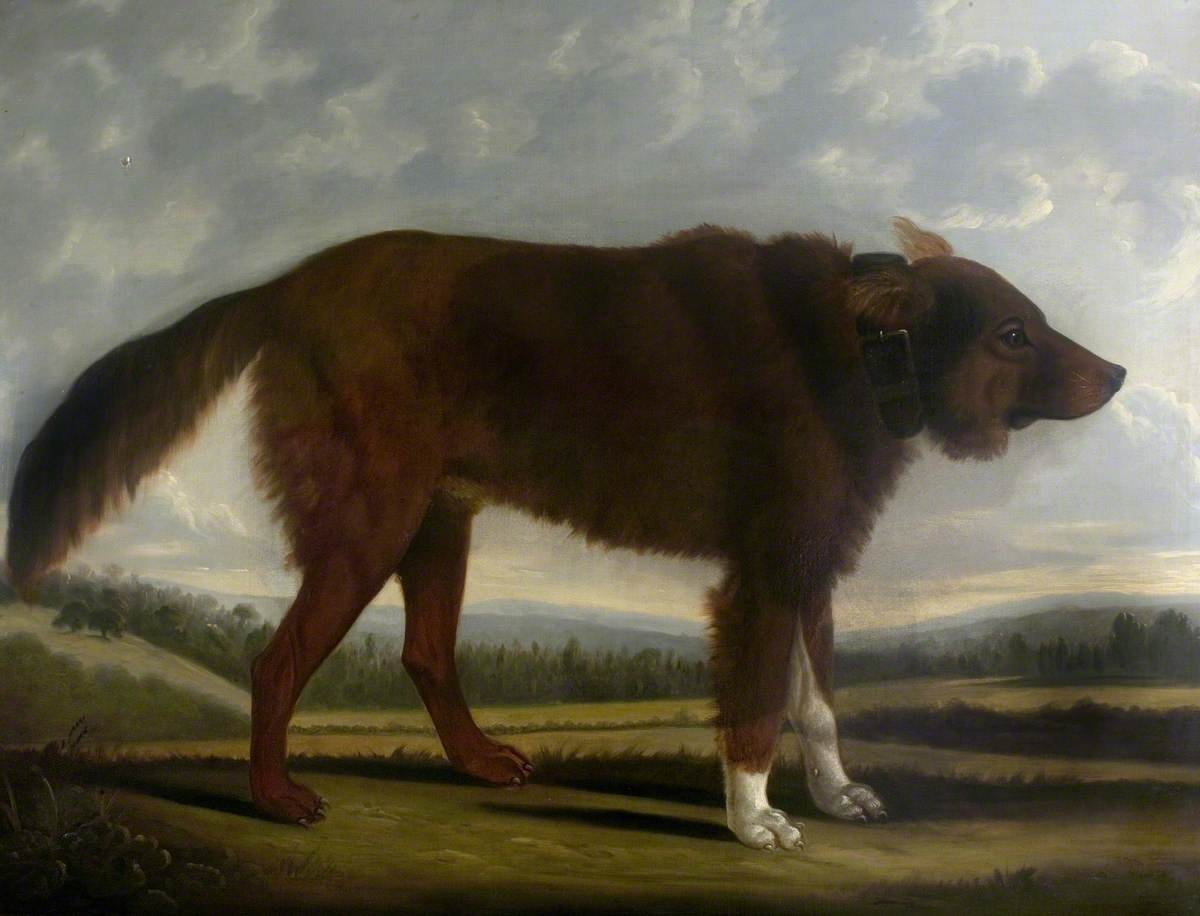
Source: Clifton Tomson (1775–1828), “Lord Byron’s Dog ‘Lyon’ (The Wolf Dog),” 1808, oil on canvas, 135 × 171 cm (53 5/32 × 67 5/16 in.), Gift from Charles Ian Fraser, 1931, accession number NA 277, Newstead Abbey, Nottingham City Museums & Galleries, Nottingham City Council, Ravenshead, Nottinghamshire

Source: William Parry (1773–1859), “‘Lyon you are no rogue Lyon’ (Frontispiece to William Parry’s The Last Days of Lord Byron),” 1825 (etched by Robert Seymour [1798–1836] and published at London by Knight and Lacey [floruit 1823–1828] in 1825), pencil drawing on paper, 13 × 11 cm (5 ⅛ × 4 21/64 in.), The Corvey Collection, Special Collections & University Archives, call number PR4382.A3 P26 L3 1825, The Bancroft Library, University of California Berkeley, Berkeley, California
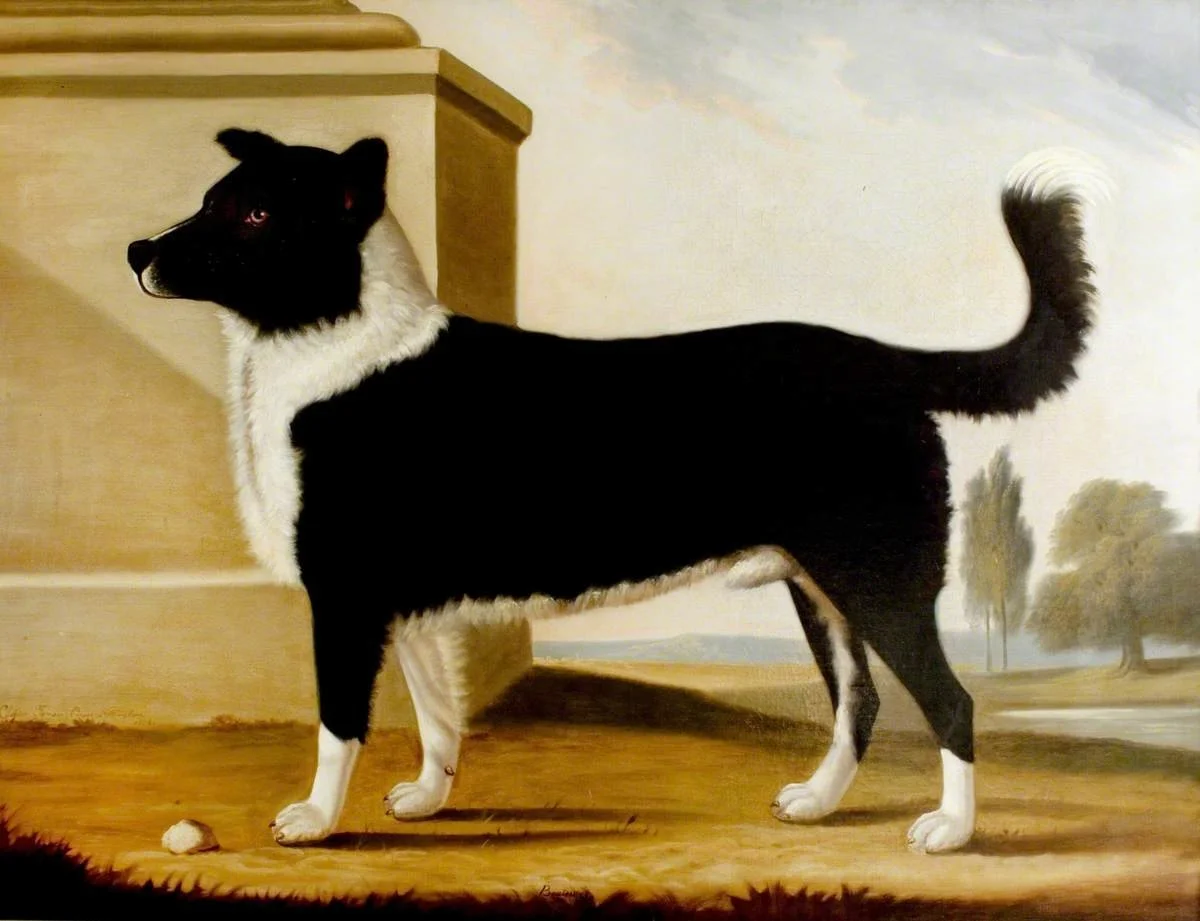
Source: Clifton Tomson (1775–1828), “Lord Byron’s Dog ‘Boatswain’ (1803–1808) (The Newfoundland),” 1808, oil on canvas, 135 × 171 cm (53 5/32 × 67 5/16 in.), Gift from Charles Ian Fraser, 1931, accession number NA 245, Newstead Abbey, Nottingham City Museums & Galleries, Nottingham City Council, Ravenshead, Nottinghamshire
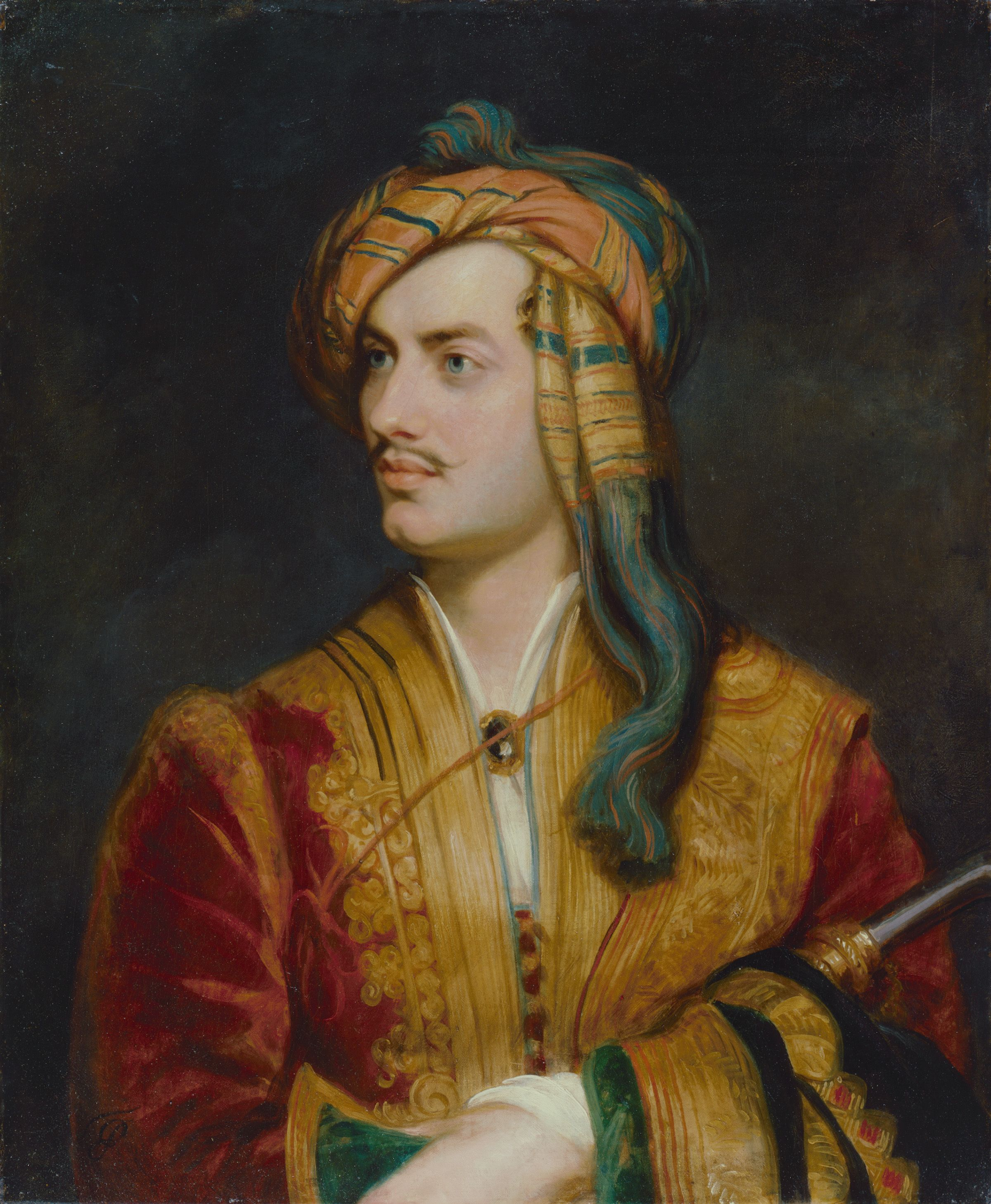
Source: Thomas Phillips (1770–1845), “Lord Byron,” circa 1835 (replica, based on a work of 1813, by the same artist), oil on canvas, 76.5 × 63.9 cm (30 ⅛ × 25 ⅛ in.), Purchased, 1862, Primary Collection, accession number NPG 142, National Portrait Gallery, London
Lineage, Tone, and Atmosphere.
What even led to this?
The Artistic DNA: A slick, hyper-æstheticized pressure cooker balancing suspenseful heist/survival dynamics with acid-tongued social critique.
✺
Slick High-Stakes & High Society: The Thomas Crown Affair, Entrapment, and Vertigo establish the polished visual language of ultra-wealth, obsessive gaze, art collection, and psychological game-playing.
✺
Absurdist & Acidic Satire: The Lobster and The Square ground the project’s razor-sharp commentary on human vanity, elite performativity, and institutional absurdity.
✺
Glitzy Cynicism & Visual Excess: The Neon Demon and Velvet Buzzsaw push the critique of the contemporary art/fashion world into macabre, high-style horror-comedy territory—where vanity literally becomes a life-or-death hazard.
✺
Historical Timeline.
Fame, Desire, and the Fall
Seven Defining Moments in Byron’s Myth
Byron’s Life at a Glance
Explore the key moments that defined Lord Byron’s real-life journey, from his meteoric rise to fame to his tumultuous love affairs and eventual exile. This timeline offers insight into the historical events that shaped the man behind the legend. Note that this is not a representation of the film’s nonlinear narrative, which explores Byron’s life and myth through fragmented, artistic expression.
I. Birth of a Scandal: The Enigmatic Origins (1788)
Byron’s birth marked the start of a life shadowed by scandal—his father's debts, his mother’s fierce temper, and the deformity that would haunt him. The seeds of isolation were sown early, setting the stage for a poet whose greatness would never escape the weight of his lineage.
II. Cambridge: The Blossoming of Desire and Rebellion (1805–1808)
At Cambridge, Byron’s intellectual rebellion and secret passions began to take form. It was here that his first forbidden loves—particularly toward fellow male students—ignited the fire that would both fuel his poetry and haunt his soul.
III. The Early Celebrity: The Rise of One So “Mad, Bad, and Dangerous to Know” (1812–1816)
Byron became a literary icon overnight with Childe Harold, but his fame soon became a gilded cage. Scandal erupted with his marriage to the intellectual Annabella, his affair with his half-sister Augusta, and the births of legitimate Ada and incestuous Medora. His growing reputation for forbidden love, including rumors of male affairs, led to his forced exile. In the apocalyptic summer of 1816, Byron’s Fragment of a Novel birthed the first English vampire story, forever intertwining his legacy with the darkness of gothic myth.
IV. The Tumultuous Love Affair with Teresa Guiccioli: A Darker Romance (1819–1823)
In exile, Byron’s affair with Teresa Guiccioli offered fleeting solace, but the darkness of his soul remained. Their love, intense and turbulent, mirrored his deepening isolation and unspoken desires for men. In Italy, Byron was not just a poet—he was a man broken by his own contradictions, caught between love and exile.
V. The Greek Revolution: A Hero’s Last Stand (1823–1824)
Byron’s final act was a heroic, yet tragic, plunge into the Greek War of Independence. Leaving behind the comforts of fame, he sought redemption in battle—but his body, worn by fever and exhaustion, ultimately failed him. Byron’s death in Missolonghi sealed his mythic status, both a poet and a warrior lost to history.
VI. The Secret of His Heart: Forbidden Desires in the Shadows (Various Periods)
Byron’s heart was forever torn between his public persona and his private, forbidden loves. His relationships with men—intense, passionate, and unspoken—ran like a dark thread throughout his life, shaping both his work and his inner torment.
VII. The Final Rejection: Death as Liberation (1824)
Byron’s death at 36 marked the ultimate rebellion—an escape from a world that never truly understood him. In death, he became more than a poet—he became an immortal icon, free from the judgments of society, his desires forever obscured by myth.
English Bards and Scotch Reviewers
(London: James Cawthorn, 1809)
A savage satire, lashing critics, society’s hypocrisy, and Byron’s own restless genius.
Childe Harold’s Pilgrimage
(London: John Murray, 1812–1818)
A melancholic journey through ruin, self-doubt, and the intoxicating allure of solitude.
The Corsair
(London: John Murray, 1814)
A pirate’s dark romance, filled with passion, betrayal, vengeance, and doomed heroism.
The Prisoner of Chillon
(London: John Murray, 1816)
Tragic imprisonment, soul-bound to stone, reflecting eternal defiance against tyrannical forces.
Manfred
(London: John Murray, 1817)
A brooding, tormented soul seeks redemption through dark, mystical forces and guilt.
A Fragment of a Novel
(London: John Murray, 1819)
The first vampire story in English—an exploration of seduction, decay, and immortality.
Don Juan
(London: John Murray, 1819–1822; John Hunt, 1822–1824)
Subversion of desire, exploring love’s fluidity, gender, and the chaos of passion.